
Introduction
The Glossy Ibis (Plegadis falcinellus) is a distinctive water bird belonging to the order Pelecaniformes and the family Threskiornithidae. Known for its wide distribution and elegant silhouette, this species is a fascinating subject for bird enthusiasts and researchers alike.
Physical Appearance
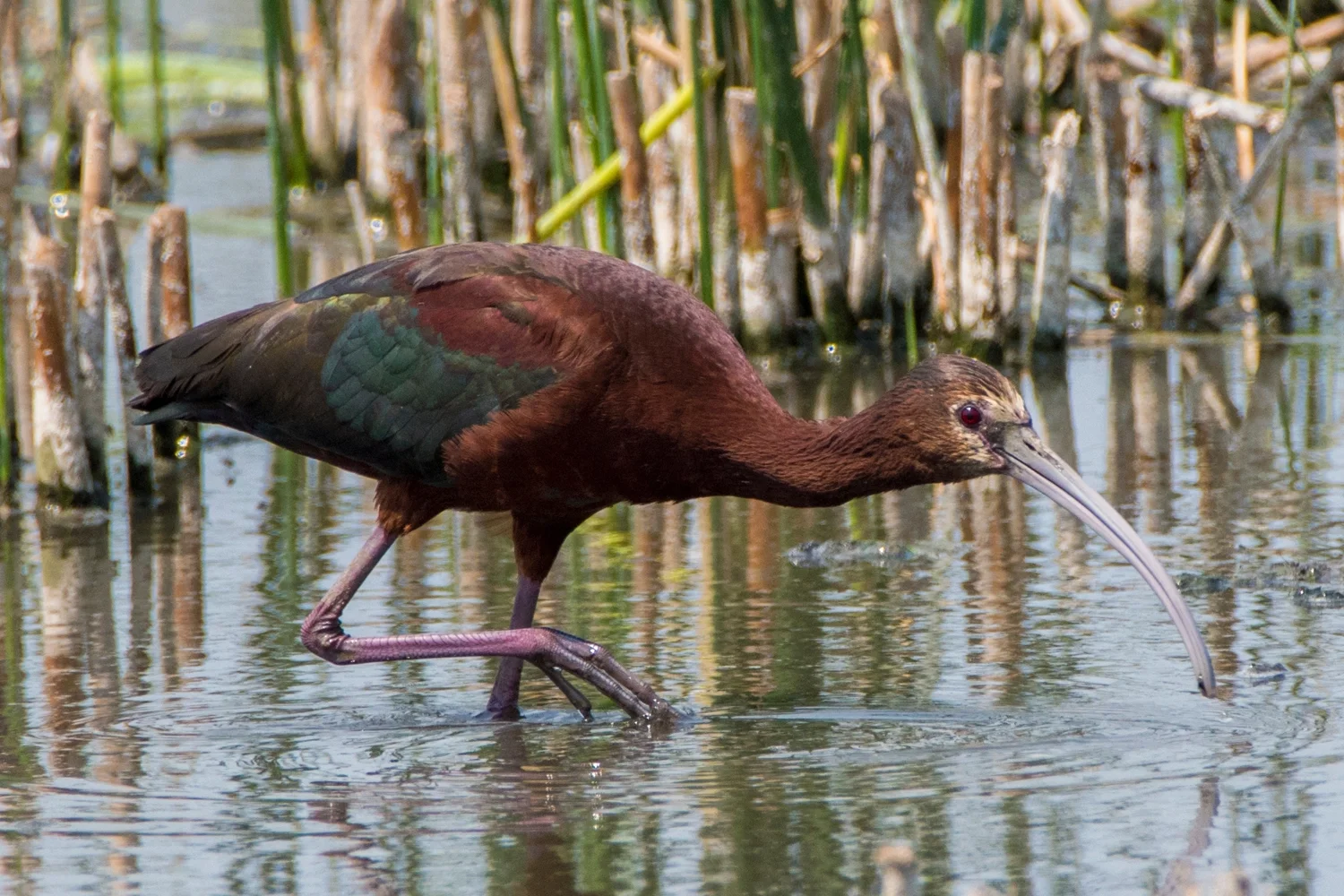
The Glossy Ibis is a medium-sized wading bird, typically measuring between 55 and 65 cm in length. Its most striking feature is its long, downward-curved bill, which resembles a sickle. The plumage appears dark, but under good light, it reveals iridescent shades of deep maroon, green, and bronze.
Habitat
This species primarily breeds in freshwater or brackish wetlands characterized by dense emergent vegetation such as reeds, papyrus, and rushes. While it favors marshes near lakes or rivers, it can also be found in flood-plains and wet meadows. It is notably uncommon in coastal regions like estuaries or salt marshes. For resting, these birds typically roost in large trees located at a distance from their feeding grounds.
Diet
The Glossy Ibis is an opportunistic feeder that mainly consumes insects. Its diet includes:
- Aquatic beetles, flies, and dragonflies
- Grasshoppers and crickets
- Spiders and leeches
- Frogs, tadpoles, and small fish
- Lizards, small snakes, and snails
Breeding and Nesting
Glossy Ibises are colonial nesters, often building their nests in shrubs or trees surrounded by marshy areas. Both parents share nesting duties, working together to raise their young. They prefer locations that offer protection from predators while remaining close to abundant food sources.
Behavior
These birds are highly active foragers, usually wading in shallow water to probe the mud for prey using their specialized bills. Although they primarily forage in water, they may also pick up insects from the ground or water surface. The Glossy Ibis is a migratory species, moving southwards after the breeding season, though some populations in regions like western India remain resident year-round.
Conservation Status - LC Least Concern
Currently, the Glossy Ibis is locally abundant and not globally threatened. However, it faces significant threats from the degradation and loss of wetland habitats. Conservation efforts focus on preserving the marshes and flood-plains essential for their survival.
Interesting Facts
- The scientific name Plegadis falcinellus comes from the Greek 'plegados' and Latin 'falcis', both meaning 'sickle'.
- It is the most widespread ibis species in the world, found across Europe, Asia, Africa, Australia, and the Americas.
- The species naturally spread from Africa to South America in the 19th century before expanding into North America.
- The first recorded sighting in the New World was in New Jersey in 1817.
- In recent years, the species has begun establishing new breeding colonies in places like southern Spain and has even attempted to breed in Britain.
Tips for Birdwatchers
To spot a Glossy Ibis, look for shallow, muddy margins of freshwater marshes or wet meadows. They are most easily identified by their rhythmic probing motion while feeding. Early morning or late evening is the best time to see them as they move between their feeding sites and distant roosting trees.
Conclusion
The Glossy Ibis is a resilient and adaptable traveler of the avian world. From its ancient origins to its modern-day range expansions, this 'sickle-billed' bird remains a vital indicator of the health of our global wetland ecosystems.
