
Introduction
The black-necked grebe (Podiceps nigricollis), also widely known as the eared grebe, is a distinctive member of the grebe family. Found across Africa, Eurasia, and the Americas, this water bird is celebrated by birdwatchers for its striking seasonal plumage and fascinating migratory behaviors.
Physical Appearance
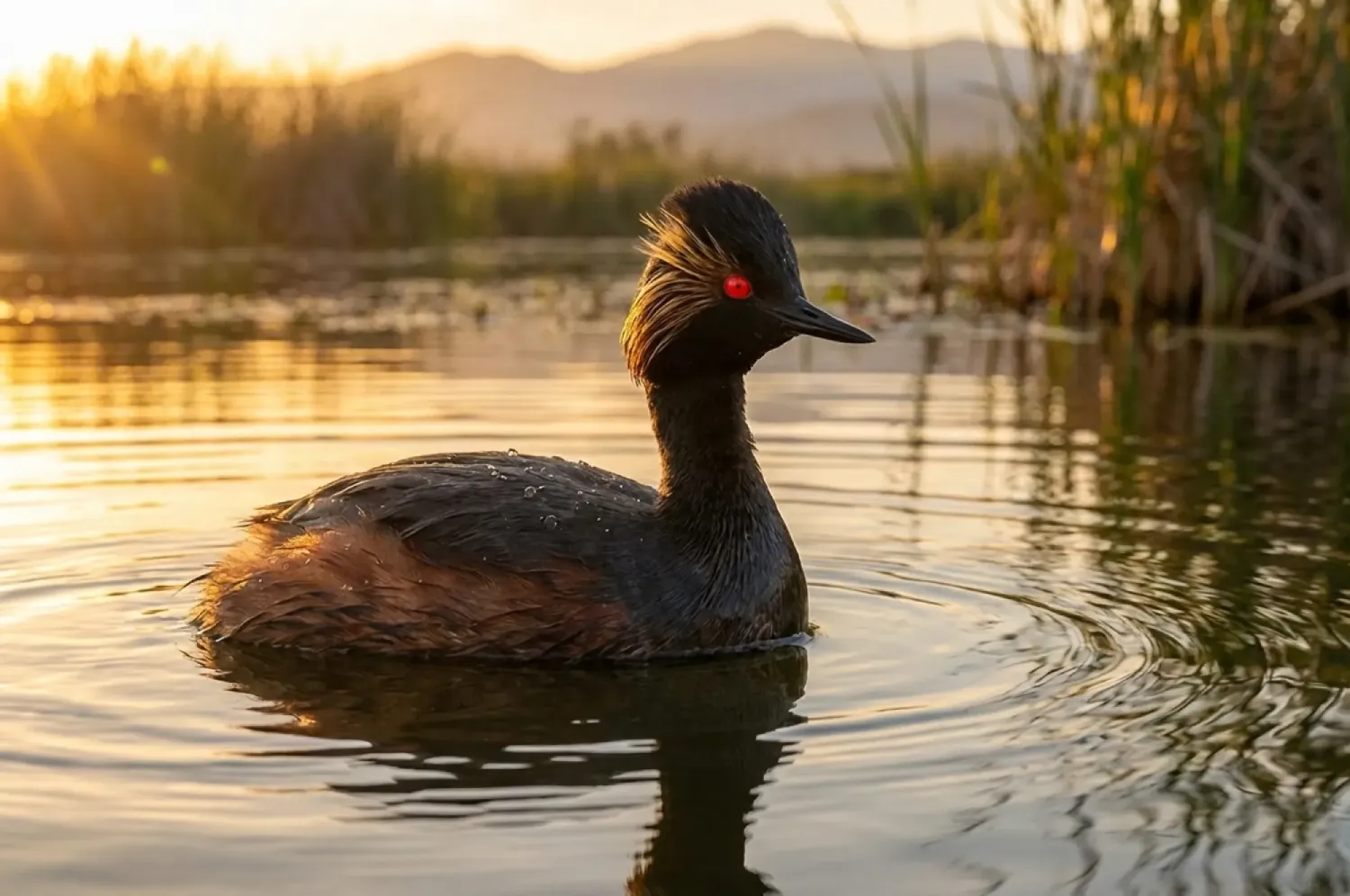
The black-necked grebe is a small water bird, measuring between 28-34 cm. During the breeding season, it displays a vibrant ochre-coloured plumage extending behind the eyes, contrasting with a black head, neck, and breast. In its non-breeding form, the bird adopts a more muted greyish-black and white appearance. There are three recognized subspecies, with californicus often featuring a longer bill and P. n. gurneyi being smaller with a greyer head.
Habitat
This species is highly adaptable, found from sea-level to mountain lakes. Their preferred breeding habitats are reed-edged freshwater lakes with plenty of emergent vegetation. Outside of the breeding season, they are frequently found in coastal waters, saline lakes, and estuaries, often migrating vast distances to reach these specific environments.
Diet
The black-necked grebe is primarily an insectivore but maintains a varied diet depending on its environment. Its food sources include:
- Insects: Both adult and larval stages of aquatic insects.
- Crustaceans and Molluscs: Essential for their nutrition in saline and coastal waters.
- Annelids: Including pile worms and marine annelids.
- Small Vertebrates: Tadpoles, small frogs, and small fish.
Breeding and Nesting
Breeding typically occurs in vegetated areas of freshwater lakes. These birds are known for their colonial nesting habits, often building floating nests among reeds. Interestingly, the African subspecies P. n. gurneyi is unique because it does not transition into a non-breeding plumage like its northern counterparts.
Behavior
A remarkable aspect of their behavior is their moulting migration. After breeding, they fly to large saline lakes to moult, becoming flightless for a period while they feast and accumulate fat. They are excellent divers, using their specialized feet to swim underwater in search of prey.
Conservation Status - LC Least Concern
While the black-necked grebe is generally widespread, they are sensitive to habitat loss and changes in water quality, especially at the specific saline lakes they rely on for moulting and wintering.
Interesting Facts
- The black-necked grebe is the most abundant grebe species in the world.
- During their stay at saline lakes, they can nearly double their body mass to prepare for migration.
- The name "eared grebe" comes from the golden tufts of feathers seen behind their eyes during the breeding season.
- They are known to congregate in massive flocks, sometimes numbering in the hundreds of thousands, at sites like the Mono Lake or Great Salt Lake.
Tips for Birdwatchers
To spot a black-necked grebe, look for them in shallow, reed-fringed lakes during the spring. In the winter, focus your search on coastal estuaries and saline inland seas. Their bright red eyes are a key identifying feature when viewed through binoculars.
Conclusion
The black-necked grebe is a resilient and beautiful species that plays a vital role in aquatic ecosystems. From their dramatic plumage changes to their impressive migratory journeys, they remain a highlight for bird enthusiasts across the globe.
