
Введение
Сероголовый дрозд (Turdus boulboul) — очаровательный представитель семейства дроздовых (Turdidae), известный своим характерным оперением и мелодичной песней. Будучи типичным представителем воробьинообразных, он стал любимцем орнитологов и любителей птиц, исследующих горные районы Азии. Этот вид встречается преимущественно в Гималаях и частично в Юго-Восточной Азии, где обитает в высокогорных лесах и густом подлеске. Его присутствие часто выдают сложные флейтовые трели, эхом разносящиеся по туманным долинам в сезон размножения. Изучение биологии и экологической роли сероголового дрозда дает ценное представление о биоразнообразии горных экосистем. Перемещаясь по сложному рельефу, эти птицы служат индикаторами здоровья леса, что делает их важным объектом для защитников природы. В этом руководстве мы подробно рассмотрим жизненный цикл, физические характеристики и поведенческие особенности этого удивительного вида птиц, предоставив исчерпывающий обзор для энтузиастов и исследователей.
Внешний вид
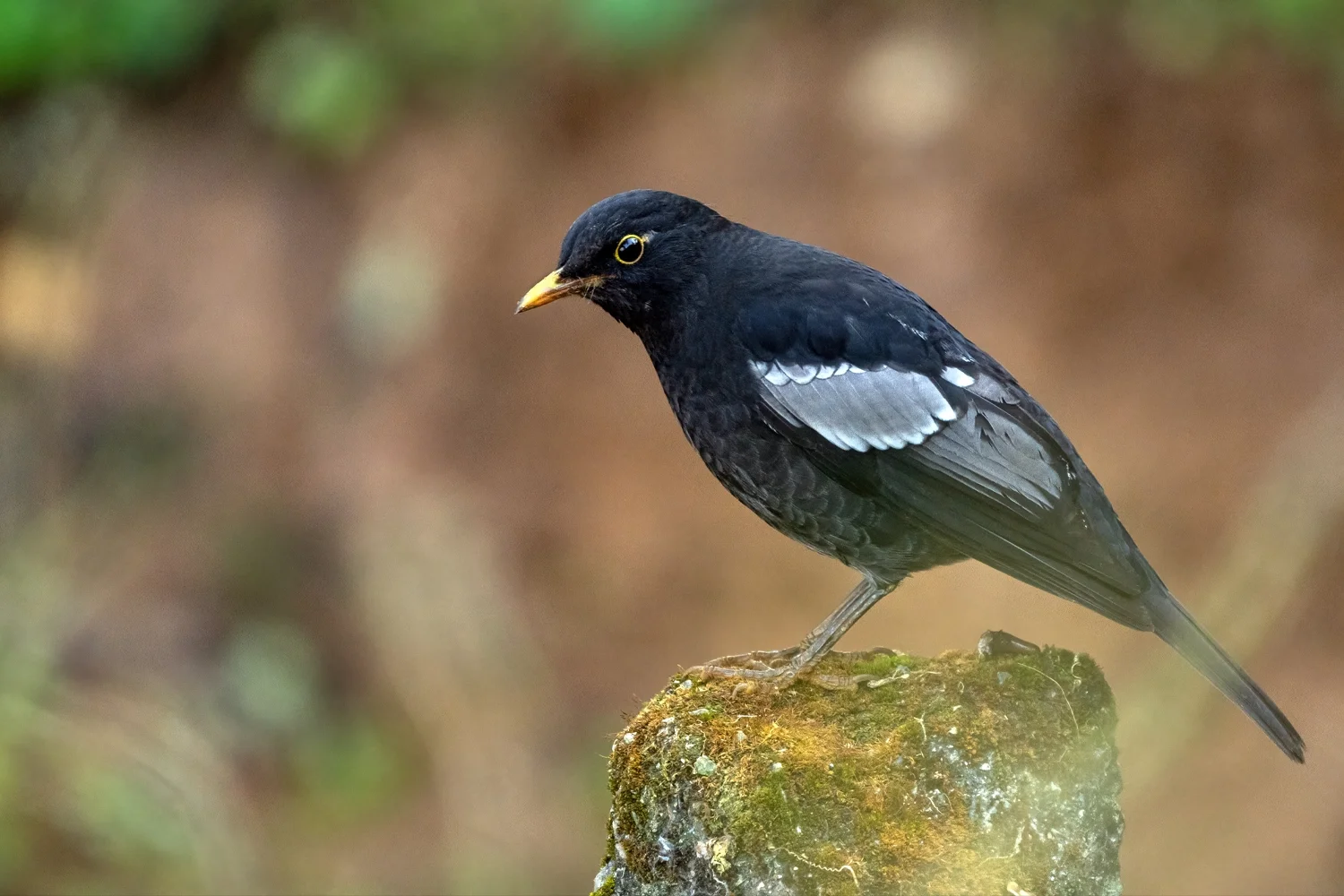
Имея длину тела от 27 до 29 см, сероголовый дрозд является дроздом среднего размера с крепким телосложением. Самая примечательная черта самца — преимущественно угольно-черное оперение, которое создает драматический контраст с его серыми крыльями, давшими название виду. Этот грифельно-серый цвет крыльев особенно заметен в полете или во время брачных демонстраций. У самца также есть ярко-желтое кольцо вокруг глаз и желтый клюв, которые добавляют яркости его монохромному облику. Самки же окрашены более скромно, в коричневато-серые тона, что служит отличной маскировкой на фоне лесной подстилки. У обоих полов сильные ноги, типичные для воробьинообразных, что позволяет им маневрировать в густой листве и держаться на ветках во время поиска пищи. Их хвосты средней длины и закругленные крылья приспособлены для коротких, ловких перелетов в подлеске, позволяя им избегать хищников и легко перемещаться по сложной местности высокогорных районов.
Среда обитания
Сероголовый дрозд — это прежде всего лесная горная птица, обычно встречающаяся на высотах от 1200 до 3000 метров над уровнем моря. Они предпочитают густые широколиственные вечнозеленые леса, смешанные хвойные леса и влажные ущелья, где полог деревьев дает значительную тень. Их часто можно заметить в подлеске гималайских лесов, особенно в местах с толстым слоем листового опада и моховым покровом. В зимние месяцы эти птицы могут спускаться на более низкие высоты, чтобы избежать суровых погодных условий, часто появляясь на опушках лесов, в садах и на плантациях, если там достаточно укрытий и пищевых ресурсов.
Рацион питания
Рацион сероголового дрозда разнообразен и оппортунистичен, что отражает его роль всеядной птицы. Основными источниками пищи являются различные беспозвоночные: дождевые черви, жуки, личинки, которых они находят, переворачивая лесную подстилку своим сильным клювом. Помимо животного белка, они потребляют значительное количество растительной пищи, особенно в осенне-зимний период. Сюда входят различные лесные ягоды, мелкие фрукты и семена деревьев и кустарников. Поедая и распространяя семена, сероголовый дрозд играет важную роль в поддержании флористического разнообразия своей горной среды обитания, являясь важным агентом расселения семян в экосистеме.
Размножение и гнездование
Размножение сероголового дрозда обычно происходит с апреля по июль, совпадая с началом сезона муссонов, что обеспечивает обилие пищи для птенцов. Гнездо представляет собой массивную чашеобразную конструкцию, тщательно сплетенную из веточек, корней, мха и грязи; обычно оно располагается в развилке дерева или на защищенном выступе в густой кроне леса. Самка в основном занимается строительством гнезда и насиживанием 3–4 бледных крапчатых яиц. Оба родителя активно защищают потомство, проявляя агрессию к нарушителям вблизи гнезда. После вылупления птенцы получают богатую белком пищу (насекомых) от обоих родителей и быстро растут, становясь способными к полету примерно через две-три недели интенсивного ухода.
Поведение
Сероголовый дрозд — довольно скрытная и пугливая птица, которую чаще слышишь, чем видишь. В основном это одиночные птицы, хотя в негнездовой период, при обилии пищи, они могут собираться в небольшие группы. Их поведение характеризуется сочетанием поиска пищи на земле и отдыха на деревьях. На земле они передвигаются характерными прыжками, часто останавливаясь, чтобы прислушаться к движению в почве. Они очень территориальны, особенно в сезон размножения, когда самцы исполняют сложные песни в полете, чтобы привлечь самок и защитить гнездовой участок от соперников. Их вокализация богата, разнообразна и часто имитирует песни других лесных птиц.
Природоохранный статус - LC Виды под наименьшей угрозой
В настоящее время сероголовый дрозд классифицируется МСОП как вид, вызывающий наименьшие опасения. Несмотря на то что их популяция считается стабильной, они не застрахованы от угроз, связанных с потерей среды обитания, вырубкой лесов и изменением климата. Как горные жители, они особенно чувствительны к температурным сдвигам и изменениям состава лесов. Защита целостности гималайских лесных коридоров необходима для обеспечения их долгосрочного выживания. Необходим постоянный мониторинг численности популяции и качества среды обитания, чтобы предотвратить сокращение вида и гарантировать, что эти культовые дрозды будут процветать в своих родных горных районах для будущих поколений.
Интересные факты
- Сероголовый дрозд принадлежит к роду Turdus, к которому относится и обыкновенный черный дрозд.
- Самцы славятся исключительным певческим талантом, часто имитируя других лесных птиц.
- Они играют жизненно важную роль в восстановлении лесов, распространяя семена через свой помет.
- Серые пятна на крыльях — это диагностический признак, по которому орнитологи отличают этот вид от других полностью черных дроздов.
- Они наиболее активны рано утром и ближе к вечеру, стараясь избегать полуденного зноя.
- Их гнезда часто укреплены грязью, что делает их удивительно прочными перед лицом горной непогоды.
Советы для бердвотчеров
Чтобы успешно увидеть сероголового дрозда, необходимы терпение и правильное время. Планируйте свои наблюдения на ранние утренние часы, так как в это время их песня наиболее выразительна, а сами птицы наиболее активны при поиске пищи на лесной подстилке. Используйте качественный бинокль для осмотра подлеска и нижних ветвей, где они проводят большую часть времени. Поскольку они могут быть пугливыми, надевайте одежду нейтральных цветов и двигайтесь медленно, чтобы не спугнуть их. Прослушивание их характерной флейтовой песни — лучший способ обнаружить их в густой листве. Если вы наблюдаете за птицами в Гималаях, ищите влажные, покрытые листвой участки земли возле ручьев, так как это излюбленные места кормежки этого неуловимого и красивого дрозда.
Заключение
Сероголовый дрозд (Turdus boulboul) является свидетельством биологического богатства горных экосистем Азии. Его элегантный внешний вид, характеризующийся поразительным контрастом между глубоким черным телом и мягкими серыми крыльями, делает его ценной находкой для любого серьезного орнитолога или любителя природы. Помимо эстетической привлекательности, эта птица служит критическим звеном в лесной пищевой цепи, регулируя популяции насекомых и способствуя распространению семян. Изучая привычки, рацион и стратегии гнездования сероголового дрозда, мы глубже понимаем сложные взаимодействия, поддерживающие высокогорное биоразнообразие. Поскольку экологическое давление продолжает расти, сохранение лесных мест обитания остается первостепенной задачей. Будь вы опытный орнитолог или любознательный любитель природы, встреча с этой птицей в ее естественной, окутанной туманом среде — поистине незабываемый опыт. Мы призываем всех, кто исследует горы, практиковать ответственное наблюдение, уважая покой птиц в сезон размножения и помогая поддерживать первозданность их дома. Благодаря осведомленности и защите мы можем гарантировать, что песня сероголового дрозда будет звучать в горах еще долгие годы.
