
Introduction
The Arctic Tern (Sterna paradisaea) is arguably the most impressive traveler in the avian world. Renowned for undertaking the longest migration of any animal on the planet, this small but resilient seabird journeys annually from its breeding grounds in the high Arctic to the icy waters of the Antarctic and back. This extraordinary round trip covers distances that can exceed 70,000 to 90,000 kilometers each year, ensuring that the bird experiences two summers annually—one in the Northern Hemisphere and one in the Southern. As a member of the Laridae family, the Arctic Tern is synonymous with endurance, navigation prowess, and adaptability. These birds are not merely survivors; they are masters of the global climate, perfectly attuned to the seasonal cycles of the poles. Ornithologists and bird enthusiasts alike hold the Arctic Tern in high regard, viewing it as a symbol of nature's boundless capacity for exploration and resilience in the face of shifting environmental conditions across the globe.
Physical Appearance
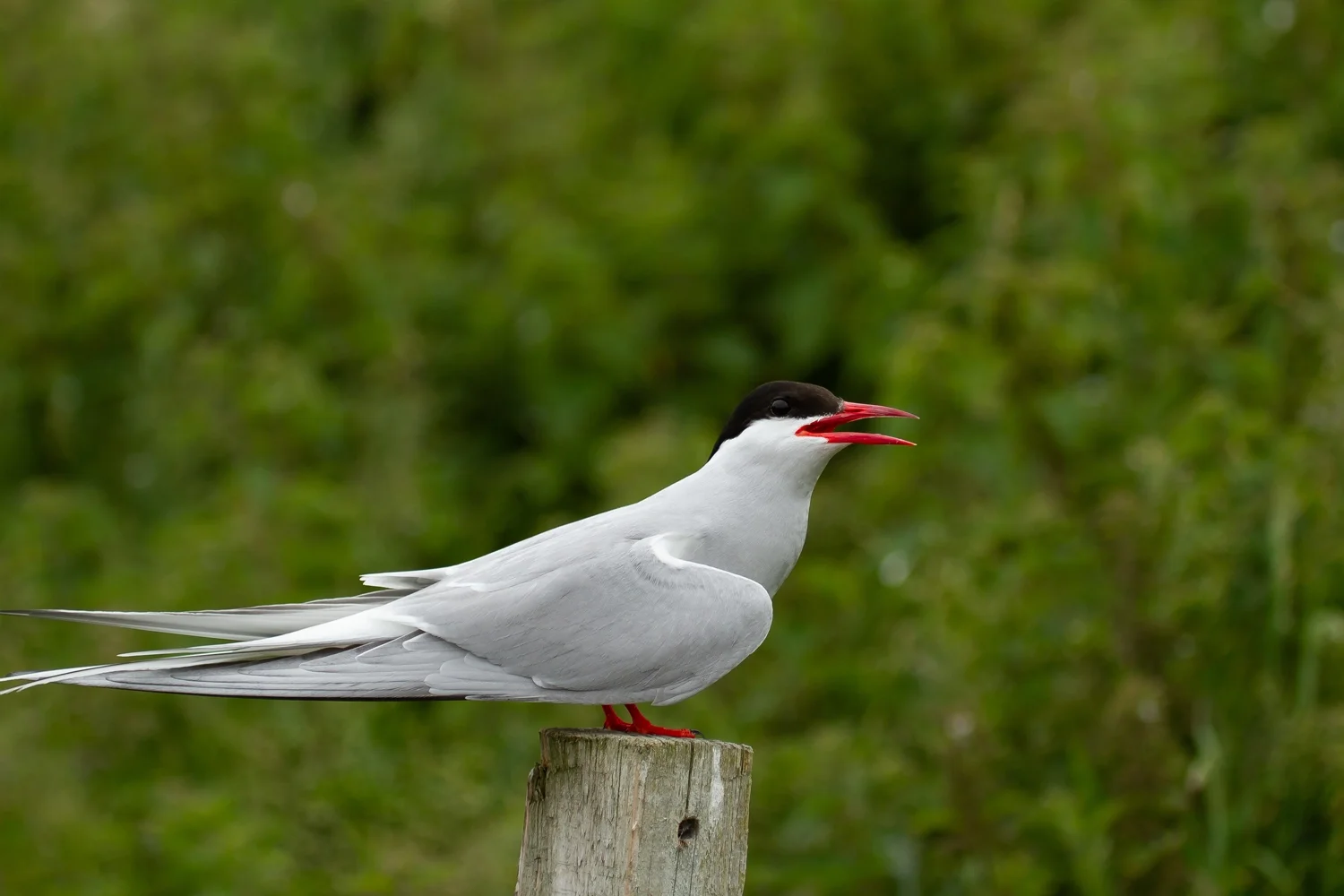
The Arctic Tern is a medium-sized seabird measuring between 33 and 39 centimeters in length. Its appearance is characterized by a sleek, aerodynamic profile that facilitates long-distance flight. The bird is primarily gray on its mantle and wings, which provides excellent camouflage against the choppy, light-reflecting surface of the open ocean. A striking contrast is created by its white underparts, neck, and cheeks, which help the bird blend into the bright sky when viewed from below by potential prey. During the breeding season, the adult Arctic Tern sports a distinctive solid black cap that extends from the forehead to the nape, contrasting sharply with its white cheeks. Its bill and legs are a vibrant, deep red, adding a flash of color to its otherwise muted plumage. In their non-breeding plumage, the forehead becomes white, and the bill may appear darker. Despite their relatively delicate look, their wings are long and pointed, providing the perfect structure for sustained, high-efficiency soaring over vast maritime expanses during their epic seasonal migrations.
Habitat
The Arctic Tern is a truly global citizen, spending its life in perpetual daylight. During the breeding season, these birds inhabit the high Arctic regions, including northern coastal areas of North America, Europe, and Asia. They prefer rocky islands, coastal beaches, and tundra environments near water sources. As winter approaches in the north, they embark on their legendary migration toward the Southern Ocean. They are rarely seen on land during this period, preferring to spend their time on the wing over the open sea, resting on floating icebergs or small oceanic islands. Their ability to thrive in such diverse, extreme environments—from the northern tundra to the frigid Antarctic shelf—demonstrates a remarkable level of ecological flexibility that few other species can match.
Diet
As a specialized seabird, the diet of the Arctic Tern consists primarily of small fish and marine crustaceans. They are agile foragers, often seen hovering above the water’s surface before performing a shallow dive to snatch prey, such as sand eels, capelin, or herring. In addition to fish, they consume various marine invertebrates, including krill, amphipods, and occasionally insects when foraging near inland freshwater sources during the breeding season. Their hunting technique is highly precise; they utilize their excellent vision to spot movement beneath the waves, plunging into the water with minimal splash. This efficient feeding strategy allows them to maintain the high energy levels required for their grueling trans-global migrations, as they must constantly refuel while traversing vast, nutrient-rich oceanic zones.
Breeding and Nesting
Breeding usually occurs in colonies, often situated on rocky islands or sheltered coastal tundra. The Arctic Tern is fiercely protective of its nesting territory and is known to dive-bomb intruders, including humans and larger predators, to defend its eggs. The nest itself is typically a simple depression in the ground, occasionally lined with bits of vegetation or shells. A female usually lays one to three eggs, which are incubated by both parents for approximately three weeks. Once hatched, the chicks are semi-precocial, meaning they can move around shortly after birth but remain dependent on their parents for food. Both the male and female work tirelessly to provide fish for their growing offspring. The chicks are capable of flight within three to four weeks, preparing them for the arduous journey ahead as the Arctic summer begins to wane.
Behavior
The Arctic Tern is an exceptionally social and vocal bird, especially within its breeding colonies. They are known for their graceful, buoyant flight and their ability to remain active in the air for extended periods. During the breeding season, they exhibit complex courtship displays, including 'fish flights' where the male presents a fish to the female in mid-air. Beyond their social nature, they are highly aggressive when defending their nests. Their endurance is their most famous behavioral trait; they are capable of sleeping while gliding, a necessity for a bird that spends most of its life in transit across the world’s oceans. This constant movement reflects a life defined by the relentless pursuit of favorable feeding conditions.
Conservation Status - LC Least Concern
The Arctic Tern is currently classified as 'Least Concern' by the IUCN, though their populations face significant challenges. Climate change poses a major threat, as shifting ocean temperatures affect the availability of their prey species. Furthermore, disturbances to their breeding colonies from human activity and the introduction of invasive predators like rats and cats to nesting islands can lead to reproductive failure. While their vast distribution offers some protection against localized threats, the ongoing health of global marine ecosystems is essential for the long-term survival of this extraordinary migratory species.
Interesting Facts
- The Arctic Tern travels up to 90,000 kilometers annually, the longest migration in the animal kingdom.
- They can live for up to 30 years in the wild.
- They experience more daylight than any other creature on Earth.
- Arctic Terns are known to sleep while flying by resting one half of their brain at a time.
- They are fiercely territorial and will attack much larger animals to protect their nests.
- Their wingspan is approximately 75–85 cm, despite their relatively small body size.
- They prefer to nest in the same colony sites year after year.
Tips for Birdwatchers
To observe the Arctic Tern, timing and location are everything. During the breeding season, visit coastal areas or rocky islands in the high north, where you can witness their spectacular aerial displays and defensive behaviors. Always maintain a respectful distance from colonies to avoid disturbing nesting pairs, as they are easily stressed. Use high-quality binoculars or a spotting scope to observe their hunting techniques without encroaching on their territory. If you are birdwatching near a colony, be prepared for their aggressive behavior; wearing a hat is highly recommended. Patience is key, as these birds are constantly in motion, making them a rewarding but challenging subject for both amateur and professional wildlife photographers.
Conclusion
The Arctic Tern is more than just a bird; it is a biological marvel that connects the two poles of our planet. Its life cycle represents the ultimate example of persistence, navigation, and adaptation to the natural world. By traveling thousands of miles every single year, the Arctic Tern defies the limits of what we consider possible for a creature of its size. As we continue to study and appreciate the Arctic Tern, we gain deeper insights into the health of our oceans and the interconnectedness of global ecosystems. Whether you are a seasoned ornithologist or a casual nature enthusiast, the story of the Arctic Tern serves as a powerful reminder of the beauty and complexity of the natural world. Protecting the environments where these birds breed and the oceans where they feed is a responsibility we all share. Through conservation efforts and continued awareness, we can ensure that this incredible traveler continues its epic journey for generations to come, gracing the skies of both the Arctic and the Antarctic with its presence.
