
Introduction
The Indian river tern (Sterna aurantia) is a graceful member of the Laridae family. Unlike many of its coastal relatives, this elegant bird is a resident breeder that thrives along the inland rivers and freshwater bodies of the Indian Subcontinent, extending from Iran to Thailand.
Physical Appearance
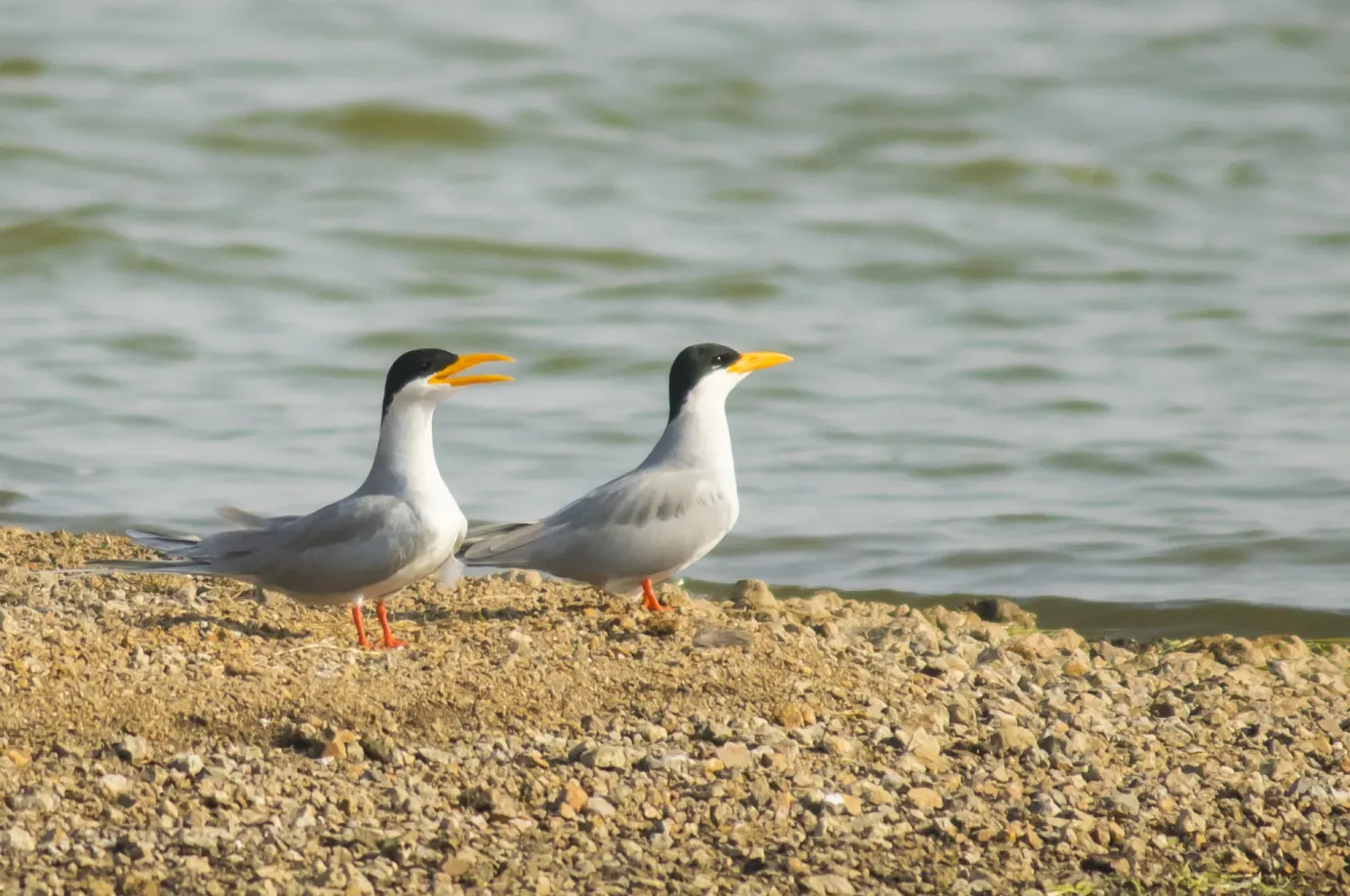
The river tern is a medium-sized bird, typically measuring between 38-46 cm in length. Its physical characteristics include:
- Upperparts: Dark grey plumage with long, pointed wings.
- Underparts: Clean white feathers.
- Tail: A deeply forked tail featuring long, flexible streamers.
- Head: A striking black cap during the breeding season, which becomes greyish-white and streaked in winter.
- Bill and Legs: A bright yellow bill and red legs, though the bill tip becomes dusky in winter.
Habitat
This species is uniquely specialized for freshwater environments. Its primary habitats include:
- Inland rivers and streams.
- Large lakes and man-made tanks.
- Sandbanks and sand islands located within water bodies.
- They are almost completely absent from sea coasts and rarely venture into tidal creeks.
Diet
As a carnivorous diver, the river tern's diet is primarily composed of aquatic life. It feeds on:
- Fish: The main staple of their diet.
- Crustaceans: Including crabs and other small species.
- Insects: Various aquatic insects.
- Amphibians: Frogs and tadpoles.
- Molluscs: Occasionally consumed in their freshwater habitats.
Breeding and Nesting
The breeding season for the river tern occurs between February and May. They are monogamous birds that breed in colonies. Their nesting habits are quite specific:
- Location: They choose less accessible areas like sandbanks or sand islands to avoid predators.
- Nest Type: A simple shallow scrape on bare rock or dry open ground.
- Clutch: They typically lay three greenish-grey to buff eggs with brown blotches.
- Parental Care: Both parents share the duties of incubating the eggs and raising the young.
Behavior
The river tern is most famous for its plunge-diving technique, where it hovers over the water before diving sharply to catch prey. They are highly territorial during the breeding season and are known to be social yet protective of their nesting colonies. Their flight is characterized by steady wing beats and great agility.
Conservation Status - VU Vulnerable
Currently, the numbers of the river tern are decreasing. The species faces significant threats from the pollution of inland waterways, the flooding of nesting sites due to dam releases, and human disturbance of the sandbanks they rely on for breeding.
Interesting Facts
- Unlike most other Sterna terns, the river tern is almost exclusively a freshwater bird.
- The winter plumage features a dark 'mask' that runs through the eye.
- Their nesting sites are highly vulnerable to seasonal flooding, which can impact an entire colony's breeding success.
- Juvenile river terns have distinct brown markings on their heads and upperparts to help with camouflage.
Tips for Birdwatchers
For the best chance of spotting a river tern, visit large inland reservoirs or river systems during the early morning. Look for their bright yellow bills and listen for their sharp calls. During the breeding months of March to May, they are most active around sandbanks, but be sure to maintain a respectful distance to avoid disturbing their nests.
Conclusion
The river tern is a beautiful indicator of the health of our freshwater ecosystems. With its striking appearance and specialized hunting skills, it remains a favorite among birdwatchers. Protecting our rivers and minimizing pollution is essential to ensure this magnificent bird remains a fixture of the Indian Subcontinent's waterways.
