
Introduction
The Audubon's shearwater (Puffinus lherminieri) is a small, agile tropical seabird belonging to the petrel family. Often referred to as the dusky-backed shearwater, this species is a fascinating subject for ornithologists due to its cryptic species complex and wide distribution across tropical oceans. The name honors the French naturalist Félix Louis L'Herminier.
Physical Appearance
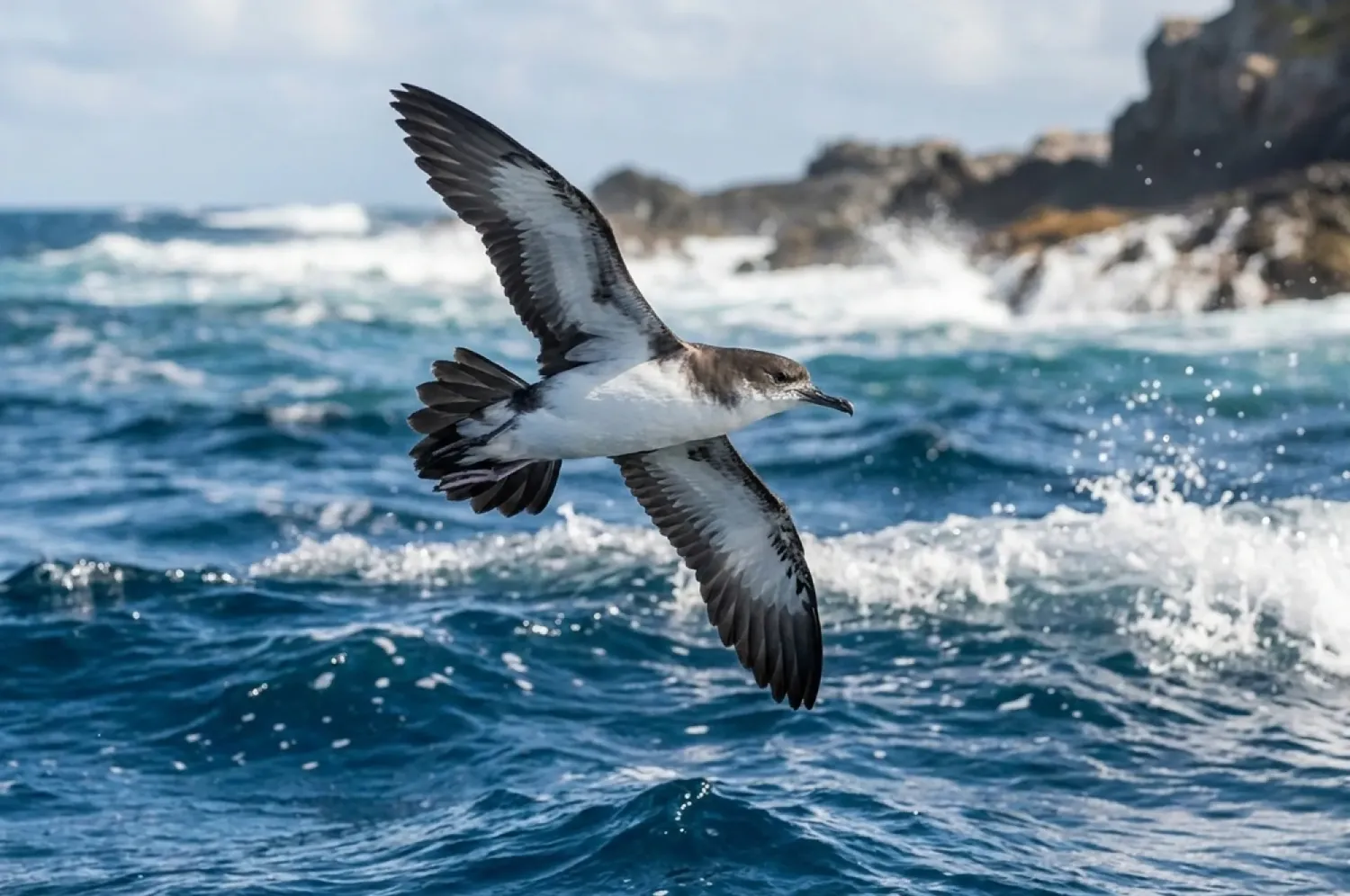
Measuring approximately 30-33 cm in length, this bird features a distinctive contrast in plumage. Key physical characteristics include:
- Upperparts: Blackish-brown feathers covering the back, tail, and wings.
- Underparts: Predominantly white, extending to the head below eye level.
- Bill: Greyish with a darker tip and a slight pinkish hue, measuring about 3 cm.
- Feet: Dull pink with a black wash and black toenails.
- Wingspan: Ranges from 64 to 72 centimetres, designed for efficient gliding.
Habitat
These birds are primarily found in offshore and pelagic waters. They spend the majority of their lives at sea, only returning to land for breeding purposes. They are known to inhabit tropical regions and frequently associate with other seabirds in the open ocean.
Diet
The diet of the Audubon's shearwater consists mainly of small squid and fish. While their full diet is not perfectly documented, they are known to consume many sardines. They are opportunistic feeders that may follow fishing boats to scavenge for food.
Breeding and Nesting
Audubon's shearwaters typically nest in colonies located on oceanic islands. They utilize burrows or rock crevices to protect their young. During the breeding season, their twittering and mewing calls are frequently heard at night, which helps them communicate within the colony.
Behavior
This species is a skilled hunter that employs several techniques to catch prey. They are known for plunge-diving followed by an underwater pursuit of fish. Additionally, they can be seen pattering across the water's surface with their legs dangling to stir up prey.
Conservation Status - LC Least Concern
While the species complex as a whole is relatively common, specific populations may face threats from invasive predators (like rats or cats) at their nesting sites. Habitat degradation and marine pollution also pose risks to their long-term stability.
Interesting Facts
- They are roughly half the size of the Greater Shearwater.
- The species is part of a "cryptic species complex," leading to various names like Baillon's or Persian shearwater.
- Males and females are monomorphic, meaning they look identical to the naked eye.
- They are often found in the company of other seabirds while foraging.
Tips for Birdwatchers
To identify an Audubon's shearwater in the field, look for its blackish-brown undertail coverts, which distinguish it from the similar Manx shearwater. Birders should focus their search on offshore waters or near fishing vessels where the birds may be scavenging.
Conclusion
The Audubon's shearwater is a remarkable example of tropical marine adaptation. From its specialized diving behavior to its wide-ranging pelagic lifestyle, it remains an essential component of the tropical oceanic ecosystem.
