Introduction
The Bay-backed Shrike (Lanius vittatus) is a small, striking member of the Laniidae family. Resident primarily in South Asia, this bird is a fierce predator despite its modest size, often observed in open landscapes and agricultural areas.
Physical Appearance
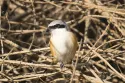
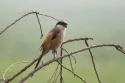
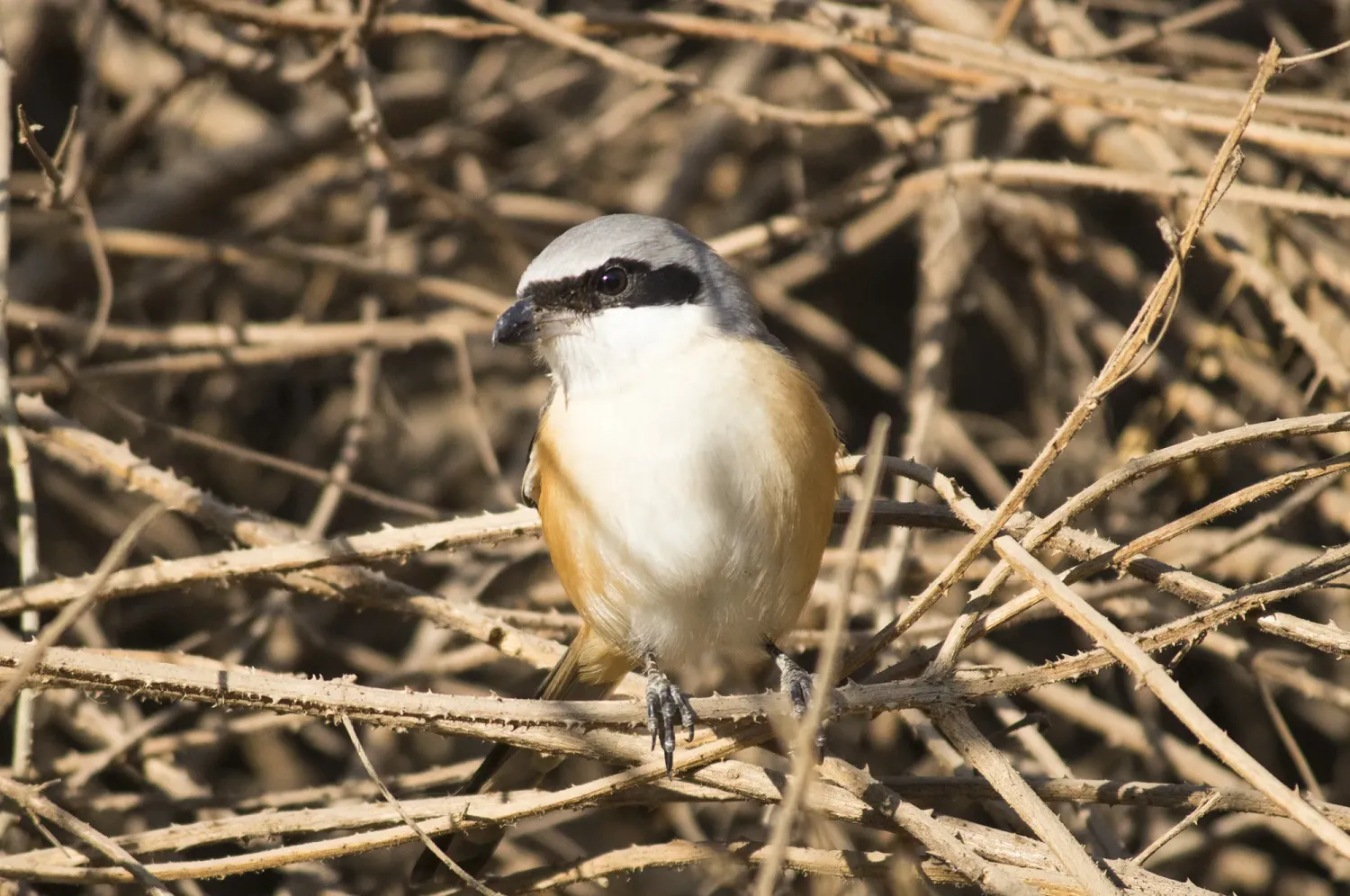
Measuring approximately 17 cm, the adult Bay-backed Shrike is identified by its black forehead, pale grey crown, and deep maroon mantle. It features a whitish rump and a distinctive white patch at the base of its primaries. Juveniles are smaller and more greyish-buffish than the Long-tailed Shrike, with patterned wing-coverts tipped with buff.
Habitat
This species prefers open dry scrub and bushes located within cultivation. It is a widespread resident across Afghanistan, Pakistan, Nepal, and India, and has recently been recorded as far south as Sri Lanka.
Diet
The Bay-backed Shrike is a carnivore that hunts from an upright perch. Its diet consists of lizards, large insects, small birds, and rodents. Because its feet are not designed for tearing, it often impales its prey on thorns to secure it before using its strong hooked bill to consume the meal.
Breeding and Nesting
Breeding occurs in scrubby areas and cultivated land. The birds construct their nests within bushes and typically lay a clutch of 3 to 5 eggs.
Behavior
Characterized by an upright attitude while perched, this shrike is a patient hunter. It is famous for its "larder" behavior, where it secures prey on sharp points like thorns. This allows the bird to rip apart food that its feet cannot hold firmly.
Conservation Status - LC Least Concern
The Bay-backed Shrike is a widespread resident throughout its range. While generally common, it remains unrecorded in certain northeastern regions of its typical geographic territory.
Interesting Facts
- It belongs to the 'butcher bird' family, named for the habit of impaling prey on thorns.
- The maroon mantle is a key field mark that distinguishes it from other shrike species.
- Despite its small 17 cm size, it is bold enough to hunt rodents and other birds.
- First-year birds look like washed-out versions of adults and lack the signature black forehead.
Tips for Birdwatchers
To spot a Bay-backed Shrike, scan the tops of bushes in dry, scrubby environments. Look for their distinctive upright posture and the white patches on their wings, which are particularly visible during flight.
Conclusion
The Bay-backed Shrike is a fascinating predator of the South Asian scrublands. Its unique hunting methods and bold plumage make it a highlight for any birdwatcher exploring the open countryside of the Indian subcontinent.