
Introduction
The Black Eagle (Ictinaetus malayensis) is a majestic and unique raptor found across the tropical forests of Asia. Known for its distinct silhouette and specialized hunting techniques, this bird of prey is a fascinating subject for ornithologists and birdwatchers alike. Unlike many other eagles that rely on high-speed dives, the Black Eagle is a master of low-speed maneuvering above the forest canopy.
Physical Appearance
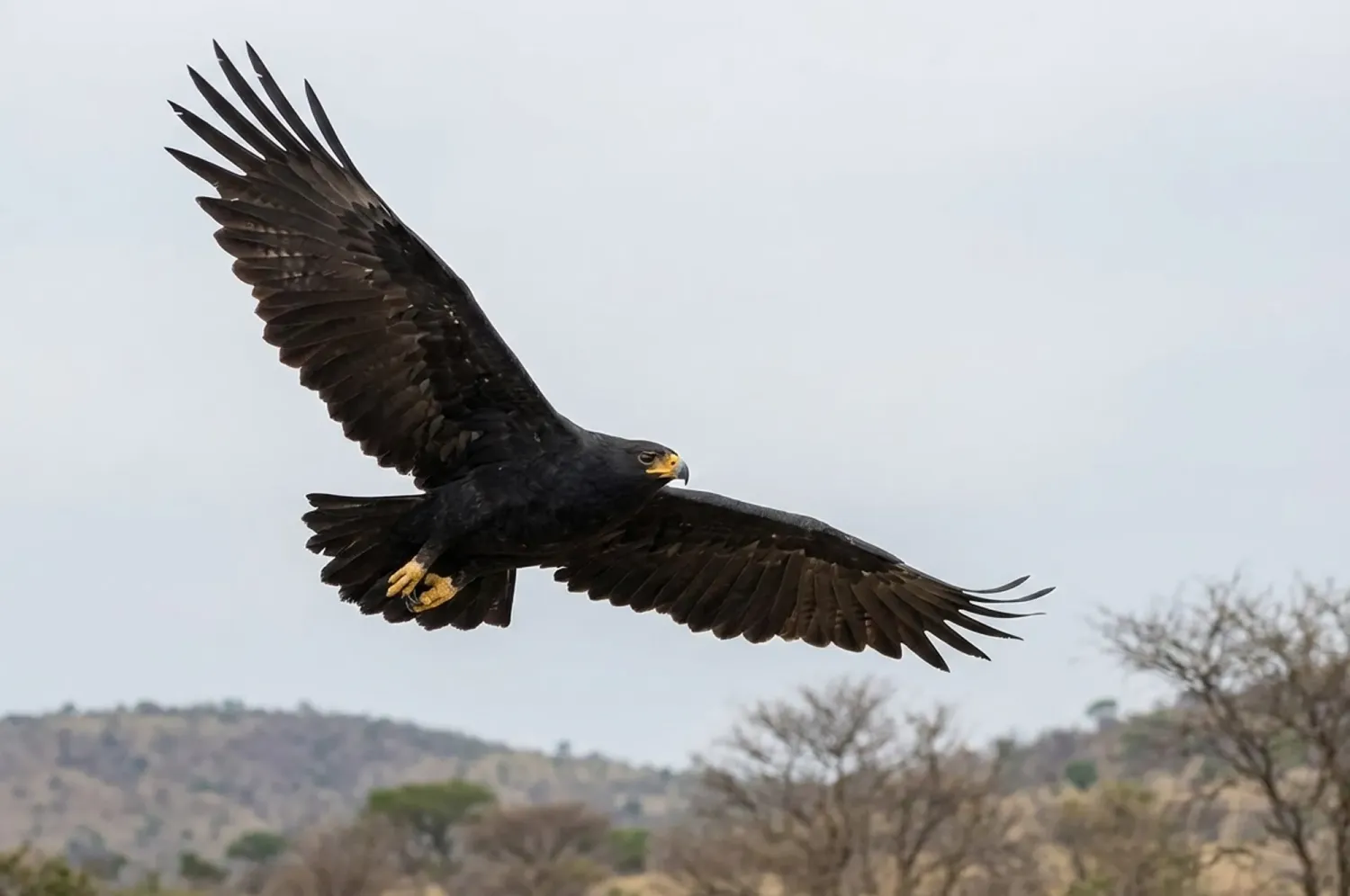
The Black Eagle is a large raptor, measuring between 69 and 81 cm in length with an impressive wingspan of 164 to 178 cm. Key physical features include:
- Plumage: Adults possess entirely jet-black feathers, while juveniles have a buff-colored head and underparts.
- Features: It has a distinctive yellow bill base (cere) and bright yellow feet.
- Wings: The wings are long and pinched at the innermost primaries, creating a unique shape that forms a shallow "V" during flight.
- Claws: They possess relatively short, stout toes with long, specialized claws that are less curved than those of other raptors, perfect for raiding nests.
Habitat
These eagles primarily inhabit hills and mountain forests. Their range is extensive, covering tropical Asia, including the Himalayan foothills, the Eastern and Western Ghats in India, and Sri Lanka. In Bangladesh, they are also known to frequent mangrove forests. They are often spotted soaring over the Aravalli range in northwestern India.
Diet
The Black Eagle is a specialized nest predator. Its diet is diverse and includes:
- Mammals: Bats, squirrels (including the Indian giant squirrel), and young bonnet macaques.
- Birds: Small birds and swiftlets taken directly from caves.
- Eggs: They use their wide gape and specialized claws to pick up eggs from nests.
- Unique Habit: Along with swallow-tailed kites, they are known to carry away an entire nest, including the nestlings, to a feeding perch.
Breeding and Nesting
The Black Eagle breeds throughout tropical Asia. The race perniger is specifically found in the Himalayan foothills and peninsular India. Their nesting behavior is unique due to their ability to snatch entire nests from trees, though they build their own nests high in the forest canopy to raise their own young.
Behavior
One of the most recognizable behaviors of the Black Eagle is its slow, scouring flight just above the treetops. This allows them to search for nests to maraud. Because of their predatory habits, many forest animals like macaques and squirrels emit loud alarm calls when a Black Eagle is spotted soaring nearby. They are most active on hot afternoons when they utilize thermals to glide effortlessly.
Conservation Status - LC Least Concern
While not currently listed as globally threatened, the Black Eagle relies heavily on undisturbed forest ecosystems. Habitat loss and deforestation in tropical Asia are the primary concerns for the long-term stability of their population.
Interesting Facts
- The Black Eagle has a unique wing shape that allows it to fly at exceptionally slow speeds without stalling.
- It is one of the few birds of prey capable of carrying an entire bird's nest away while flying.
- Their inner toe claws are unusually long and straighter than those of most eagles, specifically adapted for raiding nests.
- When perched, their wingtips often reach or even exceed the tip of their tail.
Tips for Birdwatchers
To spot a Black Eagle, look to the skies during hot afternoons. They are easily identified by their jet-black color and characteristic slow-motion flight over the canopy. Listen for the alarm calls of squirrels and macaques, which often signal the eagle's presence. Binoculars are essential to see the faint barring on the tail and the distinctive yellow cere.
Conclusion
The Black Eagle (Ictinaetus malayensis) is a remarkable example of evolutionary specialization. From its unique physical adaptations to its specific role as a canopy predator, it remains one of the most intriguing raptors in the Asian wilderness. Protecting the mountain forests of India and Southeast Asia is vital to ensuring this magnificent bird continues to soar.
