
Introduction
The Common Goldeneye (Bucephala clangula) is a medium-sized diving duck that is a frequent sight across the Northern Hemisphere. Known for its striking golden-yellow eyes and energetic personality, this species is a favorite among waterfowl enthusiasts and birdwatchers alike.
Physical Appearance
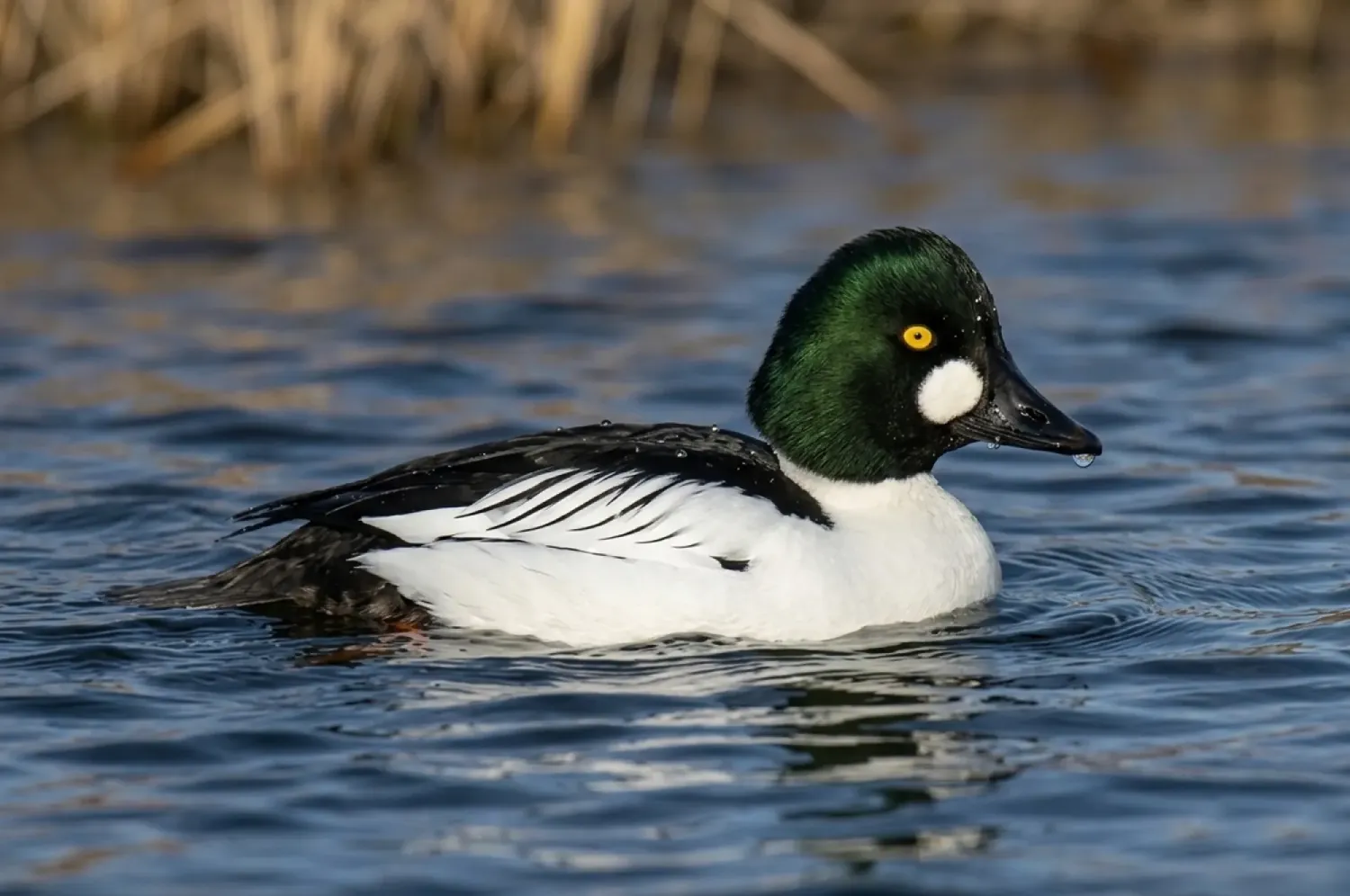
Measuring between 42-50 cm in length, the Common Goldeneye exhibits significant sexual dimorphism. Adult males feature a dark, iridescent green head that appears black from a distance, highlighted by a bright white circular patch between the eye and the bill. Females, on the other hand, have a chocolate-brown head and a mottled grey body. Both sexes share the characteristic bright yellow iris that gives the species its name.
Habitat
Common Goldeneyes are primarily found in boreal forests and taiga regions during the breeding season, favoring clear lakes and rivers surrounded by mature timber. During the winter, they migrate to more temperate areas, often inhabiting coastal bays, estuaries, and large, ice-free inland lakes.
Diet
As expert divers, their diet is primarily carnivorous. Their food sources include:
- Aquatic insects and their larvae
- Crustaceans such as crayfish and shrimp
- Mollusks including snails and mussels
- Small fish and fish eggs
Breeding and Nesting
Unlike many ducks, Common Goldeneyes are cavity nesters. They typically seek out abandoned woodpecker holes or natural hollows in large, old-growth trees near water. They are also known to readily occupy man-made nest boxes, which has helped support their populations in areas where old-growth forests have been depleted.
Behavior
These ducks are powerful and fast fliers. One of their most distinctive behavioral traits is the whistling sound produced by their wings during flight, which can be heard from a considerable distance. They are also highly social outside of the breeding season, often forming small to medium-sized flocks on open water.
Conservation Status - LC Least Concern
The Common Goldeneye is currently classified as Least Concern by the IUCN. While their populations are generally stable, they remain sensitive to water pollution and the loss of mature forest habitats necessary for nesting.
Interesting Facts
- The Common Goldeneye is often nicknamed the 'Whistler' because of the high-pitched sound its wings make in flight.
- Newly hatched chicks must jump from the nesting cavity—sometimes 40 feet in the air—to the ground just a day after hatching.
- The genus name Bucephala is derived from Ancient Greek and means 'bull-headed,' referring to the bird's large, rounded head shape.
- They can stay submerged for up to 30 seconds while foraging for food underwater.
Tips for Birdwatchers
To spot a Common Goldeneye, visit large, open bodies of water during the winter months. Look for the male's brilliant white facial spot, which is visible even from a distance. Because they are shy, using a spotting scope or high-quality binoculars is recommended to observe their diving behavior without startling them.
Conclusion
The Common Goldeneye is a resilient and beautiful diving duck that adds a touch of gold to the northern wilderness. Understanding their habitat and nesting needs is essential for ensuring this 'whistling' waterfowl continues to thrive in our lakes and rivers.