
Introduction
The Coppersmith Barbet (Megalaima haemacephala), also known as the crimson-breasted barbet, is a vibrant and iconic bird found across the Indian subcontinent and parts of Southeast Asia. It is most famous for its unique, metronomic call that mimics the sound of a coppersmith striking metal with a hammer.
Physical Appearance
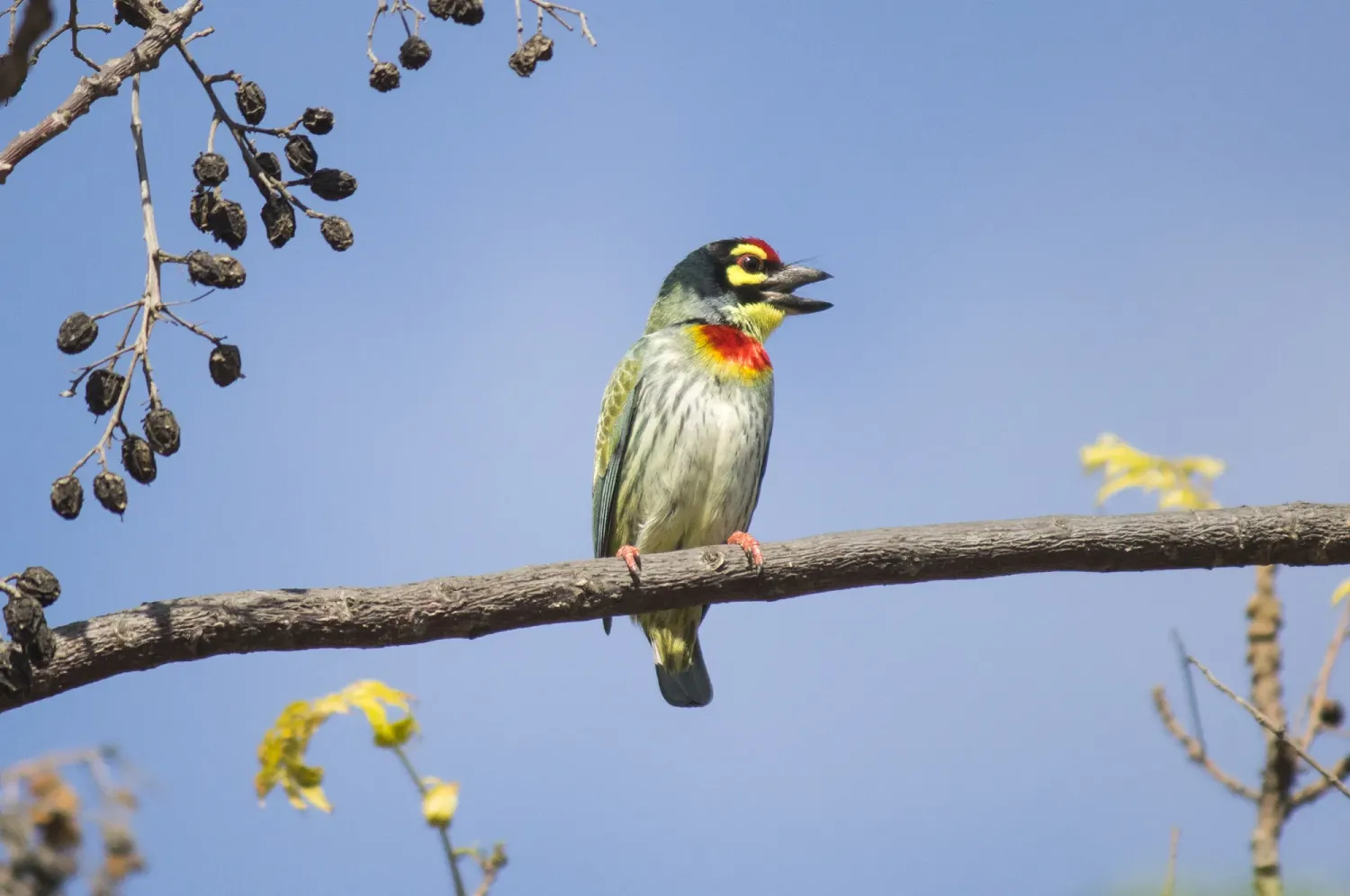
This smallish bird measures between 15-17 cm in length. It is characterized by its striking appearance, featuring:
- A crimson forehead and throat patch.
- A distinct yellow eye-ring and throat border.
- Green upperparts and a streaked underside.
- Juveniles are typically duller and lack the vibrant red patches seen in adults.
Habitat
The Coppersmith Barbet is highly adaptable and can be found in a variety of environments, including:
- Deciduous forests and open woodlands.
- Urban parks and residential gardens with fruiting trees.
- Thickets and the edges of mangroves.
Diet
While they are predominantly frugivorous, their diet is quite diverse:
- Fruits: They mainly consume figs, berries, and mangoes.
- Insects: They supplement their diet with beetles, mantises, crickets, and winged termites.
- Foraging: They often forage in tree canopies or snatch insects mid-flight.
Breeding and Nesting
Like other barbet species, the Coppersmith Barbet is a cavity nester. They carve out holes inside tree trunks to build their nests. During the nesting season, pairs engage in courtship displays involving duets, head bobbing, tail flicking, and courtship feeding.
Behavior
This bird is an arboreal species that is usually seen singly or in small groups. It is known for its sedentary nature, meaning it does not migrate, though it may perform local dispersion. To find food, it often taps and removes bark chips to reach invertebrates hidden underneath.
Conservation Status - LC Least Concern
The Coppersmith Barbet is currently considered a common species across its range. Its ability to adapt to urban environments and gardens with fruiting trees has helped maintain a stable population.
Interesting Facts
- Its call is so rhythmic and metallic that it is often mistaken for a craftsman at work.
- Phylogenetic analyses show that this species is basal among Old World barbets in its genus.
- In the Western Ghats, its range overlaps with the Malabar barbet, which has a similar appearance but a faster call.
- During nesting, wear and tear on feathers can make the upper back plumage appear bluish.
Tips for Birdwatchers
To spot a Coppersmith Barbet, follow these tips:
- Listen for the sound: Their 'tonk-tonk' call is much easier to find than the bird itself.
- Scan fruiting trees: Look for them in Banyan or Peepal trees when figs are ripe.
- Watch the canopy: They prefer the upper layers of trees but will occasionally move to lower branches to forage.
Conclusion
The Coppersmith Barbet is a delightful addition to any garden or forest. With its vibrant colors and rhythmic song, it remains one of the most beloved and easily recognized birds in its native range.
