
Introduction
The Eurasian Collared Dove (Streptopelia decaocto) is a remarkable bird species that has successfully expanded its range across continents. Originally native to Europe and Asia, this adaptable dove has established a significant presence in North America, becoming a familiar sight in many urban and suburban landscapes. Known for its distinctive call and rapidly increasing population, the Eurasian Collared Dove offers fascinating insights into avian adaptation and dispersal.
Physical Appearance
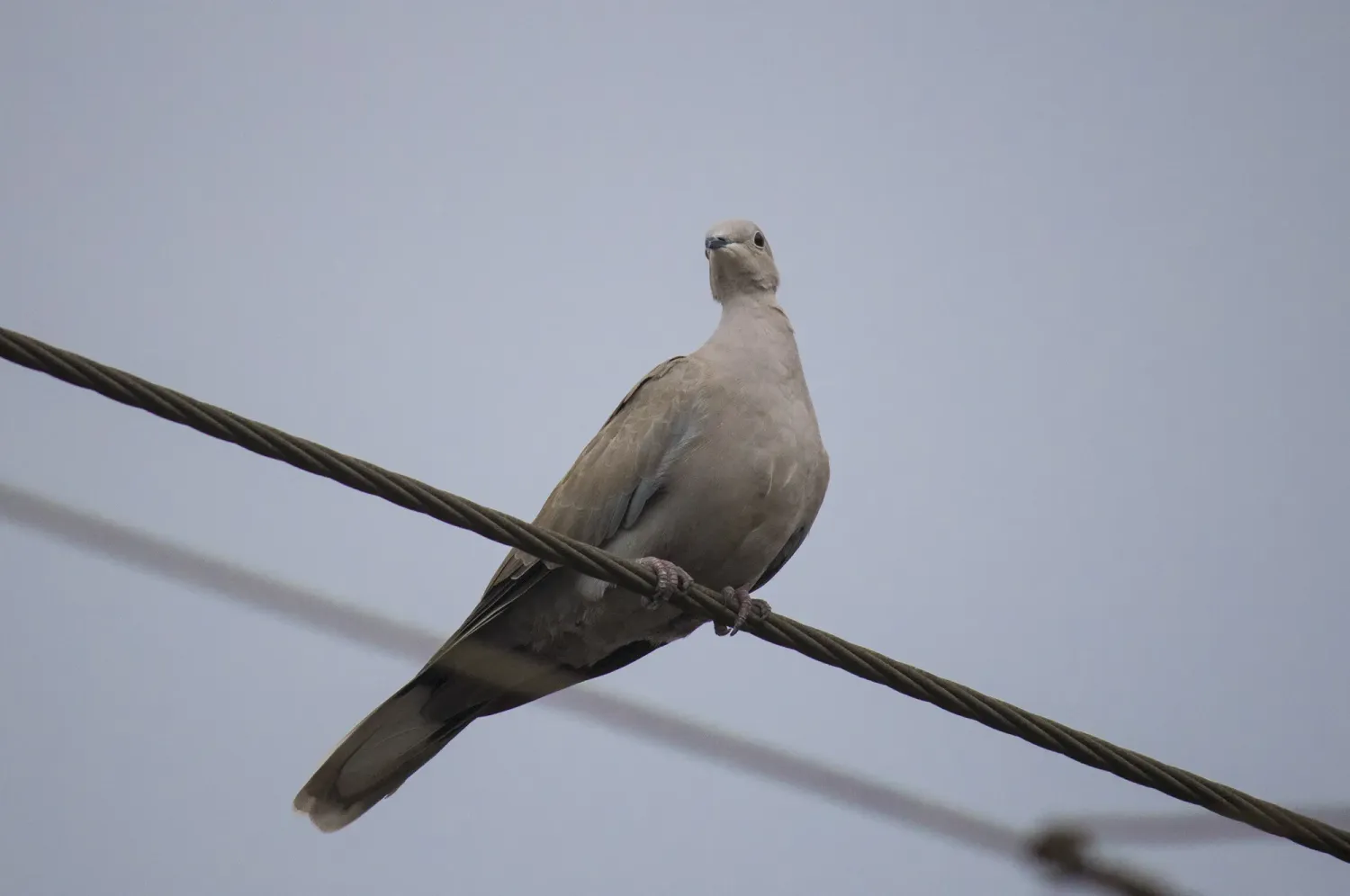
The Eurasian Collared Dove is a medium-sized bird, typically measuring between 32 and 32 cm in length. Its plumage is predominantly a delicate shade of brown, complemented by subtle black markings. The most distinguishing feature, and the origin of its name, is a prominent black collar on the nape, bordered with white. Its eyes are typically dark, and its legs are reddish.
Habitat
This highly adaptable dove thrives in a variety of environments, particularly those influenced by human activity. You can commonly find the Eurasian Collared Dove in:
- Towns and big cities
- Urban parks and gardens
- Depending on the region, it may also frequent:
- Semi-desert areas with scattered trees
- Mixed thickets and orchards
Its ability to coexist with humans has been a key factor in its widespread success.
Diet
The diet of the Eurasian Collared Dove is primarily granivorous, meaning it feeds mainly on seeds. However, it is an opportunistic feeder and will supplement its diet with other items:
- Mainly seeds from cereals and grasses
- Buds
- Fruits and berries
- Insects and other invertebrates
It predominantly feeds on the ground, meticulously foraging for fallen seeds. Occasionally, it will perform short, agile rising flights to pluck a berry directly from a scrub or bush.
Breeding and Nesting
Eurasian Collared Doves are prolific breeders, contributing significantly to their expanding population. They typically construct simple, somewhat flimsy nests made of twigs, placed in trees, shrubs, or even on man-made structures like eaves and window ledges. They can produce multiple broods per year, often laying two white eggs per clutch. Both parents share incubation duties and care for the young, which fledge relatively quickly.
Behavior
These doves are generally seen alone or in pairs, though they can gather in larger flocks at feeding sites. They are known for their characteristic, repetitive three-note cooing call, often transcribed as "hoo-HOO-hoo," which is a familiar sound in their territories. Eurasian Collared Doves form strong pair bonds, often remaining with the same mate for life. They are primarily diurnal, spending their days foraging and resting.
Conservation Status - LC Least Concern
The conservation outlook for the Eurasian Collared Dove is exceptionally positive. Due to its vast global range and a continuously increasing population trend, it has been listed as Least Concern on the IUCN Red List since 2014. This status reflects its remarkable ability to adapt to new environments and thrive, even in human-dominated landscapes.
Interesting Facts
- The Eurasian Collared Dove is native to Europe and Asia but has successfully been introduced to North America, where its population continues to grow rapidly.
- Its scientific name, Streptopelia decaocto, literally translates to "collared turtle-dove eighteen," possibly alluding to a legend or its persistent call.
- Despite its widespread presence, it was only in the 1980s that it began to colonize North America, expanding from Florida.
- They are sometimes kept in aviculture, demonstrating their ability to form strong relationships with their caretakers and each other.
- The species is also commonly referred to simply as the "collared dove" or spelled with a hyphen as "Eurasian collared-dove."
Tips for Birdwatchers
For birdwatchers hoping to spot the Eurasian Collared Dove, here are some tips:
- Look in urban areas: They are most commonly found in towns, cities, parks, and suburban gardens.
- Listen for their call: Their distinctive three-note coo is often the first sign of their presence.
- Observe feeders: They are frequent visitors to bird feeders, especially those offering seeds.
- Check power lines and rooftops: They often perch conspicuously on wires, antennas, and building edges.
Conclusion
The Eurasian Collared Dove stands as a testament to nature's adaptability and resilience. From its origins in the Old World to its successful colonization of new continents, this dove continues to thrive in diverse habitats, becoming an increasingly common and beloved sight for many. Its remarkable success story and pervasive presence make it an excellent subject for birdwatchers and a valuable indicator of environmental change.
