
Introduction
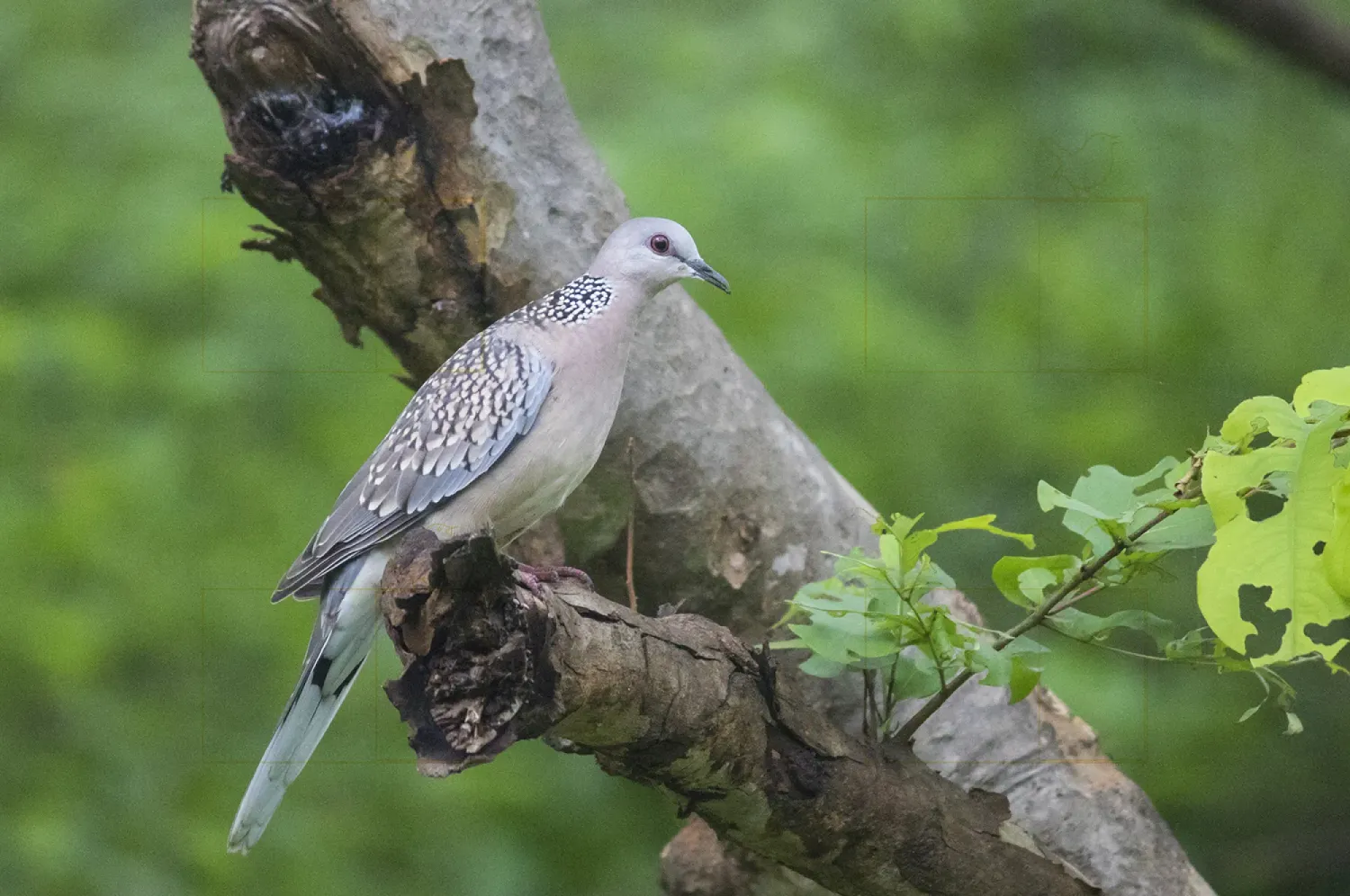
The spotted dove (Spilopelia chinensis) is a small, long-tailed pigeon native to the Indian subcontinent and Southeast Asia. Known for its distinct plumage and gentle cooing, this bird has become a familiar sight in many urban and suburban environments worldwide due to its adaptability.
Physical Appearance
The spotted dove typically measures between 28 and 32 cm in length. It features a buff-brown body with a signature white-spotted black collar on the back and sides of its neck. The tail is long with white tips, and the wing coverts often display light buff spots. Juveniles are generally duller than adults and lack the distinctive neck spots until they reach maturity.
Habitat
This species thrives in a variety of environments, ranging from open woodlands and farmlands to suburban gardens and urban areas. It is frequently found near human habitations and frequents landscapes from the countryside to mountains, though it generally avoids dense, deep forests.
Diet
The diet of the spotted dove consists primarily of seeds and grains. A unique physiological trait of this dove is its ability to drink water by sucking, which means it does not have to tilt its head back to swallow like many other bird species.
Breeding and Nesting
Spotted doves are prolific breeders, often nesting throughout the year in warmer climates. They build relatively flimsy nests made of twigs and grass, typically situated in low trees, bushes, or even on the ledges of buildings. They usually lay two white eggs per clutch.
Behavior
These birds are mostly terrestrial foragers, spending much of their time on the ground. When startled, they take off with an explosive flutter of wings and may glide down to a nearby perch. They are known for their characteristic rhythmic cooing and social interactions in small groups or pairs.
Conservation Status - LC Least Concern
The spotted dove is currently classified as Least Concern by the IUCN. It has an extremely wide distribution range and its population is considered stable, largely due to its successful adaptation to human-altered landscapes.
Interesting Facts
- It is also commonly known as the pearl-necked dove, lace-necked dove, or mountain dove.
- The species was formerly classified under the genus Streptopelia before being moved to Spilopelia.
- The white spots on their neck collar are actually the tips of bifurcated (split) black feathers.
- Spotted doves have been successfully introduced to many regions outside their native range, including Australia, Hawaii, and parts of North America.
- Rare plumage variations, such as leucism, can occasionally be observed in wild populations.
Tips for Birdwatchers
To observe a spotted dove, look in open parklands, gardens, or backyards early in the morning. They are easily identified by their rhythmic "coo-coo-croo" call. Because they are accustomed to humans, they can often be approached more closely than other wild pigeon species, making them excellent subjects for bird photography.
Conclusion
The spotted dove is a resilient and beautiful species that has successfully integrated into human-dominated environments. Whether in a rural village or a bustling city, its gentle presence and unique checkered collar make it a favorite among bird enthusiasts worldwide.
