
Introduction
The Eurasian Tree Sparrow, scientifically classified as Passer montanus, is a charming and widespread member of the Passeridae family. Often overshadowed by its more urban-dwelling cousin, the House Sparrow, the Eurasian Tree Sparrow possesses a distinct elegance and a preference for more rural or semi-open landscapes. These small, social perching birds are characterized by their active demeanor and high-pitched chirps, which resonate through hedgerows and orchards across much of Eurasia and parts of Southeast Asia. Unlike many other sparrow species, the Eurasian Tree Sparrow is monomorphic, meaning males and females share the same striking plumage, which includes a rich chestnut-brown crown and a distinctive black patch on their white cheeks. As highly adaptable birds, they have successfully colonized a variety of environments, though they remain particularly fond of areas with scattered trees, agricultural fields, and traditional parklands. Understanding the life cycle, behaviors, and ecological requirements of this species is essential for bird enthusiasts and conservationists alike, as their populations serve as a vital indicator of the health of our rural ecosystems and farmland biodiversity.
Physical Appearance
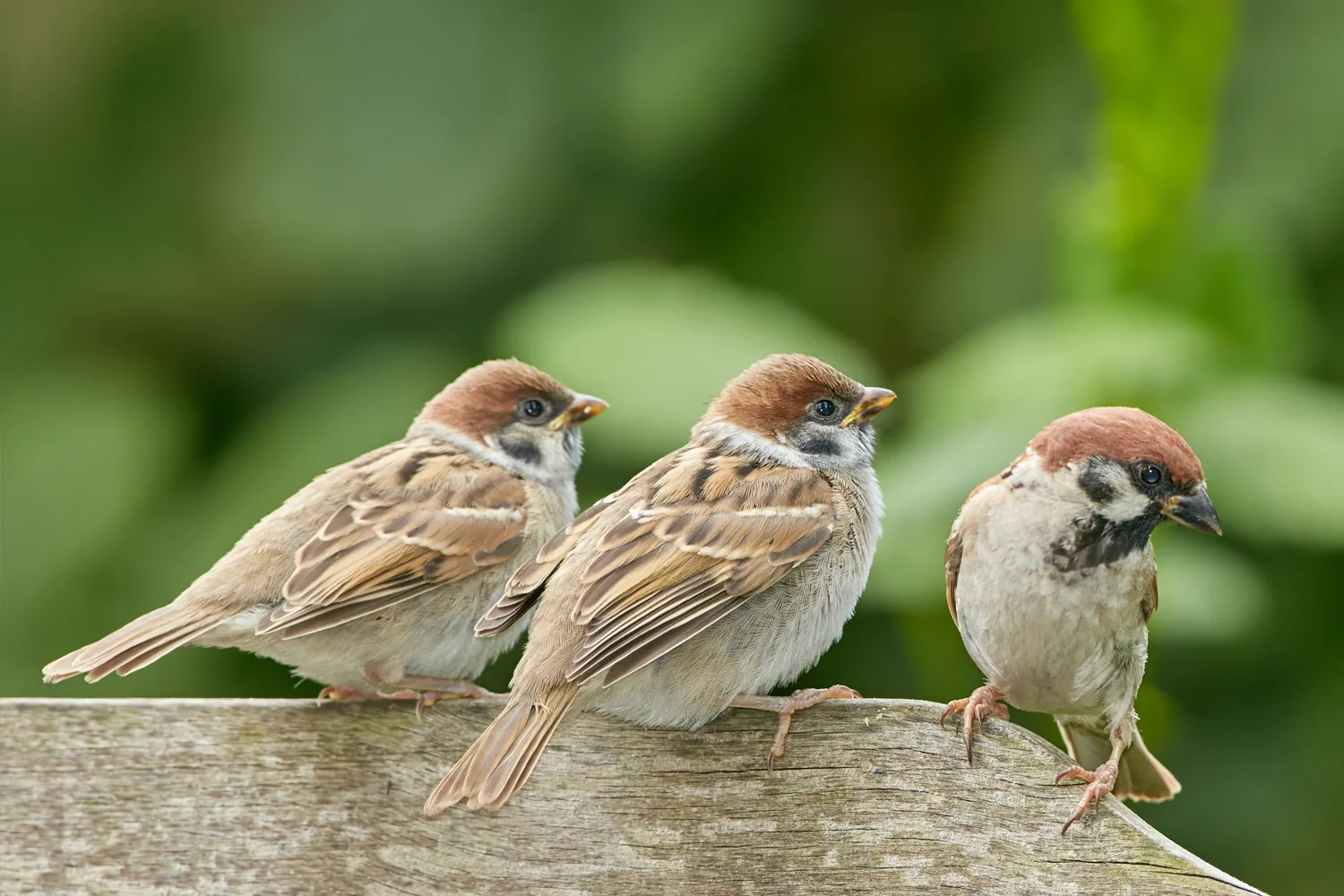
The Eurasian Tree Sparrow is a compact perching bird, measuring between 12 and 14 cm in length. Its plumage is a masterpiece of subtle, yet striking, earth tones. The most prominent feature of this bird is its rich, chocolate-brown crown, which contrasts sharply with the pale white sides of its neck and cheeks. A defining diagnostic mark for identification is the small, crescent-shaped black patch located on each white cheek, which serves as a reliable way to distinguish it from other sparrow species. The bird's back and wings are a mottled blend of brown, buff, and black streaks, providing excellent camouflage against tree bark and dry vegetation. The underparts are a clean, off-white or light gray, giving the bird a sleek appearance. Both sexes look identical, a trait that sets them apart from the sexually dimorphic House Sparrow. Their bills are small, conical, and dark, perfectly adapted for cracking seeds and handling small insects. The overall aesthetic is one of refined beauty, with a stout body shape that is characteristic of the sparrow family, yet with a noticeably more delicate posture when perched on thin branches.
Habitat
Eurasian Tree Sparrows are versatile inhabitants, though they typically avoid dense, dark forests and heavily urbanized city centers. They thrive in semi-open landscapes where there is a mosaic of trees, shrubs, and open ground. Common habitats include agricultural farmland, orchards, hedgerows, and traditional parklands where old, hollow trees are present. Because they are secondary cavity nesters, they rely heavily on the availability of natural tree holes or old woodpecker burrows for shelter and breeding. In recent years, they have also adapted to using human-made structures, such as nest boxes in rural gardens and the crevices of traditional stone buildings. Their preference for these edge habitats allows them to forage efficiently while remaining close to protective cover, which is vital for escaping predators in the open field environments they frequent.
Diet
The diet of the Eurasian Tree Sparrow is primarily granivorous, consisting of a wide variety of seeds and grains. They are particularly fond of weed seeds and waste grain found in agricultural fields, making them a common sight during harvest periods. However, their nutritional requirements change significantly during the breeding season. During the spring and early summer, they shift their focus to animal protein, consuming a large quantity of insects, spiders, and larvae. This shift is crucial for the development of their chicks, as the high protein content is necessary for rapid growth. They are agile foragers, often seen hopping along the ground in small, social groups or gleaning insects from the leaves of trees and shrubs, showcasing their adaptability to different food sources throughout the year.
Breeding and Nesting
Breeding for the Eurasian Tree Sparrow is a communal yet organized affair. As cavity nesters, they exhibit a strong preference for natural tree holes, although they will readily occupy man-made birdhouses. They are known for being loosely colonial, often nesting in close proximity to other pairs. The nest itself is a messy, globular structure composed of dry grass, straw, and feathers, usually tucked deep within a cavity. Both the male and female work together to build the nest and feed the brood. A typical clutch consists of four to six eggs, which are incubated by both parents for approximately two weeks. The fledglings are highly dependent on their parents for several weeks after leaving the nest. Interestingly, these birds are known for their high reproductive potential, often producing two or three broods per season, provided the weather conditions are favorable and food supplies are abundant.
Behavior
Eurasian Tree Sparrows are highly social and gregarious birds, often found in small flocks, especially outside of the breeding season. They are active, restless, and constantly on the move, frequently seen hopping on the ground or darting between branches. Their communication consists of a variety of chirps and trills, which are generally more musical and higher-pitched than those of the House Sparrow. They are not particularly shy but tend to be more elusive, often retreating into thick vegetation when threatened. During the winter, they often join mixed-species flocks with other small birds, which helps them find food more efficiently and provides better protection against predators. Their constant chatter and energetic movements make them a lively addition to any rural landscape or garden.
Conservation Status - LC Least Concern
The Eurasian Tree Sparrow is currently listed as Least Concern by the IUCN, as it has a massive global range and a stable population across many regions. However, this status masks significant regional declines observed over the past few decades, particularly in Western Europe. These localized declines have been largely attributed to changes in agricultural practices, such as the increased use of pesticides, which reduce insect availability, and the loss of nesting sites due to the removal of old, hollow trees. Conservation efforts now focus on habitat restoration, the installation of specialized nest boxes, and the promotion of wildlife-friendly farming practices to ensure these birds continue to thrive in their traditional rural habitats.
Interesting Facts
- They are one of the few sparrow species where males and females look identical.
- Unlike the House Sparrow, they are not highly dependent on urban environments.
- They are known to be monogamous and often pair for life.
- The black ear patch is a key feature used to identify them from other sparrow species.
- They often use nest boxes as communal roosting sites during the cold winter months.
- They have been introduced to several parts of the world, including Australia and parts of North America.
- Their diet is highly seasonal, shifting from seeds in winter to insects during the summer.
- They are considered a symbol of good luck in some Asian cultures.
Tips for Birdwatchers
For birdwatchers hoping to spot the Eurasian Tree Sparrow, the best approach is to focus on rural areas, particularly those with a mix of hedges, orchards, and open fields. Early morning is the most productive time, as the birds are most active and vocal. Look for their distinct black cheek patches using binoculars, as this is the most reliable way to distinguish them from the more common House Sparrow. Setting up a bird feeder with high-quality seeds in a rural garden is an excellent way to attract them. If you provide a nesting box, ensure it has a small entrance hole, as they prefer tight, secure spaces. Patience is key, as they can be quite flighty; remaining still and quiet will allow you to observe their fascinating social behaviors and energetic interactions within their flock.
Conclusion
In conclusion, the Eurasian Tree Sparrow (Passer montanus) is a remarkable bird that bridges the gap between rural landscapes and human-influenced environments. Its distinctive appearance, social nature, and adaptability make it a subject of great interest for ornithologists and casual birdwatchers alike. While their population remains stable on a global scale, the observed declines in certain regions serve as a poignant reminder of the fragile balance between human land use and wildlife sustainability. By understanding their needs—such as the requirement for cavity-based nesting sites and a diverse, insect-rich diet—we can play a role in their preservation. Whether you are an experienced birder or a backyard enthusiast, observing these lively, chestnut-crowned birds provides a deeper connection to the natural world. Protecting the habitats they rely on, such as hedgerows and traditional farmland, is not only beneficial for the Eurasian Tree Sparrow but also for the wider ecosystem, ensuring that these charismatic birds continue to chirp and forage in our countryside for generations to come. Their presence is a testament to the resilience of nature and the importance of preserving the diverse, semi-open landscapes that so many species call home.
