
Introduction
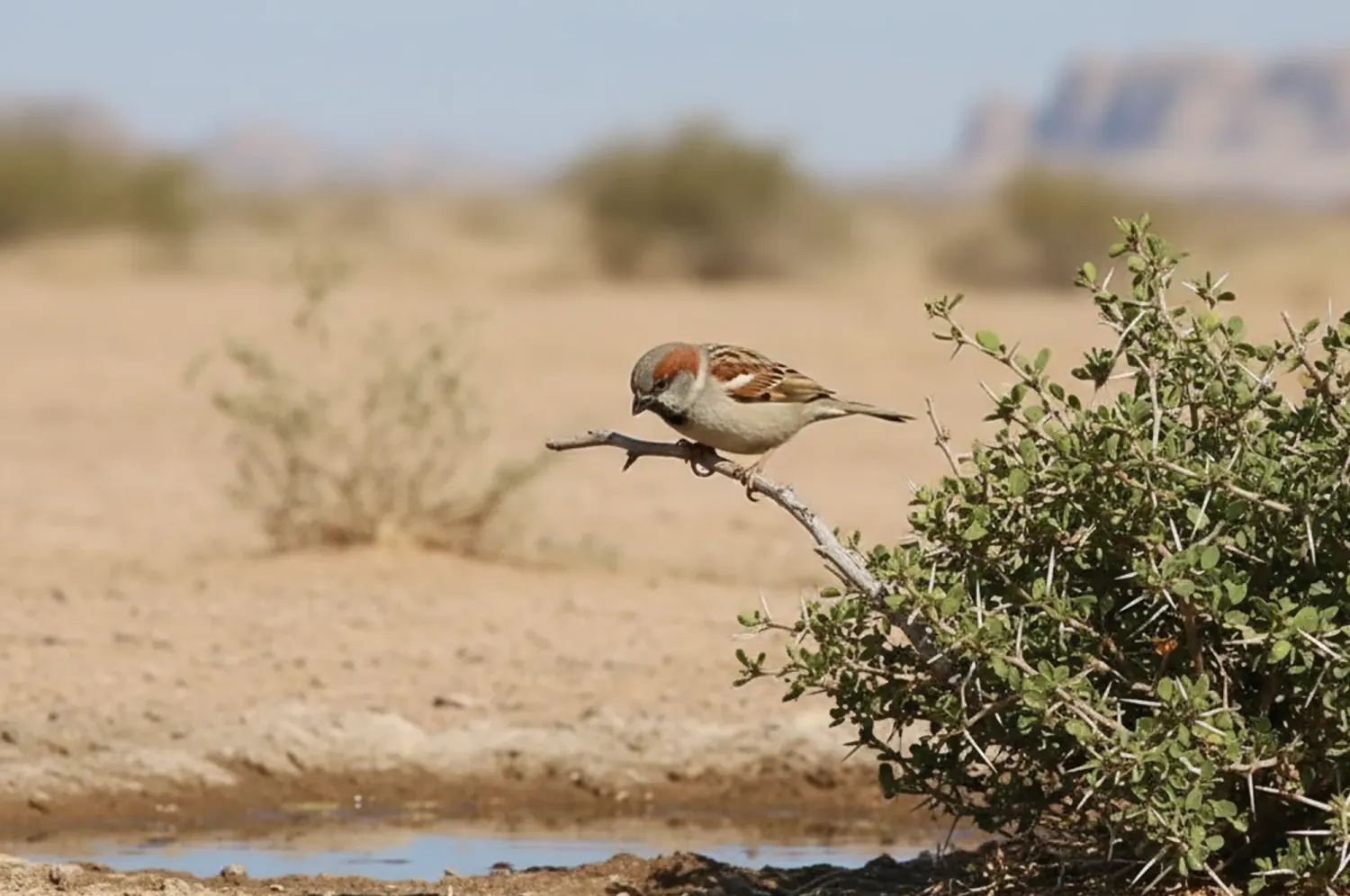
The Sind sparrow (Passer pyrrhonotus), also known as the jungle sparrow or rufous-backed sparrow, is a small passerine bird belonging to the sparrow family, Passeridae. Found predominantly in the Indus valley region of South Asia, this species shares a close resemblance to the common house sparrow but possesses distinct characteristics that set it apart.
Physical Appearance
Measuring approximately 13 cm in length, the Sind sparrow is noticeably smaller than the related house sparrow. The species exhibits sexual dimorphism, where males display brighter plumage featuring a grey crown and a distinctive chestnut stripe running down the head behind the eye. Females and younger birds have a darker head compared to other sparrow species, with plumage that is generally more subdued.
Habitat
The Sind sparrow has a specialized habitat preference, primarily occurring within the Indus valley of Pakistan and its tributaries in the Punjab region. Its distribution extends to the Indus Delta, parts of western India including Delhi, and eastern Iran. It thrives in riverine and wetland habitats characterized by thorny scrub and tall grass. During winter, some populations disperse to drier regions or make short-distance migrations.
Diet
The diet of the Sind sparrow consists mainly of seeds, specifically those from grasses and small herbs. In addition to its herbivorous preferences, it also consumes invertebrate food, such as the caterpillars of Lepidoptera, to supplement its nutritional needs, especially during the breeding season.
Breeding and Nesting
Breeding typically occurs in small groups. The Sind sparrow builds untidy globular nests made of grass and other plant materials, lined with softer textures. These nests are usually placed in the branches of thorny trees. A breeding pair usually raises two clutches per season, with each clutch containing between three to five young. Both parents share the responsibilities of nest building and chick rearing.
Behavior
This species is highly social, often seen foraging in small groups near the ground. Its vocalizations are characterized by soft chirping calls, which males extend into longer, more complex songs during the breeding season. While they are generally resident birds, they are known to make short-distance movements during the non-breeding season to find food.
Conservation Status - LC Least Concern
The Sind sparrow is currently assessed as Least Concern on the IUCN Red List. It is considered fairly common within its restricted breeding range, and its population is even expanding in certain areas. Currently, there are no major known threats to the survival of the species.
Interesting Facts
- The Sind sparrow was first discovered around 1840 but remarkably went undetected for several decades afterward.
- Although it looks very similar to the house sparrow, recent evolutionary studies suggest its closest relatives may actually lie elsewhere.
- A possible sighting in the United Arab Emirates in 2000 suggests the species might occasionally undertake much longer migrations than previously thought.
- It is one of the few sparrow species specifically adapted to the unique riverine ecosystem of the Indus valley.
Tips for Birdwatchers
To spot a Sind sparrow, focus your search on wetland margins and thorny thickets along the Indus River. Because they are smaller and quieter than house sparrows, pay close attention to the chestnut eye-stripe in males and the darker head profile in females. Early morning is the best time to hear their soft chirping songs.
Conclusion
The Sind sparrow is a fascinating example of regional avian specialization. Its survival is closely tied to the health of the Indus valley ecosystem. As a species that has successfully expanded its range into parts of India and Iran, it remains a resilient and charming member of the Passeridae family.
