
Introduction
The Lesser Frigatebird (Fregata ariel) is the smallest member of the Fregatidae family. This remarkable seabird is widely recognized for its incredible aerial agility and its presence across tropical and subtropical waters in the Indian, Pacific, and Atlantic Oceans.
Physical Appearance
This species is a lightly built seabird with a length ranging from 66 to 81 cm and a wingspan of 155 to 193 cm. Key features include:
- Males: Primarily brownish-black with a striking red gular sac and white patches on the flanks that extend as spurs under the wings.
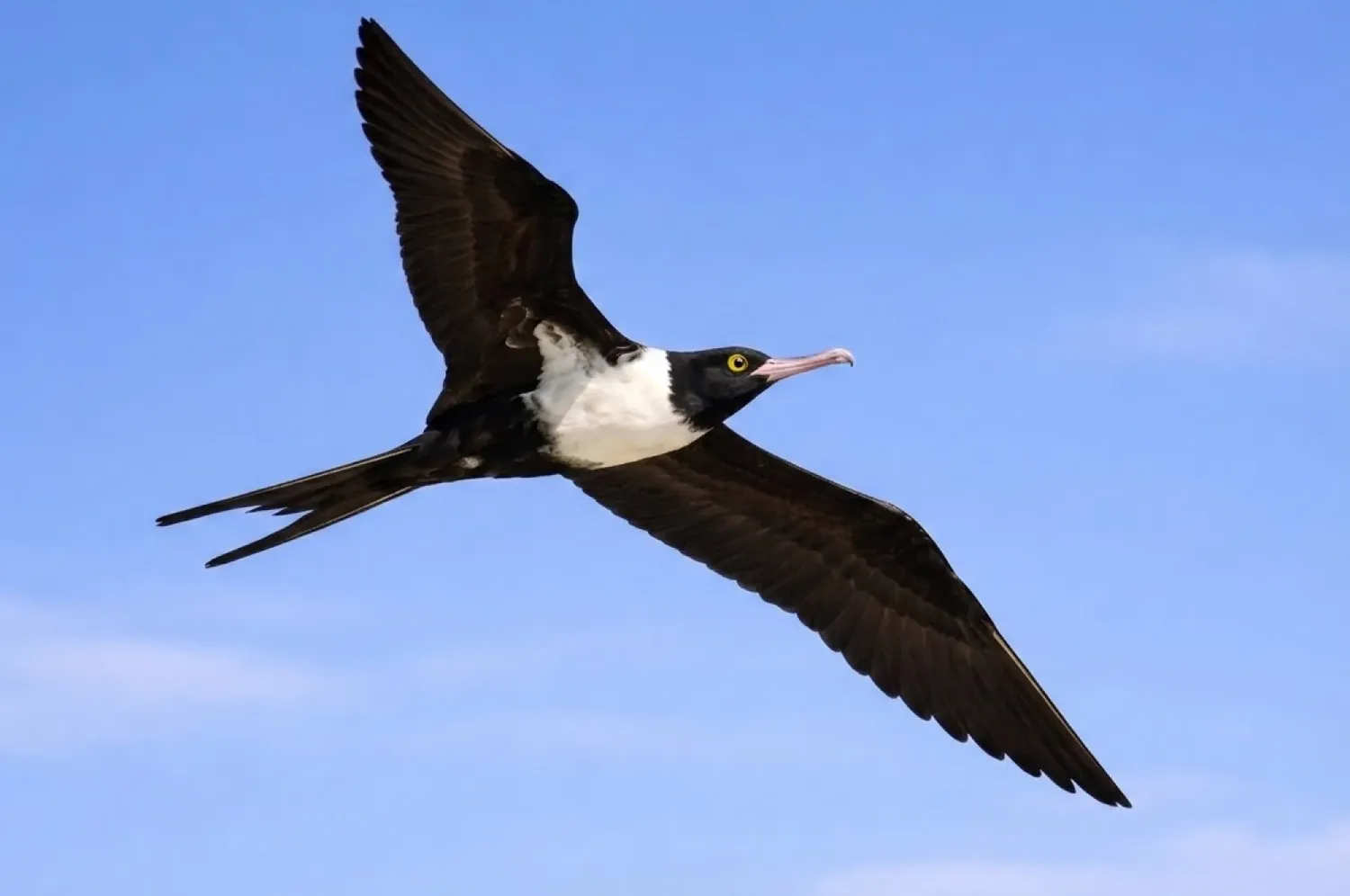
- Females: Slightly larger and heavier than males, featuring a black head, white collar, and white breast.
- Juveniles: Identified by the presence of white spurs in the "armpit" area.
- Build: Extremely light skeleton with long, narrow wings and a deeply forked tail.
Habitat
The Lesser Frigatebird inhabits tropical and subtropical waters. They are most commonly found breeding on remote islands, utilizing low vegetation such as small bushes and mangroves, or even nesting directly on the ground. While they forage in the open ocean, they are frequently seen off the coasts of Brazil and throughout the Indian and Pacific Oceans.
Diet
The diet of the Lesser Frigatebird mainly consists of squid and flying fish scooped up from the surface of the sea. They are also famous for kleptoparasitism, a behavior where they harass other birds like boobies to force them to regurgitate their food, which the frigatebird then catches in mid-air.
Breeding and Nesting
Breeding occurs on remote islands in small bushes or mangroves. The male performs an elaborate courtship display by inflating his large red throat sac, spreading his wings, and using a variety of calls and bill-rattling to attract a mate.
Behavior
True masters of the air, Lesser Frigatebirds are built almost entirely for flight. They rarely swim and cannot walk, though they can climb through the bushes where they nest. They spend the majority of their time soaring over the ocean, using their light frames to stay aloft for long periods with minimal effort.
Conservation Status - LC Least Concern
Like many seabirds, the Lesser Frigatebird is threatened by habitat destruction, human disturbance at nesting sites, and persecution for food. Currently, three subspecies are recognized across their global range.
Interesting Facts
- It is the smallest species of frigatebird in the world.
- The species was formerly placed in the genus Apagen because of its diminutive size.
- Despite being seabirds, their feathers are not waterproof, so they avoid landing on the water.
- The male's white flank patch is a key identifier, extending onto the underwing as a spur.
Tips for Birdwatchers
When birdwatching in tropical regions, look for the deeply forked tail and the characteristic white "spurs" in the armpits to distinguish the Lesser Frigatebird from its larger relatives. They are best spotted near breeding colonies on remote islands or following schools of predatory fish that drive flying fish to the surface.
Conclusion
The Lesser Frigatebird is a fascinating aerial specialist of the tropical seas. From its dramatic red gular sac to its "pirate" feeding habits, it remains a vital and striking component of marine ecosystems across the globe.