
Introduction
The Northern Pintail (Anas acuta) is widely regarded as one of the most elegant waterfowl species in the world. Known for its slender profile and graceful movements, this dabbling duck is a favorite among bird enthusiasts and hunters alike across the Northern Hemisphere.
Physical Appearance
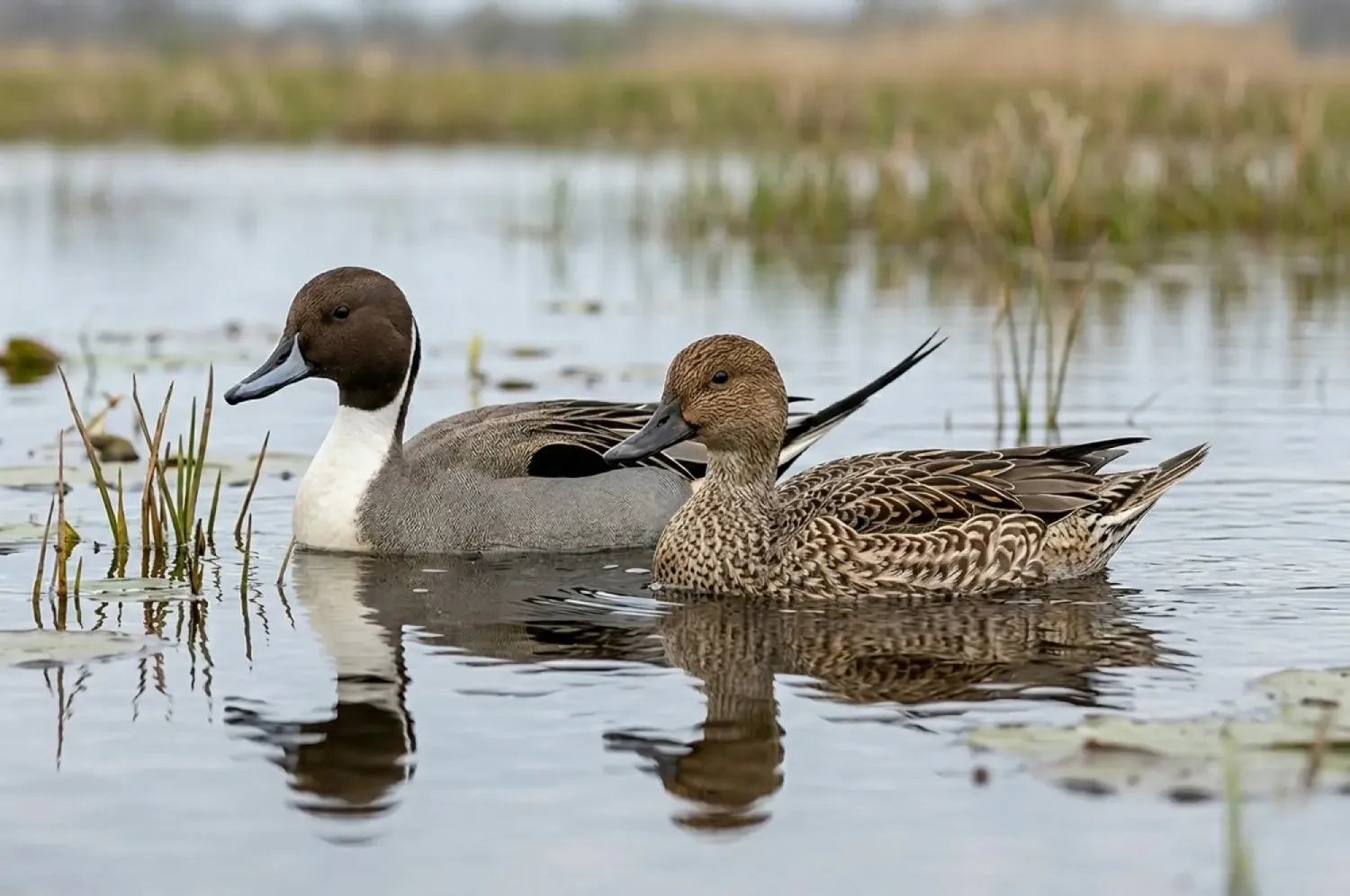
Measuring between 51-56 cm in length, the Northern Pintail is characterized by its long, thin neck and pointed tail. Males exhibit a chocolate-brown head, a white breast, and a distinctive white stripe extending up the side of the neck. Females are more mottled brown but retain the species' signature slender silhouette and gray bill.
Habitat
Northern Pintails thrive in wide-open wetlands, including prairies, tundra, and coastal marshes. During the breeding season, they prefer shallow seasonal wetlands. In winter, they are commonly found in estuaries, brackish lagoons, and flooded agricultural fields.
Diet
As dabbling ducks, their diet is diverse and changes with the seasons. They primarily consume seeds, aquatic plants, and grains. During the breeding season, they supplement their intake with protein-rich insects, mollusks, and crustaceans found in shallow waters.
Breeding and Nesting
Nesting typically occurs on the ground in open areas with low vegetation, often quite far from the nearest water source. The female scrapes a shallow depression and lines it with down. They usually lay a clutch of 7 to 9 eggs, which are incubated for about 22 to 24 days.
Behavior
These birds are highly migratory, traveling long distances between their northern breeding grounds and southern wintering areas. They are social birds, often forming large flocks outside of the breeding season. They feed by tipping forward in the water to reach submerged vegetation rather than diving.
Conservation Status - LC Least Concern
The Northern Pintail is currently listed as Least Concern by the IUCN. However, their populations have seen significant fluctuations due to habitat loss in the prairie pothole regions and changes in agricultural practices. Conservation efforts focus on wetland restoration and protection.
Interesting Facts
- The Northern Pintail is one of the fastest ducks, capable of reaching flight speeds of up to 48 mph.
- The name 'Pintail' comes from the male's long, pointed central tail feathers.
- They are known to migrate as far south as Central America and even sub-Saharan Africa.
- Because of their slender build, they are often referred to as the 'greyhounds of the air'.
Tips for Birdwatchers
- Look for them in shallow wetlands and flooded fields during the winter months.
- Use spotting scopes to identify the male's distinct white neck stripe from a distance.
- Listen for the male's soft, two-toned whistle, which is very different from a typical mallard quack.
- Early morning or late afternoon are the best times to see them feeding.
Conclusion
The Northern Pintail remains an iconic symbol of wetland health and avian grace. Whether you are an experienced birder or a casual observer, spotting the sleek silhouette of an Anas acuta is always a highlight of any birding excursion.