
Introduction
The Indian white-eye (Zosterops palpebrosus), formerly known as the Oriental white-eye, is a small and energetic passerine bird. A resident breeder across the Indian subcontinent, this bird is a member of the white-eye family and is highly recognized for its social nature and distinctive facial features.
Physical Appearance
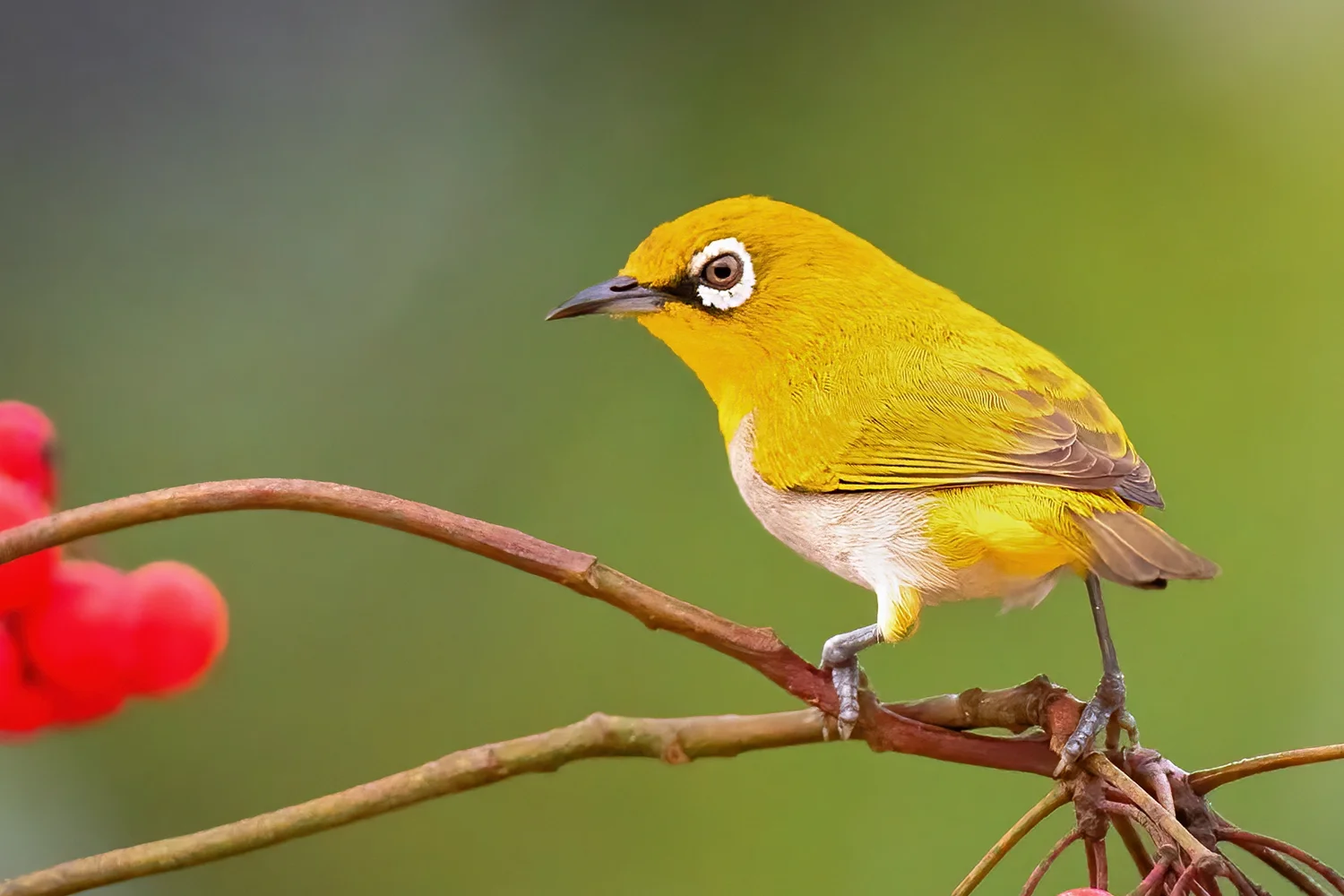
This bird is small, measuring between 8 to 10 cm in length. It is easily identified by its distinctive white eye-ring and yellowish-olive upperparts. It features a yellow throat and vent, while the belly is typically a whitish-grey. Both sexes appear similar, maintaining a vibrant yellowish-green plumage that helps them blend into foliage.
Habitat
The Indian white-eye is found in a variety of environments, including open broadleaved forests, groves, gardens, orchards, and mangroves. In Southern India, they are particularly common in cardamom plantations. They are highly arboreal, spending most of their time in the canopy.
Diet
Their diet is omnivorous and consists of:
- Insects: Small insects and thrips found on leaves and flowers.
- Flower Nectar: They frequently visit flowers, acting as pollinators.
- Berries: Various small fruits and berries.
Breeding and Nesting
The breeding season spans from February to September, with a peak in April. They construct a compact cup nest that hangs like a hammock from the fork of a branch. Using materials like cobwebs, lichens, and plant fibers, the nest is built in about four days. A typical clutch consists of two pale blue eggs, which hatch in approximately 10 days.
Behavior
These birds are highly sociable, often forming large flocks that only disperse during the breeding season. They communicate frequently with a soft, nasal "cheer" call. They are known for their arboreal lifestyle, rarely descending to the ground, and have been observed bathing in dew accumulated on leaves.
Conservation Status - LC Least Concern
The Indian white-eye is a widespread species with a stable population across its range. While it faces natural predators like bats and kingfishers, it is not currently considered globally threatened, though some island subspecies require careful monitoring due to their limited range.
Interesting Facts
- They are known to steal nesting material from the nests of other bird species.
- The forehead of the bird often gets stained with pollen, which can lead to mistaken identification.
- In the 1980s, a feral population established itself in California, requiring intervention to manage the species.
- There have been recorded cases of interspecific feeding, where white-eyes were seen feeding the chicks of a paradise flycatcher.
Tips for Birdwatchers
To spot an Indian white-eye, look for movement in the upper canopy of flowering trees or orchards. Listen for their constant nasal contact calls, as they are rarely silent while foraging. Since they move in flocks, seeing one usually means there are many more nearby.
Conclusion
The Indian white-eye is a fascinating species that adds color and life to the woodlands of Asia. From its unique white eye-ring to its role as a pollinator, this small bird is a vital part of its ecosystem and a delight for birdwatchers to observe in its natural habitat.
