
Introduction
The Osprey (Pandion haliaetus), often referred to as the sea hawk or fish eagle, stands as one of the most remarkable and widespread birds of prey in the world. Unlike many other raptors, the Osprey is a specialized piscivore, meaning its entire existence is intricately linked to aquatic environments. Found on every continent except Antarctica, this magnificent bird has adapted perfectly to hunting in both freshwater and saltwater ecosystems. Its unique physiology allows it to thrive where other birds of prey would struggle, making it a master of the air and the water. As a cosmopolitan species, the Osprey serves as an important indicator of environmental health, particularly regarding water quality and fish populations. Their dramatic plunge-diving behavior, where they dive feet-first into the water to snatch unsuspecting fish, is a spectacle that draws birdwatchers and nature enthusiasts from across the globe. Understanding the Osprey is not just about appreciating a single species; it is about recognizing the complex balance of our global aquatic habitats.
Physical Appearance
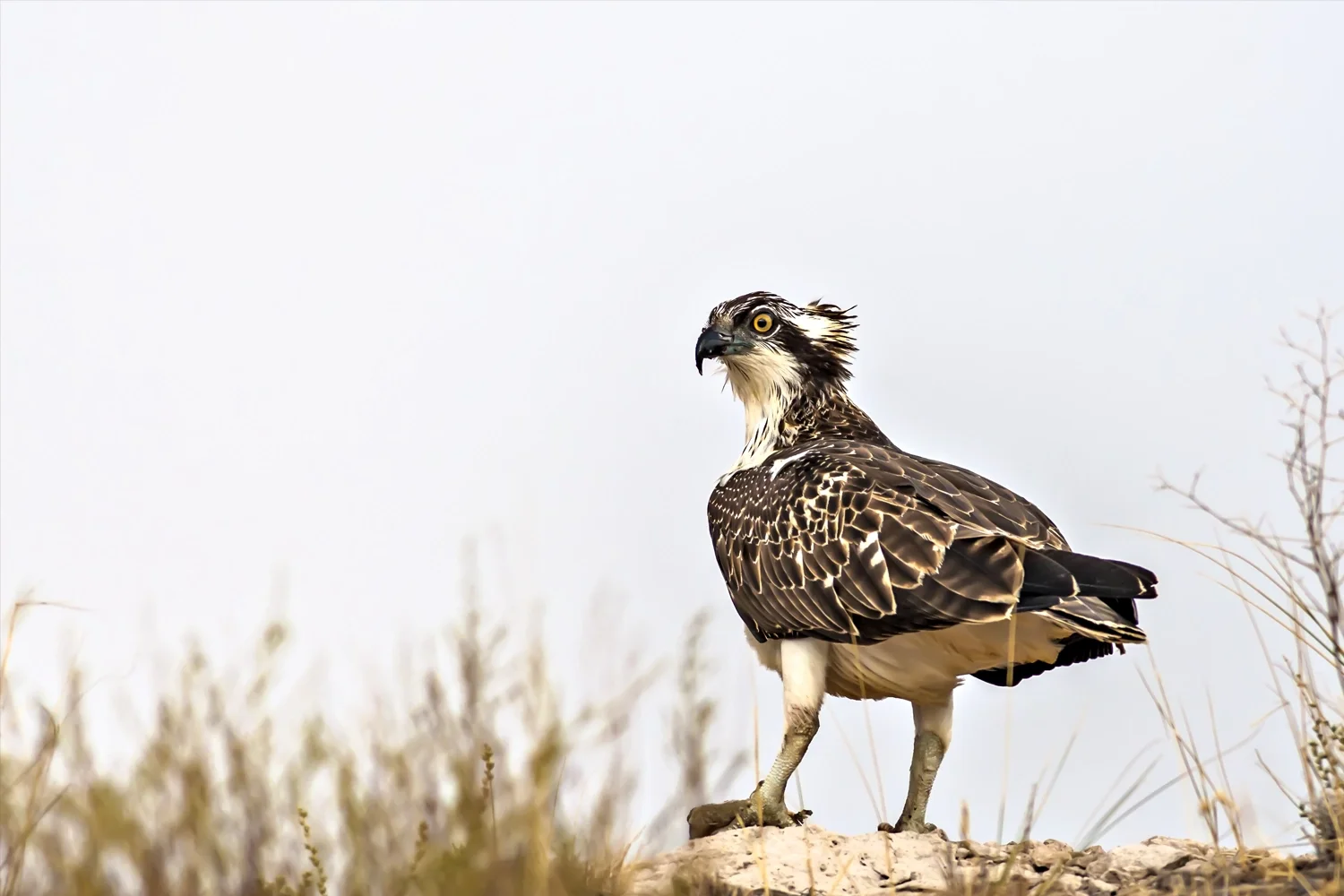
The Osprey is a medium-to-large raptor, typically measuring between 50 and 66 cm in length with a wingspan that can reach up to 1.8 meters. Its physical appearance is striking and highly functional for its lifestyle. The plumage is dominated by a deep brown coloration on the upperparts, including the back, wings, and a distinctive eye stripe, contrasted sharply by a clean white underside, chest, and head. This countershading is a classic example of camouflage, helping the bird remain inconspicuous to fish below while blending with the sky from above. One of the most notable features of the Osprey is its reversible outer toe, which allows it to grip slippery prey with two toes in front and two behind, a specialized adaptation known as zygodactyly. Additionally, they possess dense, oily feathers that provide excellent water repellency, and their nostrils are specially designed to close when submerged. Their sharp, curved talons and a hooked beak are perfectly evolved for securing and consuming fish, ensuring they remain the apex hunters of the waterways.
Habitat
Ospreys are found globally, inhabiting a wide variety of locations that provide access to shallow, abundant water sources. They are most commonly spotted near coastlines, lakes, rivers, reservoirs, and estuaries. Their habitat selection is dictated primarily by the availability of fish and the presence of suitable nesting sites. Ospreys are particularly known for their resilience and ability to adapt to human-altered environments, frequently nesting on man-made structures like utility poles, channel markers, and purpose-built nesting platforms. While they prefer proximity to large bodies of water, they are migratory in many parts of their range, traveling thousands of miles between their breeding grounds and their wintering spots, often following predictable migratory corridors along coastlines and mountain ranges.
Diet
The diet of the Osprey is almost exclusively composed of live fish, which accounts for over 99% of their nutritional intake. They are highly skilled hunters, utilizing keen eyesight to spot fish from altitudes of up to 40 meters. Once a target is identified, the Osprey performs a dramatic, high-speed dive, submerging its feet into the water to snatch the prey. They are opportunistic, feeding on various species such as trout, perch, pike, and mullet, depending on the local environment. Occasionally, when fish are scarce, they may supplement their diet with small mammals, birds, or amphibians, though these instances are rare. Their ability to successfully hunt in murky or turbulent water makes them highly efficient predators in diverse aquatic settings.
Breeding and Nesting
Ospreys are famous for their massive, stick-built nests, often referred to as eyries. These structures are constructed at the tops of dead trees, rocky cliffs, or artificial platforms and are frequently reused by the same pair for many years. Each breeding season, the pair adds new material, causing the nest to grow significantly in size over time. A typical clutch consists of two to four eggs, which are incubated by both parents for approximately 35 to 40 days. Once the chicks hatch, the male takes on the primary responsibility of hunting to provide food for the female and the growing young. The fledging process takes about eight to ten weeks, after which the young Ospreys begin to master the art of fishing and prepare for their first migration, showcasing the strong parental investment typical of this species.
Behavior
Behaviorally, Ospreys are solitary birds for most of the year, although they are highly social during the breeding season. They are known for their distinct vocalizations, consisting of a series of sharp whistles used for communication, especially when defending their nest or during courtship displays. Ospreys are also fiercely territorial, often seen chasing away intruders or other raptors that come too close to their nesting sites. Their flight patterns are graceful and powerful, often characterized by a distinct 'M' shape when viewed from below. During migration, they demonstrate incredible navigational abilities, often returning to the exact same nesting site year after year, demonstrating high levels of site fidelity and spatial memory.
Conservation Status - LC Least Concern
The conservation status of the Osprey is currently listed as Least Concern by the IUCN. However, this was not always the case; the species suffered significant population declines in the mid-20th century, primarily due to the widespread use of pesticides like DDT, which caused eggshell thinning. Following the ban of these harmful chemicals, Osprey populations have made a remarkable recovery in many parts of the world. Continued conservation efforts, such as the installation of nesting platforms and the protection of water quality, remain vital to ensure that these majestic raptors continue to thrive in our changing environment.
Interesting Facts
- Ospreys are the only raptors that dive into water to catch fish.
- They have a reversible outer toe to help them grip slippery fish.
- Ospreys possess nostrils that can close to keep water out during a dive.
- Their nests can weigh several hundred pounds and be over five feet wide.
- Some Ospreys migrate over 3,000 miles from North America to South America.
- The Osprey is one of the most widely distributed birds of prey in the world.
Tips for Birdwatchers
For birdwatchers hoping to spot an Osprey, the best approach is to visit large, open bodies of water during the spring and summer months. Bring a high-quality pair of binoculars or a spotting scope, as these birds are often perched high up on dead trees or utility poles. Look for their distinct white heads and brown eye patches, which are visible even from a distance. If you are near a known breeding area, observe from a respectful distance to avoid disturbing the nesting pair. Early morning is the best time for observation, as this is when the birds are most active in their hunting efforts, giving you the best chance to witness their spectacular diving behavior.
Conclusion
In conclusion, the Osprey (Pandion haliaetus) is a truly fascinating bird that highlights the incredible adaptability of nature. From its specialized physical features, such as its reversible toes and water-repellent plumage, to its complex hunting and nesting behaviors, every aspect of the Osprey's life is perfectly tailored to its aquatic environment. As a species that has successfully bounced back from the brink of decline due to human intervention, it serves as a powerful symbol of successful conservation. Whether you are an avid birdwatcher looking to capture the perfect shot of a diving raptor, or simply a nature enthusiast interested in wildlife biology, the Osprey offers endless opportunities for study and appreciation. Protecting the waterways and ecosystems these birds depend on is essential for their continued success. By learning about their habits and preserving their habitats, we ensure that future generations will have the privilege of seeing these masterful hunters soaring above our lakes and coastlines, reminding us of the interconnectedness of all life on Earth.