
Introduction
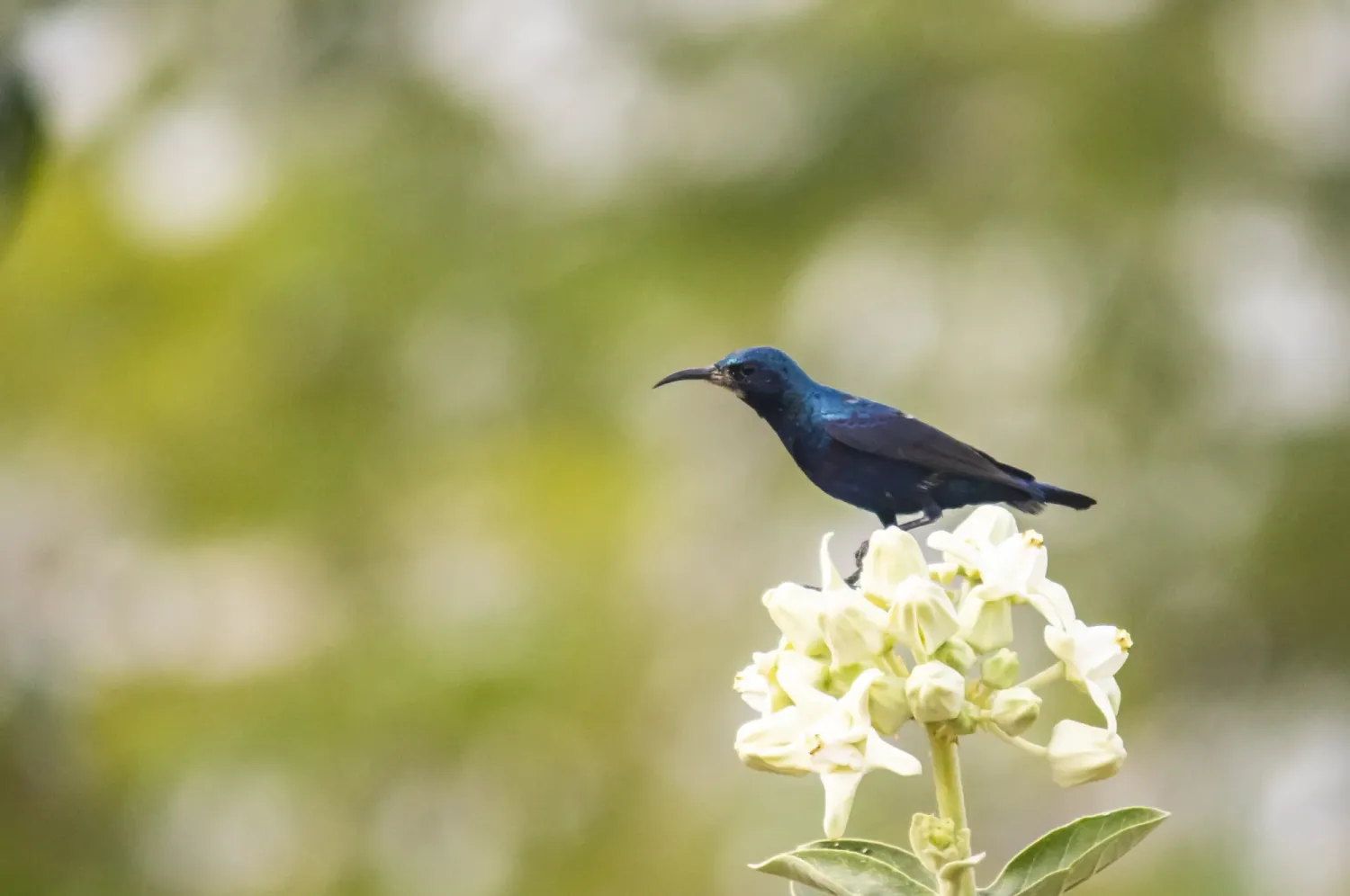
The purple sunbird (Cinnyris asiaticus) is a small, vibrant member of the sunbird family. Renowned for its stunning metallic plumage and energetic flight, this bird is a common yet captivating sight across various landscapes, from lush gardens to dense forests.
Physical Appearance
Measuring approximately 10 cm in length, the purple sunbird exhibits striking sexual dimorphism. Breeding males are characterized by a metallic blue and purple sheen that can appear all black in low light, accented with maroon feathers on the breast. In contrast, females are olive above and yellowish below. Non-breeding males resemble females but can be identified by a blue-black band running down the throat and chest.
Habitat
These birds are primarily resident and are widely distributed from sub-Saharan tropical Africa and the Arabian Peninsula through the Indian subcontinent into Southeast Asia. They thrive in gardens, cultivated areas, and forests. While mostly non-migratory, some populations engage in short-distance or altitudinal movements to follow the flowering seasons of their favorite plants.
Diet
The purple sunbird's diet consists mainly of nectar. While they can hover like hummingbirds, they generally prefer to perch while feeding. They are also known to consume:
- Small berries and fruits, including cultivated grapes.
- Insects and spiders, which are crucial protein sources when raising their young.
- Nectar from specific plants like Butea monosperma and Acacia.
Breeding and Nesting
The primary breeding season typically occurs between January and June. The female is responsible for building the nest, which is a pouch made of cobwebs, vegetation strips, and bark. These nests are often suspended from low branches or even man-made objects. A typical clutch consists of two eggs, which the female incubates for 15 to 17 days. Both parents participate in feeding the chicks once they hatch.
Behavior
Purple sunbirds are vociferous and active. They are known for their rapid, rattling songs and metallic call notes like "chwit" or "chwing." They are brave enough to join others in mobbing predators like owls. During foraging, they frequently flick their wings and are essential pollinators for many tropical plant species.
Conservation Status - LC Least Concern
While not formally listed with a specific threat level in the provided data, the purple sunbird is a widespread and adaptable species often found in human-altered landscapes, suggesting a stable population status.
Interesting Facts
- In captivity, sunbirds have been known to live for nearly 22 years.
- Males perform elaborate courtship displays by fanning their tails and fluttering open wings to show off pectoral tufts.
- They sometimes practice "nectar robbing" by slitting the base of a flower to reach the nectar without pollinating it.
- In certain regions, they modify social spider webs to use as a foundation for their own nests.
Tips for Birdwatchers
To spot a purple sunbird, look for brightly colored, tubular flowers in gardens or parks. Because of their iridescence, their true colors are best seen in direct sunlight. Listen for their metallic, ringing calls, which often give away their location before they are seen.
Conclusion
The purple sunbird is a remarkable avian species that brings both beauty and ecological value to its environment. As a key pollinator and a delight for birdwatchers, the Cinnyris asiaticus remains one of the most beloved small birds across the Afro-Asian region.