
Introduction
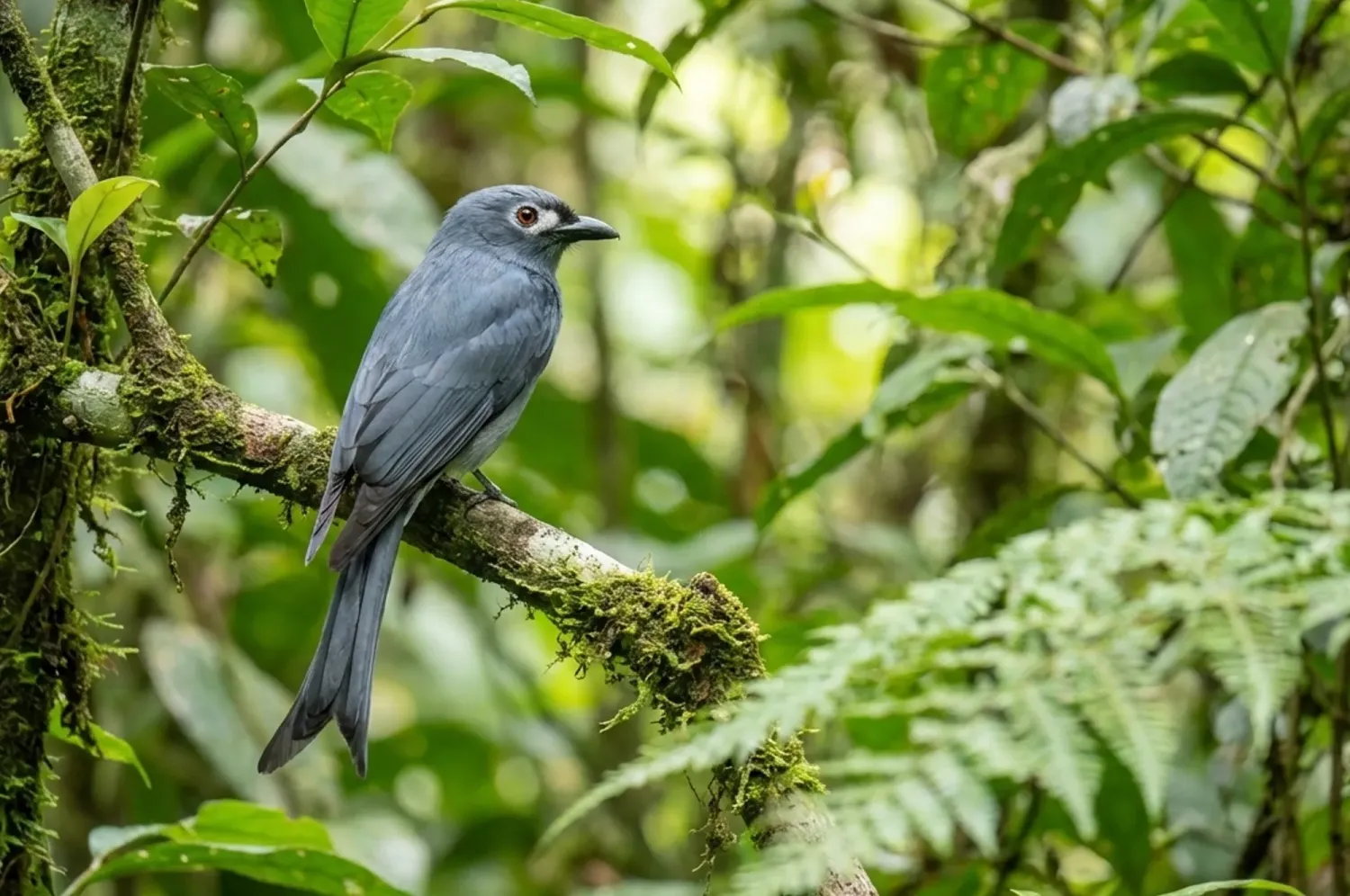
The Ashy Drongo (Dicrurus leucophaeus) is a fascinating member of the Dicruridae family. Widely distributed across South and Southeast Asia, this bird is known for its elegant grey plumage and exceptional aerial skills. As a highly adaptable species, it thrives in various environments ranging from dense forests to rural gardens.
Physical Appearance
The Ashy Drongo typically measures between 29-29 cm in length. Adults are characterized by their dark grey plumage and a distinctive long, deeply forked tail. Depending on the subspecies, some may feature white patches around the eyes or varying shades of grey. Their eyes are often a striking crimson, and they possess short legs that support an upright perching posture. Juveniles are generally a duller brownish-grey compared to the sleek appearance of adults.
Habitat
These birds exhibit low forest dependence and can be found at altitudes ranging from 0 to 2400 meters. Their habitats include:
- Natural Ecosystems: Tropical and subtropical moist montane forests, foothill forests, temperate forests, lowland forests, dry savanna, mangroves, and shrublands.
- Artificial Ecosystems: Rural gardens, plantations, agricultural lands, and heavily degraded forests.
Diet
The diet of the Ashy Drongo is primarily insectivorous. They are known to consume:
- Flying insects such as dragonflies, moths, beetles, and winged termites.
- Grasshoppers, crickets, cicadas, and locusts.
- Insect larvae, ants, and occasionally nectar.
- Small vertebrates including lizards, small mammals, and even the eggs or hatchlings of other birds.
They typically hunt by perching in prominent spots and making aerial sallies to capture prey mid-air, though they also glean insects from foliage and tree trunks.
Breeding and Nesting
The breeding season for the Ashy Drongo usually occurs from May to June. They build a loose cup nest high in a tree to protect their young. A typical clutch consists of three to four eggs, which are often reddish or brown in color.
Behavior
Ashy Dringos are known for their solitary nature or appearing in pairs, though they may form small flocks during migration. They are highly territorial and sit very upright while perched prominently on high branches. One of their most remarkable behaviors is their vocal mimicry; they can imitate the calls of other birds, such as the whistling notes of a common iora, and produce nasal, twangy calls described as drangh gip.
Conservation Status - LC Least Concern
While not specifically detailed in the provided data, the Ashy Drongo is widely distributed across Asia and occupies a variety of habitats, including human-modified landscapes, suggesting a stable population in many regions.
Interesting Facts
- The Ashy Drongo is a master of mimicry, often fooling other birds and birdwatchers with its imitations.
- Some subspecies, like leucogenis, possess distinct white eye-patches that contrast sharply with their grey feathers.
- Despite their slender build, they are aggressive defenders of their nesting territory.
- The subspecies longicaudatus in India is so dark it is frequently mistaken for the Black Drongo.
Tips for Birdwatchers
To spot an Ashy Drongo, look toward the highest branches of trees in open forests or gardens. Listen for a variety of complex calls and mimicry. Because they prefer prominent perches for hunting, they are often visible against the sky. Keep an eye out for their deeply forked tail, which is a key identifying feature during flight.
Conclusion
The Ashy Drongo is a resilient and versatile bird that adds a touch of elegance to the Asian avian landscape. From its sophisticated grey plumage to its impressive ability to mimic other species, it remains a favorite among bird enthusiasts and researchers alike.