
Introduction
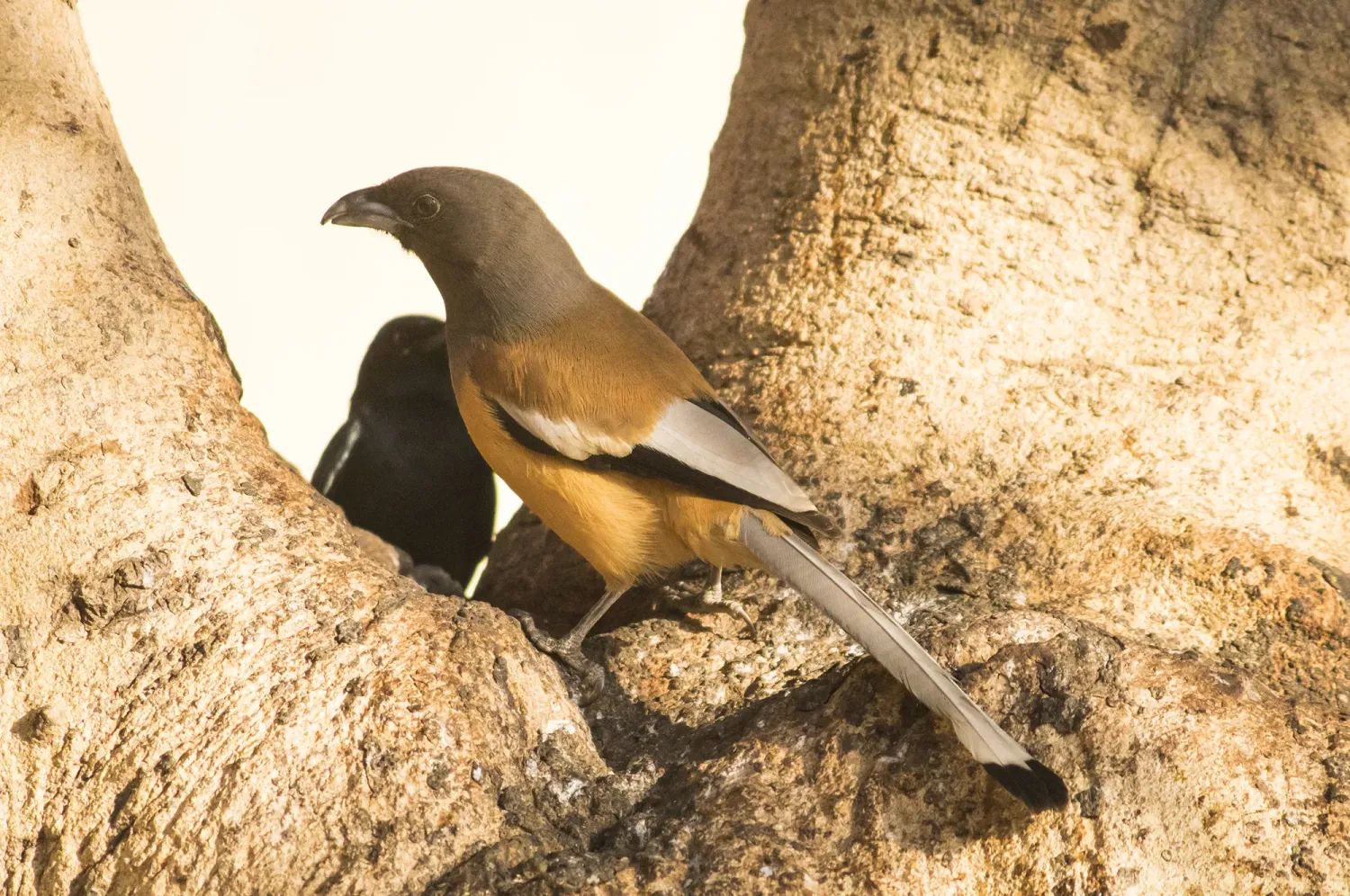
The Rufous Treepie (Dendrocitta vagabunda) is a member of the Corvidae family, widely recognized for its striking appearance and adaptable nature. Found across the Indian Subcontinent and parts of Southeast Asia, this intelligent bird is as comfortable in dense forests as it is in bustling urban parks.
Physical Appearance
The Rufous Treepie is a medium-sized bird, typically measuring between 46 to 50 cm in length. It features a long, graduated tail and a distinctive plumage that combines shades of cinnamon, soot-grey, and black. Its bill is strong and slightly hooked, reflecting its diverse dietary needs.
Habitat
This species is highly versatile, frequenting open deciduous woodlands, dry forests, and secondary growth. It is also a common inhabitant of cultivated areas with scattered trees, urban parks, and large gardens. While primarily a lowland species found below 1000 meters, it can occasionally be spotted at elevations up to 2100 meters.
Diet
The Rufous Treepie is omnivorous and an opportunistic feeder. Its diet includes:
- Insects: Orthoptera, Coleoptera, Lepidoptera, and Hymenoptera.
- Small Vertebrates: Small birds, rodents, bats, snakes, frogs, and lizards.
- Plant Matter: Wild figs (Ficus), various fruits, and nectar from flowering trees.
- Scavenged Food: Carrion and food waste found near human settlements.
Breeding and Nesting
Like other members of the crow family, the Rufous Treepie typically builds a cup-shaped nest in a tree. Both parents participate in the nesting process, ensuring the safety of their young. They are known to be protective of their nesting sites, often warding off potential predators.
Behavior
The Rufous Treepie is highly agile and social, usually occurring in pairs or small family groups. It exhibits remarkable foraging techniques, such as:
- Clambering and clinging to branches while searching for food.
- Performing short hops with a raised tail when foraging on the ground.
- Following domestic cattle and wild mammals to feed on ectoparasites and flushed invertebrates.
- Taking advantage of insects disturbed by other birds like woodpeckers and drongos.
Conservation Status - LC Least Concern
Currently, the Rufous Treepie is categorized as Least Concern by conservationists due to its wide distribution and ability to thrive in human-altered landscapes. However, maintaining large trees and urban green spaces is vital for their continued success.
Interesting Facts
- It is known to be very bold and may even take food from human hands in picnic areas.
- The Rufous Treepie is a known scavenger and will frequently visit villages to find food waste.
- Despite its beauty, it can be a fierce predator, sometimes killing other small birds for food.
- It plays an ecological role as a cleaner bird for large mammals by removing parasites.
Tips for Birdwatchers
- Look for them in flowering trees or near wild fig trees, where they often gather to feed on nectar and fruit.
- Listen for their loud, musical calls, which are often the first sign of their presence in a garden or park.
- Check near large mammals or cattle, as these birds often follow them to catch insects.
- Visit picnic spots where they are less shy and more likely to approach humans.
Conclusion
The Rufous Treepie is a fascinating example of avian adaptability. Whether it is cleaning a cow in a rural field or navigating the branches of a city park, this bird remains one of the most charismatic and intelligent species for birdwatchers to observe and enjoy.
