Introduction
The White-throated Kingfisher (Halcyon smyrnensis), also widely known as the White-breasted Kingfisher, is a captivating tree kingfisher prevalent across a vast expanse of Asia. From the Sinai Peninsula eastward through the Indian subcontinent all the way to the Philippines, this species is a resident throughout much of its extensive range. Renowned for its striking coloration and adaptability, it's a bird that often surprises observers by being found far from water, showcasing its diverse predatory nature.
Physical Appearance
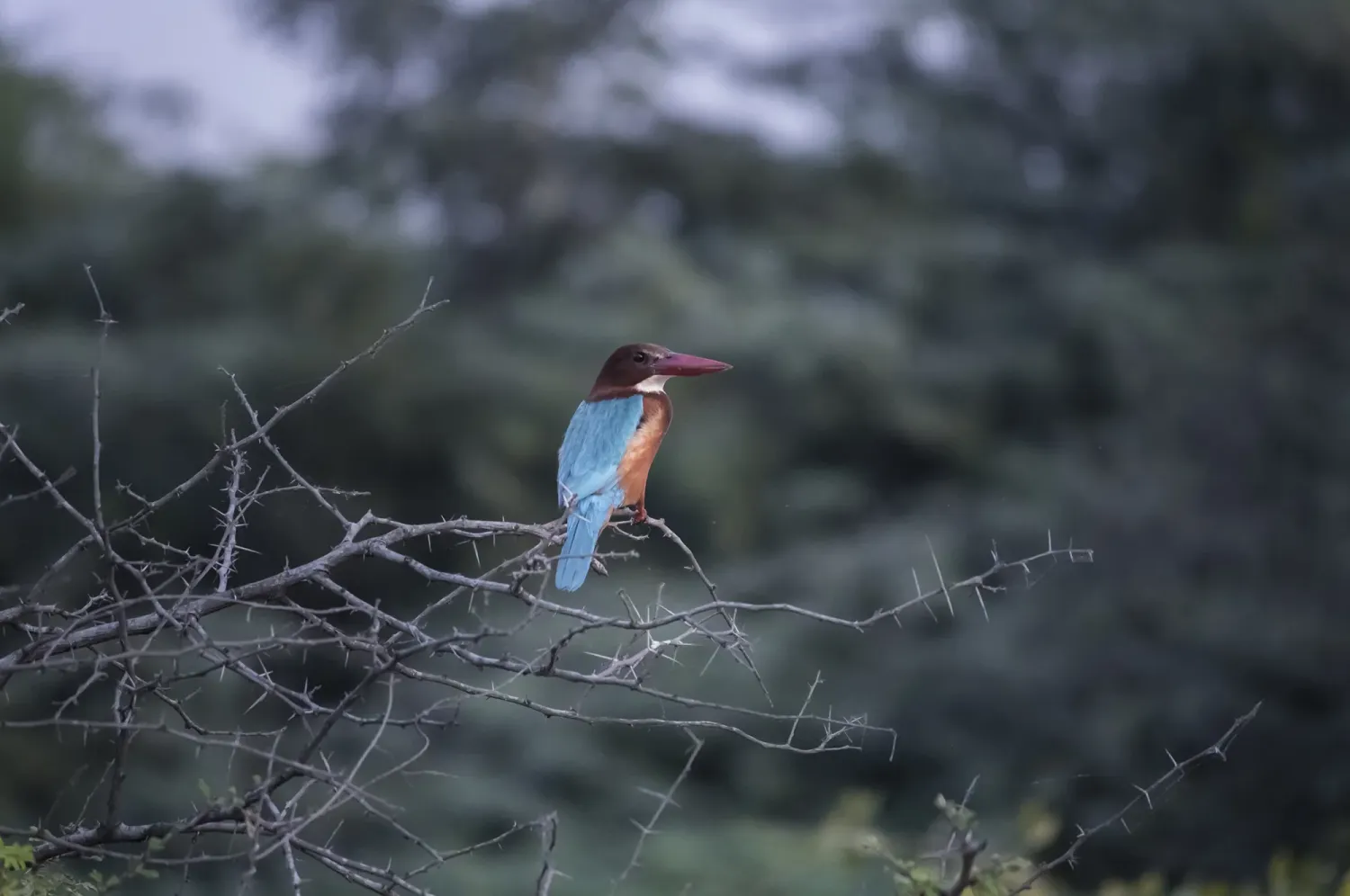
This medium-sized kingfisher typically measures between 27 to 28 cm in length. Its most distinguishing features are its vibrant plumage: a brilliant blue back and wings contrasting sharply with a prominent white throat and breast. The head and underparts are often a rich rufous-brown, completing its unmistakable profile.
Habitat
The White-throated Kingfisher is an incredibly adaptable and common species, thriving in a wide array of habitats. It prefers open country in the plains, often found in areas with scattered trees, utility wires, or other suitable perching spots. While primarily a bird of lower altitudes, it has been observed at elevations as high as 7500 ft in the Himalayas, demonstrating its ecological flexibility. Notably, the range of this resilient species is continuously expanding, indicating its success in various environments.
Diet
Unlike many kingfishers primarily associated with fish, the White-throated Kingfisher boasts an incredibly varied and opportunistic diet. Its main prey items include large crustaceans, insects, earthworms, rodents, snakes, fish, and frogs. Remarkably, reports also document its predation on small birds, such as the Oriental white-eye, chicks of red-wattled lapwings, sparrows, and munias, highlighting its formidable predatory skills. Interestingly, young kingfishers are predominantly fed invertebrates. Observations in captivity suggest it rarely drinks water, despite regular bathing.
Breeding and Nesting
During the breeding season, White-throated Kingfishers become particularly vocal, emitting loud calls from prominent perches. These perches can include the tops of buildings in urban settings or utility wires, signaling their presence. While specific details about their nesting habits are not provided, these calls are a key indicator of their reproductive activity.
Behavior
The White-throated Kingfisher is largely a resident species within its range, though some populations undertake short-distance movements. A notable behavioral trait is its ability to thrive well away from water, a departure from the typical image of a kingfisher. It is an active hunter, often perching conspicuously before swooping down on its prey. Its loud morning calls during the breeding season are a distinctive feature, often heard from high vantage points in both natural and urban landscapes.
Conservation Status - LC Least Concern
The provided information indicates that the White-throated Kingfisher is a common species and that its range is expanding. While a specific IUCN conservation status is not detailed in the provided data, these indicators suggest a healthy and stable population, likely placing it in the "Least Concern" category, reflecting its widespread distribution and adaptability.
Interesting Facts
- The White-throated Kingfisher is also known as the White-breasted Kingfisher.
- Unlike many other kingfishers, it is a "tree kingfisher" and can often be found far from water.
- Its diet is incredibly diverse, including not just fish and insects, but also rodents, snakes, and even small birds.
- The species' range is actively expanding, showcasing its adaptability to various environments.
- Despite its name, observations in captivity note that it rarely drinks water, preferring to bathe regularly.
- During breeding season, it uses prominent perches, including building tops in urban areas, to make loud calls.
Tips for Birdwatchers
- Look for prominent perches: These kingfishers often sit conspicuously on wires, tree branches, or even rooftops, making them relatively easy to spot.
- Listen for their calls: During the breeding season, their loud calls are a clear indicator of their presence, especially in the mornings.
- Check diverse habitats: Don't limit your search to water bodies; these birds are frequently found in open country, agricultural fields, and even urban gardens.
- Observe their hunting style: Watch for sudden dives from perches into grass or fields, indicating they are hunting terrestrial prey.
- Note their colors: The striking blue back and white throat/breast are key identification features.
Conclusion
The White-throated Kingfisher stands out as a truly remarkable avian species, defying typical kingfisher stereotypes with its adaptability and incredibly varied diet. Its striking blue and white plumage, coupled with its ability to thrive in diverse habitats—often far from water—makes it a fascinating subject for birdwatchers and nature enthusiasts alike. As its range continues to expand across Asia, this common yet captivating bird remains a testament to nature's resilience and diversity.