
Introduction
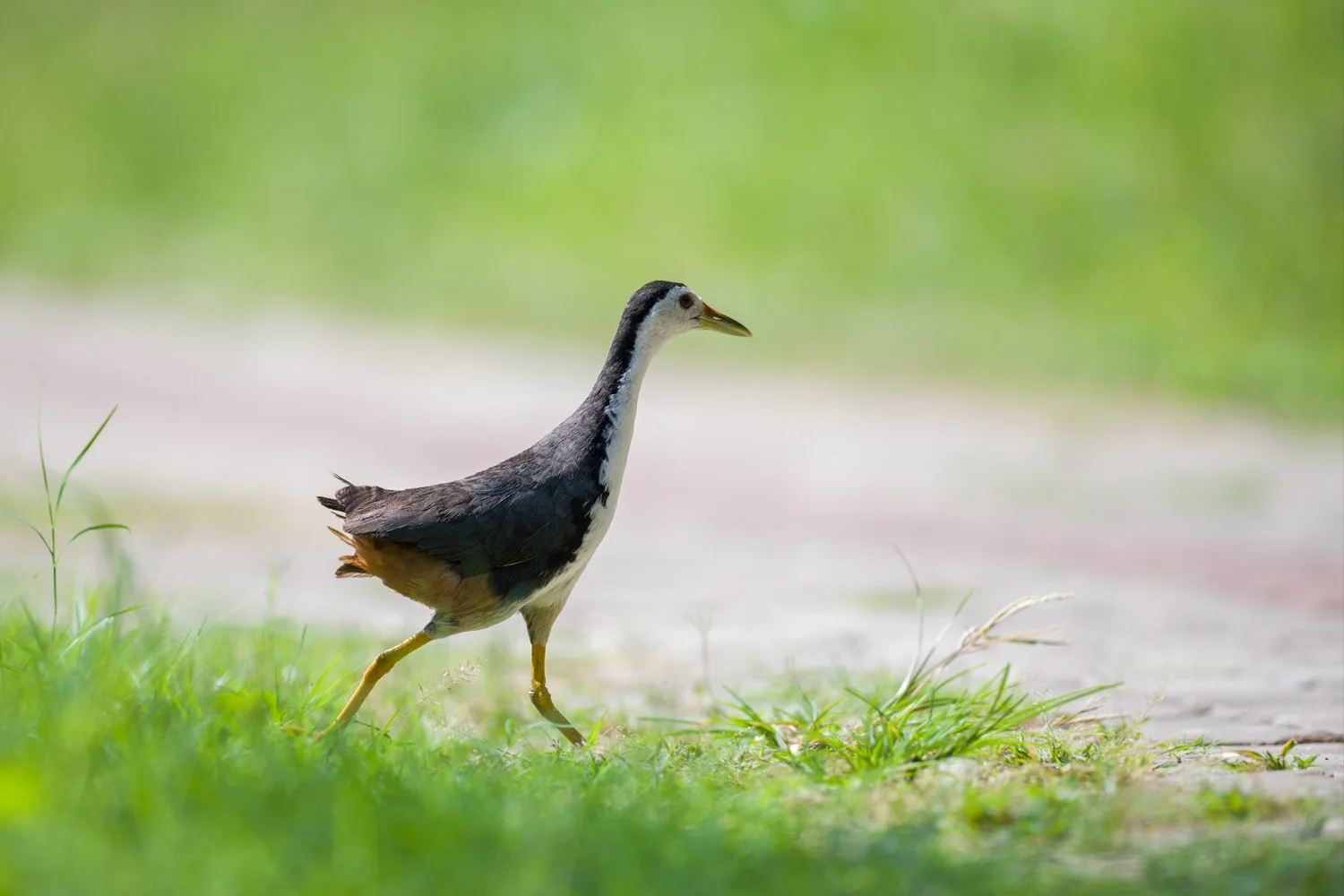
The White-breasted Waterhen (Amaurornis phoenicurus) is a distinctive waterbird belonging to the rail and crake family. Widely recognized for its bold white face and breast, this bird is a common sight across South and Southeast Asia, often found near freshwater sources and dense vegetation.
Physical Appearance
The White-breasted Waterhen exhibits several unique physical characteristics:
- Size: Adults typically measure between 25 to 35 cm in length.
- Coloration: They feature dark grey upperparts and flanks, contrasting sharply with a clean white face, breast, and belly.
- Undertail: The lower belly and undertail area are a rich cinnamon or chestnut color.
- Body Shape: They have a laterally flattened body, which is an adaptation for moving easily through thick reeds.
- Sexual Dimorphism: Males are generally larger (200-330g) than females (160-230g).
- Juveniles: Immature birds have duller plumage with less white, while young chicks are entirely black.
Habitat
The White-breasted Waterhen is highly adaptable and can be found in a variety of environments, provided there is water and cover. Common habitats include:
- Freshwater marshes and reedbeds.
- Mangroves and grasslands.
- Ricefields, orchards, and urban parks or gardens.
- Dense vegetation near small streams and pools.
Diet
These birds are omnivorous and opportunistic feeders. Their diet includes:
- Invertebrates: Aquatic and terrestrial insects, worms, snails, and mollusks.
- Vertebrates: Small frogs.
- Plant Matter: Seeds, grass, shoots, berries, and the roots of aquatic plants.
Breeding and Nesting
The White-breasted Waterhen is a monogamous species. They typically build their nests in dense vegetation, often just above the water level or in low bushes. Both parents participate in the care of the young. While the northern populations may migrate southwards during winter, local residents tend to stay in their territories year-round.
Behavior
This species is primarily active during the day (diurnal). Key behaviors include:
- Foraging: They are often seen walking in open areas during the morning, flicking their upright tails as they search for food.
- Movement: Although they can swim, they are not very proficient at it. They are also known to climb into bushes and small trees, though their large feet make them appear somewhat clumsy on branches.
- Defense: When alarmed, they prefer to run or dash into dense cover with their heads down rather than fly.
- Roosting: They spend the night resting in the safety of thick bushes or trees.
Conservation Status - LC Least Concern
The White-breasted Waterhen is currently categorized as a species of Least Concern due to its wide distribution and stable population across its range. It adapts well to human-modified landscapes like parks and agricultural fields.
Interesting Facts
- The bird's call is a loud, repetitive croaking sound that is often heard at dawn, dusk, or during rainy weather.
- Their flattened body is an evolutionary trait specifically designed to help them slip through dense marsh vegetation without getting stuck.
- White-breasted Waterhens have enormous feet with long toes, which help them walk across floating vegetation like large lotus leaves.
- Northern populations of this bird tend to be larger than those found in tropical regions.
Tips for Birdwatchers
- Best Time: Look for them in the early morning when they emerge from cover to forage in open grass or mudflats.
- Listen: Use their distinctive croaking call to locate them within thick reedbeds.
- Patience: Stay still near the edge of a pond or marsh; they are bold birds and will eventually step out of the shadows if they feel safe.
- Check the Trees: Don't just look on the ground; they often roost or forage in low-hanging branches.
Conclusion
The White-breasted Waterhen is a fascinating and resilient bird that brings a touch of wildness to both remote wetlands and urban gardens. Its striking white plumage and quirky behaviors make it a favorite among birdwatchers and nature enthusiasts across Asia.