Introduction
The Yellow-billed Babbler (Argya affinis) is a quintessential member of the Leiothrichidae family, widely recognized for its highly social nature and distinctive vocalizations. Often referred to as the 'Seven Sisters' due to their habit of foraging in small, noisy groups, these birds are a common sight across the Indian subcontinent and parts of Sri Lanka. As a medium-sized perching bird, they have adapted remarkably well to human-altered landscapes, thriving in both dense scrub jungles and busy suburban gardens. Ornithologists find the Yellow-billed Babbler fascinating because of its complex social structure, which involves cooperative breeding and sentinel behaviors that ensure the survival of the group. Their presence in an ecosystem is often marked by a cacophony of chattering calls, which serve both to maintain group cohesion and to alert members of potential predators. Understanding the lifecycle and habits of this resilient species provides valuable insight into the ecological dynamics of tropical avian communities, highlighting the importance of biodiversity in our immediate surroundings.
Physical Appearance
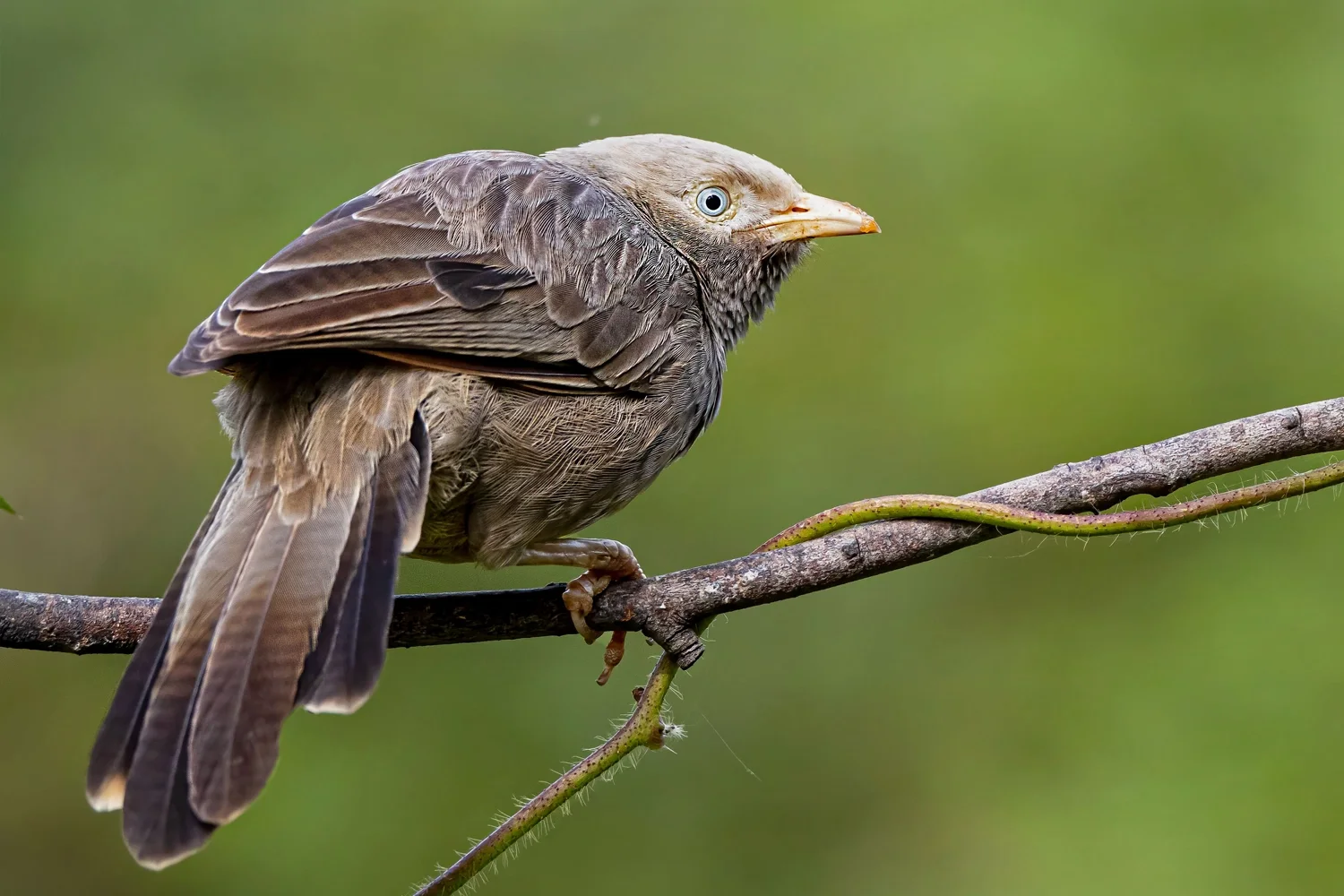
Standing at approximately 22-25 cm in length, the Yellow-billed Babbler possesses a distinctive morphology that aids in its identification. Its primary plumage is a muted, earthy grey-brown, which provides excellent camouflage against the bark of trees and leaf litter where it frequently forages. The most striking feature of this species is, as the name suggests, its vibrant, pale yellow bill, which contrasts sharply against its more subdued feathers. The throat and upper breast often display a lighter, cream-colored wash, while the tail is relatively long and rounded, aiding in balance during agile movements through dense foliage. Their eyes are typically a pale, piercing yellow or cream, adding to their alert expression. The wings are short and rounded, suited for short, fluttering flights rather than sustained, high-speed travel. Juveniles often mirror the appearance of adults but may show slightly duller coloration until they reach maturity. Overall, their physical build is robust and sturdy, perfectly evolved for a life spent hopping along branches and exploring the undergrowth.
Habitat
The Yellow-billed Babbler is a highly adaptable species, occupying a diverse range of environments across its native range. They are most commonly found in open forests, scrublands, and dry deciduous woodlands. However, they have shown a remarkable ability to colonize human-modified habitats, making them frequent visitors to agricultural fields, rural villages, and even urban parks or well-vegetated gardens. They prefer areas with significant undergrowth, which provides both protection from aerial predators and a rich supply of insects. While they are not typically found in the deepest, most humid rainforests, they are equally at home in semi-arid plains and the outskirts of bustling towns, proving their status as a versatile and resilient avian resident.
Diet
As an opportunistic omnivore, the Yellow-billed Babbler maintains a varied diet that shifts based on seasonal availability. Their primary intake consists of insects, including beetles, grasshoppers, caterpillars, and ants, which they expertly glean from the crevices of tree bark or by turning over leaf litter on the ground. This insectivorous behavior makes them beneficial to farmers and gardeners alike, as they help control pest populations. In addition to animal protein, they supplement their diet with nectar, berries, and various seeds. During the fruiting season, they can often be seen in small groups raiding flowering shrubs or fruit-laden branches, demonstrating their adaptability in securing energy-dense food sources throughout the year.
Breeding and Nesting
Breeding in the Yellow-billed Babbler is a cooperative affair, a trait that sets them apart from many solitary nesting birds. These birds build neat, cup-shaped nests constructed from small twigs, dry grasses, and rootlets, typically hidden deep within a thick bush or a low-hanging tree branch. A clutch usually consists of three to four turquoise-blue, glossy eggs. What makes their breeding strategy particularly interesting is the involvement of 'helpers'—non-breeding members of the group who assist in feeding the chicks and protecting the nest. This cooperative breeding system significantly increases the survival rate of the nestlings, as multiple adults take turns guarding the nest and foraging for food. The incubation period lasts for about two weeks, and after hatching, the young birds are fledged by the entire group, ensuring they are well-protected until they are independent.
Behavior
The most defining characteristic of the Yellow-billed Babbler is its gregarious and highly social behavior. They are rarely seen alone, preferring to move in cohesive groups of six to ten individuals. This group dynamic is reinforced by constant vocalizations, which include a variety of chirps, chatters, and whirring sounds. They are known for their 'sentinel' behavior, where one bird remains alert while others forage, signaling the group if a predator approaches. This collective vigilance is highly effective, making them difficult to approach. When moving between trees, they often follow one another in a line, creating a fluttering, undulating flight pattern that is easily recognizable to experienced birdwatchers.
Conservation Status - LC Least Concern
The Yellow-billed Babbler is currently classified as 'Least Concern' on the IUCN Red List. Their population remains stable, largely due to their ability to adapt to human-dominated landscapes and a wide geographic range. Unlike many specialized species that suffer from habitat loss, the Babbler thrives in secondary growth and agricultural areas. However, like all native birds, they face challenges from the use of pesticides in farmlands and the loss of traditional, thick-hedgerow nesting sites. Continued environmental awareness and the preservation of green spaces in urban areas are essential to ensure that this charismatic and noisy species continues to thrive for future generations.
Interesting Facts
- They are colloquially known as the 'Seven Sisters' because they are almost always found in groups of six to ten.
- Their yellow beak is a diagnostic feature that helps distinguish them from other similar-looking babbler species.
- They engage in 'allopreening,' where members of the group groom each other to strengthen social bonds.
- The nest is often built in a fork of a branch and lined with fine grass to keep the eggs warm.
- They are known to be quite bold and will sometimes approach humans in garden settings to find food scraps.
- The species is a cooperative breeder, meaning that the whole 'family' group helps raise the chicks.
Tips for Birdwatchers
Birdwatching for the Yellow-billed Babbler is a rewarding experience, especially for those interested in social behavior. To spot them, listen for their loud, distinctive chattering in the early morning or late afternoon when they are most active. Because they are social, once you hear one, you are likely to find the entire group nearby. They are not particularly shy, so if you remain still near a patch of dense scrub or a garden hedge, they will often forage within view. Use binoculars to observe their group interactions, such as grooming or sentinel duty. Avoid making sudden movements, as the group's collective alarm system will quickly cause them to retreat into deeper cover if they feel threatened.
Conclusion
The Yellow-billed Babbler is more than just a common garden bird; it is a fascinating subject of study that showcases the complexity of avian social structures. From their cooperative breeding habits to their role in controlling insect populations, these birds serve as a vital component of the ecosystems they inhabit. Their ability to thrive in the face of rapid urbanization is a testament to their resilience and adaptability. For birdwatchers and nature enthusiasts, the 'Seven Sisters' offer a daily opportunity to observe the intricate dynamics of animal cooperation. By protecting the scrublands and green spaces that these birds call home, we ensure the survival of not only this specific species but also the broader biodiversity that makes our natural world so vibrant. Whether you are an expert ornithologist or a casual observer, the Yellow-billed Babbler provides endless entertainment and educational value. Their presence serves as a constant reminder of the beauty found in social bonds and the importance of adapting to a changing world. We encourage everyone to take a moment to observe these lively birds in their natural environment, appreciating the unique role they play in the tapestry of nature, and to advocate for the preservation of the habitats that support their continued existence for years to come.