
Introduction
The Black-tailed Crake (Porzana bicolor), also known as the Zapornia bicolor, is a small, secretive waterbird belonging to the family Rallidae. This elusive species is primarily found in the high-altitude wetlands and marshes of South and Southeast Asia, making it a prized sighting for dedicated birdwatchers.
Physical Appearance
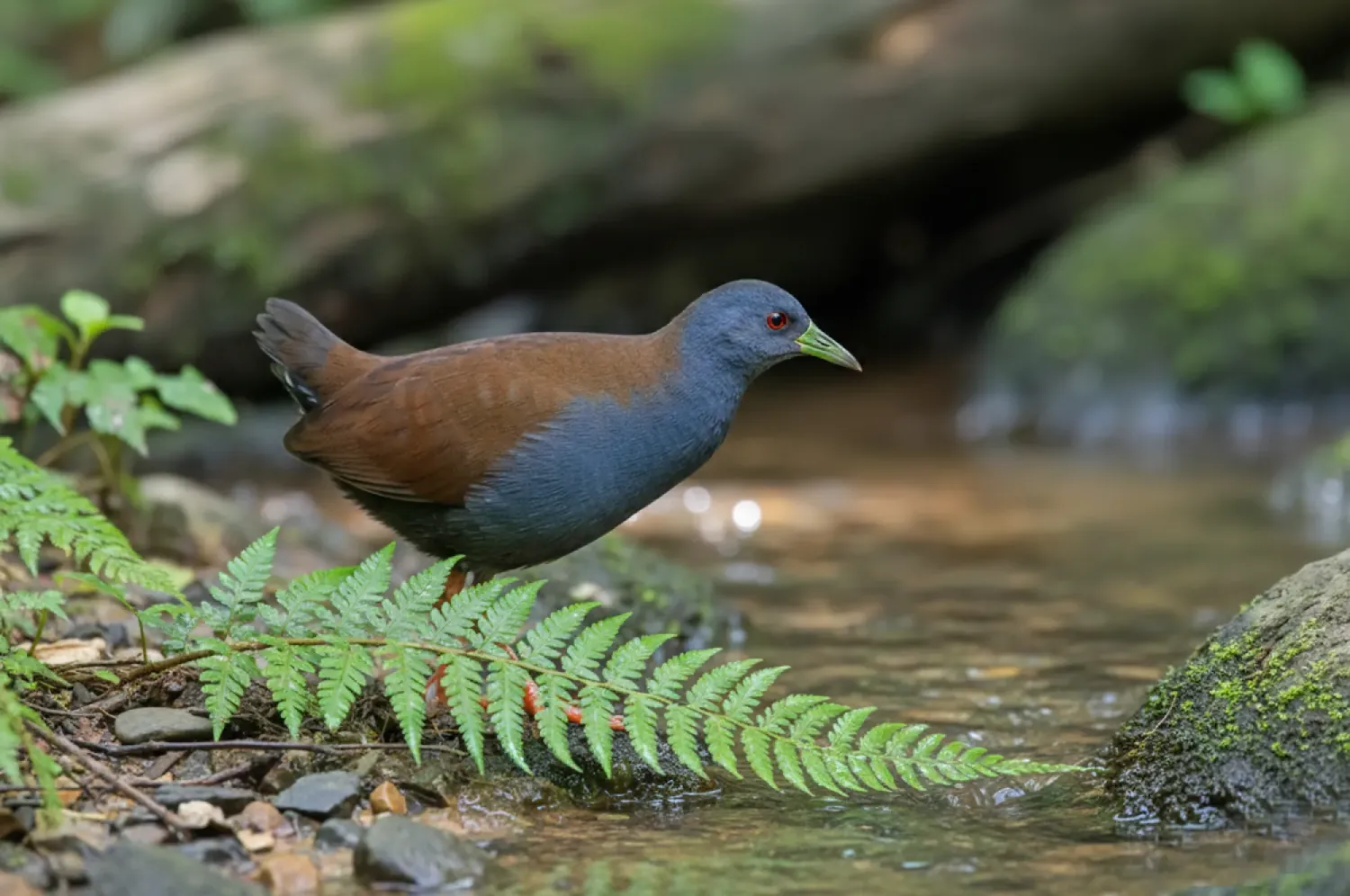
The Black-tailed Crake is a medium-sized bird, typically measuring between 22 to 25 cm in length. It features a striking contrast in plumage: its head, neck, and underparts are a deep slate-grey, while the mantle and wings are a warm chestnut-brown. Its namesake black tail is short and often cocked. Notable features include its bright red legs and a greenish bill with a distinct red patch at the base of the upper mandible.
Habitat
This species prefers high-altitude environments, usually ranging from 1,500 to 3,600 meters above sea level. Its primary habitats include dense marshy vegetation, reed beds, and the margins of mountain streams or ponds. They are often found in areas with thick cover that allows them to remain hidden from predators.
Diet
The Black-tailed Crake is an omnivore with a diet consisting mainly of insects, aquatic invertebrates, and mollusks. They also consume seeds and various types of aquatic vegetation found while foraging through damp mud and leaf litter near the water's edge.
Breeding and Nesting
Breeding typically occurs during the monsoon season when water levels are high. The nest is a cup-shaped structure made of dry grasses, sedges, and leaves, usually hidden well within dense reeds or tall grass just above the water level. A typical clutch consists of 5 to 8 creamy-white eggs with reddish-brown spots.
Behavior
Like most crakes, the Black-tailed Crake is extremely shy and skulking. It is most active during dawn and dusk (crepuscular behavior). While difficult to see, it is often detected by its vocalizations, which include a series of low, rhythmic croaks and trills used to defend territory or attract mates.
Conservation Status - LC Least Concern
The Black-tailed Crake is currently classified as Least Concern by the IUCN Red List. While its population is considered stable, it faces localized threats from habitat loss due to the drainage of wetlands for agriculture and human encroachment in mountain regions.
Interesting Facts
- Despite being a waterbird, it is often found in very steep, mountainous terrain as long as there is standing water.
- It was recently reclassified by many authorities into the genus Zapornia.
- Unlike many other rails, the Black-tailed Crake has a very distinct 'bi-colored' appearance, making it easier to identify if seen clearly.
- They are known to be quite territorial during the breeding season, using loud calls to warn off intruders.
Tips for Birdwatchers
- Patience is key: Find a quiet spot near a mountain marsh and wait for the bird to emerge from the reeds.
- Listen for calls: Familiarize yourself with their rhythmic croaking to locate them in dense cover.
- Visit at dawn: Your best chance of a sighting is during the early morning hours when they are most active.
- Use binoculars: Keep a safe distance to avoid startling this shy species back into hiding.
Conclusion
The Black-tailed Crake is a fascinating example of avian adaptation to high-altitude wetlands. While its secretive nature makes it a challenge to observe, its beautiful slate and chestnut plumage makes any sighting a rewarding experience for nature enthusiasts and SEO-driven birding blogs alike.
