
Introduction
The Black Francolin (Francolinus francolinus) is a captivating member of the pheasant family, renowned for its distinctive calls and striking appearance. As an upland ground bird, it thrives in a variety of habitats across parts of Asia and Europe, making it a beloved subject for ornithologists and birdwatchers alike. This guide delves into the fascinating world of the Black Francolin, exploring its physical characteristics, behaviors, and ecological significance.
Physical Appearance
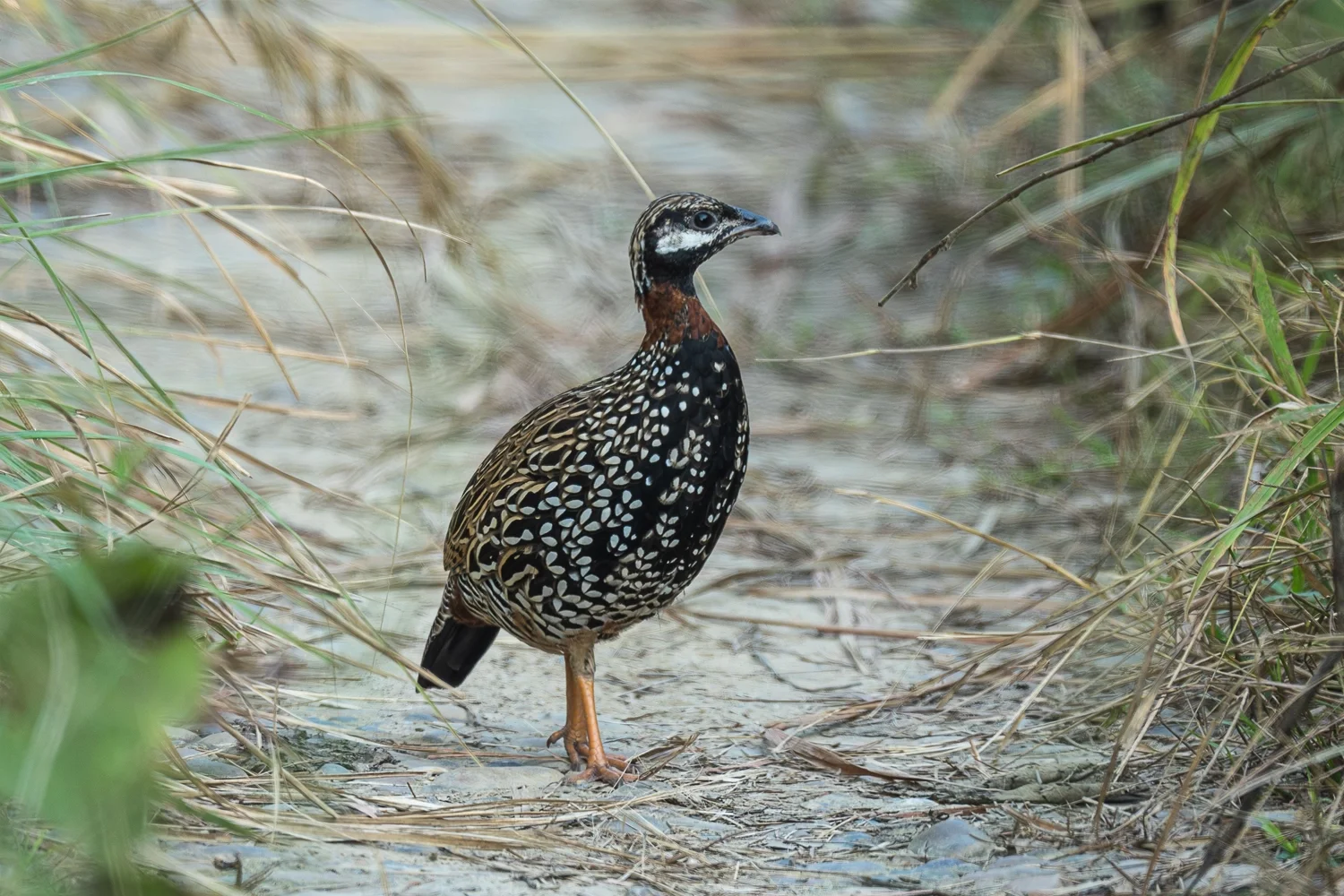
The Black Francolin is a medium-sized bird, typically measuring between 33-36 cm in length. Its plumage is remarkably striking, particularly in males. The primary color is black, adorned with intricate white markings.
- Males: Feature a prominent black head with a distinctive white cheek patch, a chestnut collar, and a black breast heavily barred with white. Their flanks are also barred with white, creating a beautiful contrast.
- Females: Generally duller in coloration, with more rufous-brown tones and less distinct barring, providing excellent camouflage in their grassy habitats. Both sexes possess sturdy legs and feet, adapted for their terrestrial lifestyle.
Habitat
Black Francolins are adaptable birds, favoring a range of habitats that provide adequate cover and food sources. They are typically found in:
- Grasslands and Savannas: Especially those with tall grasses and scattered bushes.
- Cultivated Fields: Often frequenting agricultural lands, particularly those growing grains like wheat and rice.
- Scrubland and Bushy Areas: Offering dense vegetation for roosting and nesting.
- Marshy Edges and Riparian Zones: Areas near water bodies provide essential hydration and additional food sources.
Their distribution spans from southeastern Europe through Turkey, Iran, and across parts of India and Nepal.
Diet
The Black Francolin is primarily an omnivorous species, with its diet varying seasonally and geographically. Their foraging behavior involves scratching the ground and pecking at vegetation.
- Seeds and Grains: A significant portion of their diet consists of seeds from various grasses and weeds, as well as cultivated grains like rice, wheat, and corn.
- Plant Material: They consume shoots, leaves, and berries when available.
- Insects and Invertebrates: Especially during the breeding season, they supplement their diet with insects such as ants, beetles, termites, grasshoppers, and other small invertebrates, which provide crucial protein for chick development.
Breeding and Nesting
Black Francolins are monogamous or sometimes polygynous, with breeding seasons varying by region, typically occurring from spring to summer. They are ground nesters, preferring well-concealed spots.
- Nest Site: The female constructs a shallow scrape on the ground, often hidden beneath dense vegetation, a bush, or a tussock of grass. The nest is sparsely lined with grass, leaves, and sometimes feathers.
- Eggs: A clutch usually consists of 6 to 10 eggs, which are typically olive-brown or pale buff.
- Incubation: The female primarily incubates the eggs for about 18-19 days.
- Chicks: The chicks are precocial, meaning they are well-developed and able to leave the nest shortly after hatching, following their mother to forage.
Behavior
Black Francolins are largely terrestrial birds, known for their shy and secretive nature. They are often heard before they are seen, thanks to their loud and distinctive calls.
- Vocalization: Males have a characteristic, far-carrying call, often described as a loud 'kick-kick-kick-kik-kik-kik' or 'chick-chick-chirrick,' particularly prominent during dawn and dusk.
- Foraging: They spend most of their day foraging on the ground, using their strong legs to scratch and dig for food.
- Flight: While primarily ground-dwelling, they are capable of short, explosive flights when startled, typically flying low over the vegetation before dropping back into cover.
- Social Structure: They can be found alone, in pairs, or in small family groups.
Conservation Status - LC Least Concern
According to the IUCN Red List, the Black Francolin is currently classified as 'Least Concern'. This indicates that the global population is considered stable and not facing immediate threats of extinction.
However, local populations can face challenges due to:
- Habitat Loss: Conversion of grasslands and agricultural areas for urbanization or intensive farming.
- Pesticide Use: Reduction in insect populations, which are a vital food source.
- Hunting Pressure: In some regions, they are hunted as a game bird.
Ongoing monitoring and habitat preservation efforts are important to ensure the long-term viability of this species.
Interesting Facts
- The Black Francolin is the provincial bird of Khyber Pakhtunkhwa in Pakistan.
- Its distinctive call is often used by locals to indicate the time of day, as it's most vocal at dawn and dusk.
- Males display a higher degree of sexual dimorphism, being much more brightly colored than females.
- Despite being a ground bird, they are excellent runners and can evade predators by quickly disappearing into dense cover.
- They are a popular game bird in many parts of their range, appreciated for their challenging nature.
Tips for Birdwatchers
Spotting a Black Francolin can be a rewarding experience for birdwatchers. Here are some tips:
- Listen Carefully: Their loud, distinctive call is your best bet for locating them. Listen for it during early morning or late afternoon.
- Focus on Habitat: Search in dense grasslands, agricultural fields, and areas with thick scrub, especially near water sources.
- Be Patient and Quiet: They are shy birds. Move slowly and quietly to avoid startling them.
- Use Binoculars: Once you hear a call, scan the area with binoculars for any movement in the dense vegetation.
- Avoid Disturbing: Maintain a respectful distance to observe their natural behavior without causing stress.
Conclusion
The Black Francolin, with its striking black and white plumage and distinctive call, is a true emblem of the upland ground bird community. From its varied diet to its secretive nesting habits, this species offers a wealth of intrigue for ornithologists and nature enthusiasts.
While currently stable, understanding and appreciating the Black Francolin's ecological role and habitat requirements remain crucial for its continued prosperity. By supporting conservation efforts and practicing responsible birdwatching, we can ensure that the vibrant presence and unique calls of Francolinus francolinus continue to grace the landscapes of Eurasia for generations to come.