
Introduction
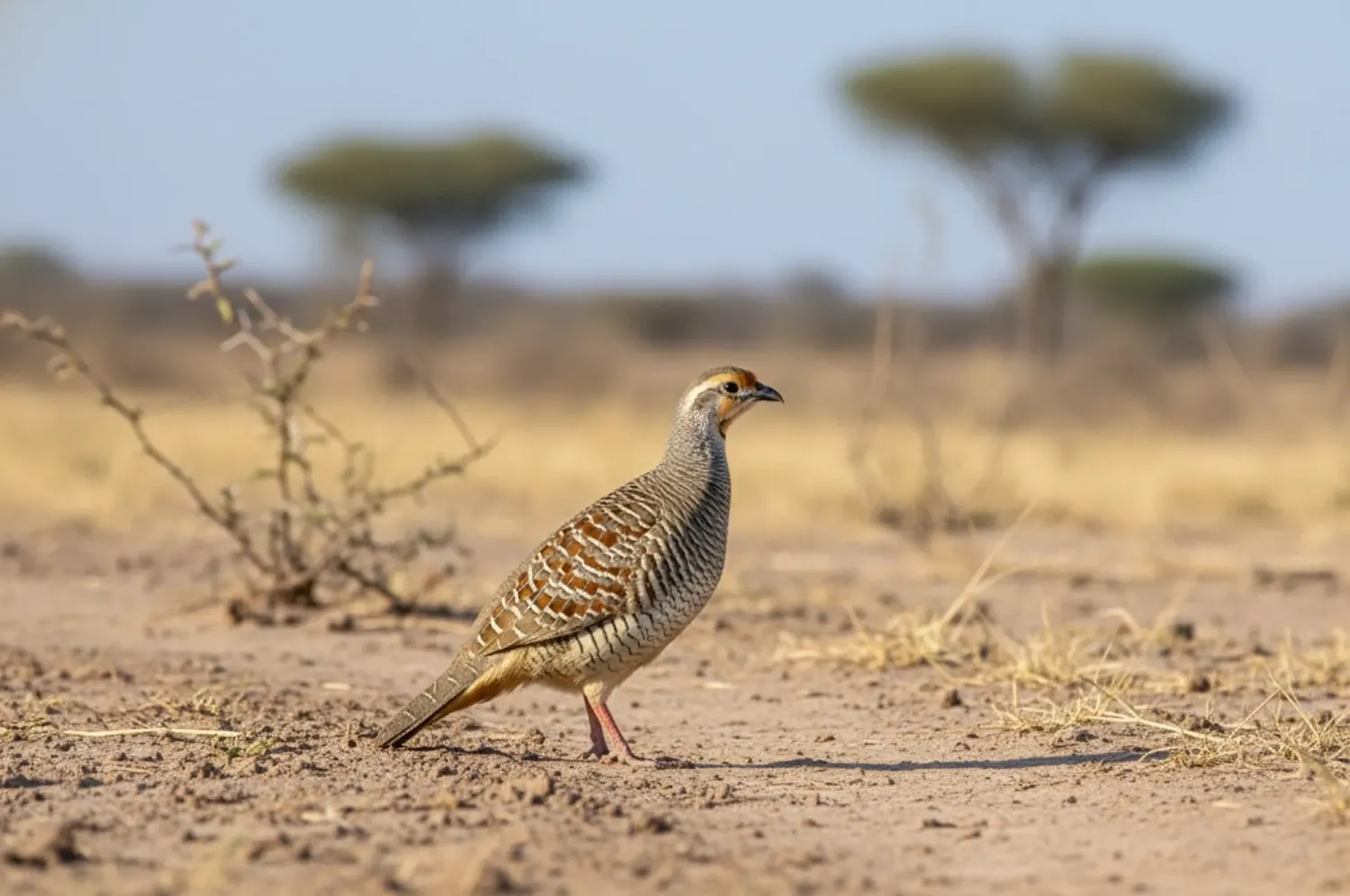
The Grey Francolin (Francolinus pondicerianus), famously known as the teetar, is a hardy species of francolin native to the plains and drier regions of the Indian subcontinent. Often found in open landscapes, this bird is well-known for its distinctive loud calls and its historical significance in local cultures.
Physical Appearance
- Size: Medium-sized, ranging from 26 to 34 cm in length.
- Weight: Males weigh between 260–340 g, while females are slightly lighter at 200–310 g.
- Plumage: The body is finely barred throughout with a pale face and a thin black border surrounding a pale throat.
- Distinguishing Features: In flight, it reveals a chestnut tail and dark primaries. Males often possess up to two spurs on their legs.
Habitat
The Grey Francolin thrives in cultivated areas, grasslands, and steppes within temperate zones. It prefers open areas but requires sufficient ground cover, such as scattered shrubby patches and hedgerows, to provide protection. It has shown remarkable adaptability to agricultural expansion across its range.
Diet
- Plant Matter: Feeds on weed seeds, cereals, and various grass leaves.
- Insects: Actively hunts for beetles (Coleoptera), aphids, bugs (Hemiptera and Heteroptera), and other small invertebrates.
Breeding and Nesting
During the breeding season, males become highly vocal to attract challengers and mates. While they are primarily ground-dwelling birds, they rely on thick undergrowth for nesting protection. Historically, their aggressive nature during this period led to their use in bird-fighting competitions.
Behavior
These birds are weak fliers, typically flying only short distances before diving back into the safety of the undergrowth. They are most famous for their call, a loud and repeated "Ka-tee-tar tee-tar", which is often performed in a duet by multiple birds.
Conservation Status - LC Least Concern
The Grey Francolin is currently not considered globally threatened. Its ability to adapt to human-altered landscapes, particularly agricultural fields, has allowed it to maintain stable populations across much of its native range.
Interesting Facts
- The name teetar is an onomatopoeic representation of its loud, rhythmic call.
- It was formerly called the grey partridge, though it is biologically distinct from the European grey partridge.
- The species is divided into several subspecies, such as mecranensis (palest) and interpositus (darker).
- When disturbed, they prefer running to flying, only taking flight as a last resort.
Tips for Birdwatchers
- Listen for the Call: The easiest way to locate them is by their loud "Ka-tee-tar" calls in the early morning.
- Check Field Edges: Look for them at the edges of cultivated fields and near thorny scrub.
- Watch the Ground: They spend most of their time on the ground; scan under shrubs where they might be foraging.
Conclusion
The Grey Francolin is a resilient and iconic bird of the Indian plains. Whether identified by its intricate barred plumage or its unmistakable call, it remains a fascinating subject for birdwatchers and a testament to avian adaptability in changing environments.