
Introduction
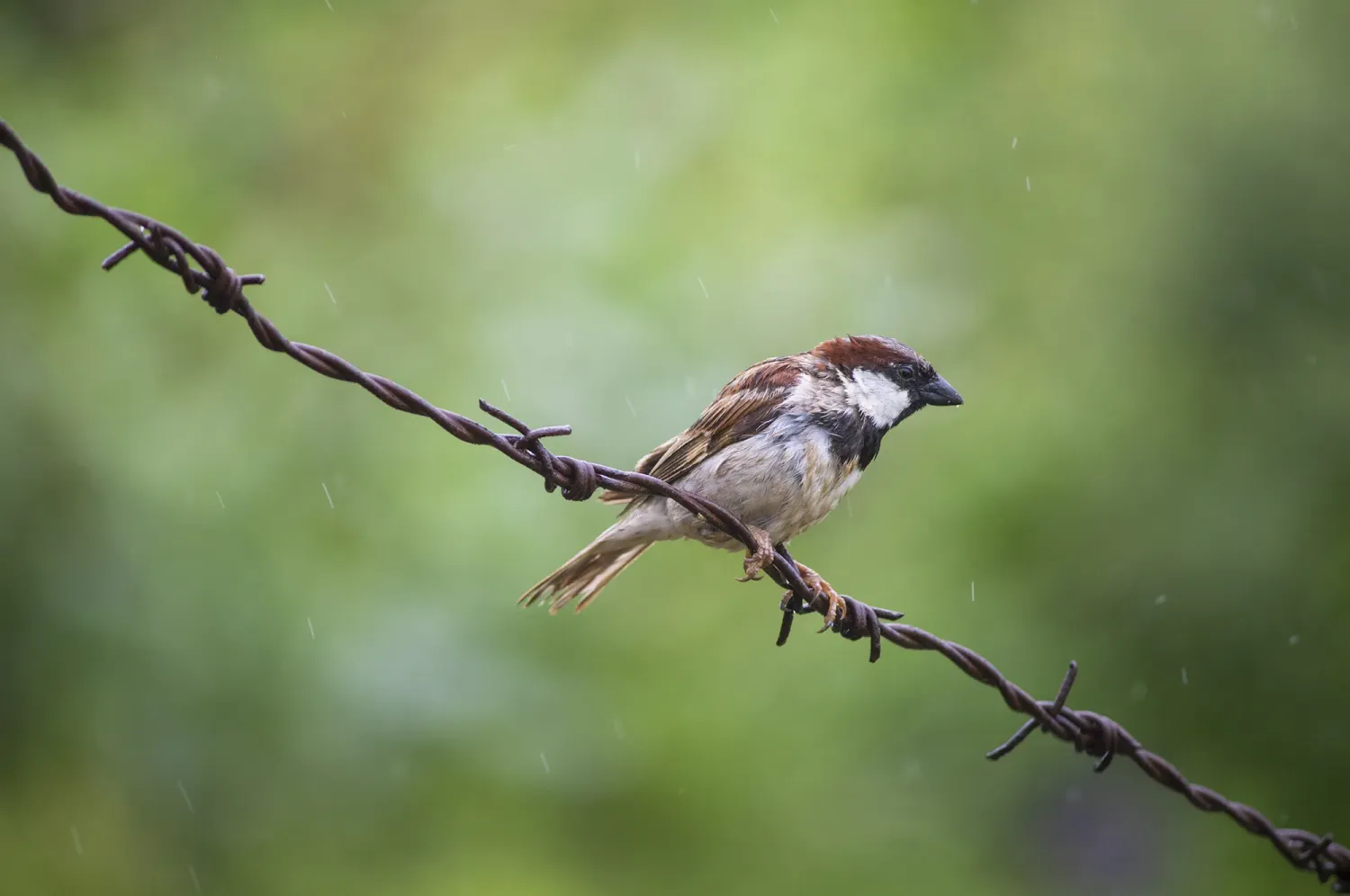
The House Sparrow (Passer domesticus) is arguably one of the most familiar and widely distributed birds across the globe. A small yet robust bird, it has successfully adapted to human environments, making it a common sight in towns, cities, and rural areas worldwide. Native to Europe, the Mediterranean Basin, and much of Asia, its remarkable adaptability and opportunistic nature have led to its introduction and establishment in countless other regions, solidifying its status as the most widespread wild bird.
Physical Appearance
The House Sparrow is a small bird, typically measuring around 16 cm (6.3 in) in length and weighing between 24–39.5 g (0.85–1.39 oz). Key features for identification include:
- Males: Display brighter and more distinct markings, characterized by a grey crown, chestnut nape, black bib, and white cheeks.
- Females and Young Birds: Generally more subdued in coloration, appearing pale brown and grey overall, lacking the prominent black bib and chestnut markings of the males.
Habitat
The House Sparrow exhibits a strong association with human habitation and cultivated areas. While not strictly dependent on humans, it thrives in environments shaped by human activity. You'll commonly find them in:
- Urban and Suburban Areas: Parks, gardens, city streets, and buildings provide ample nesting sites and food sources.
- Rural Settings: Farms, villages, and agricultural landscapes are also favored habitats.
They typically avoid extensive natural landscapes such as dense woodlands, vast grasslands, and remote deserts unless human development is present.
Diet
As an opportunistic and adaptable feeder, the House Sparrow's diet is varied, though primarily seed-based:
- Main Diet: Consists mostly of the seeds of grains and weeds.
- Urban Scavenging: In towns and cities, they are adept scavengers, frequently feeding on leftover human food, crumbs, and scraps from garbage containers or outdoor eating establishments.
- Insects: Particularly during breeding season and for feeding young, insects form a significant part of their diet.
- Other Foods: They will readily consume a wide range of available foods, demonstrating their dietary flexibility.
Breeding and Nesting
House Sparrows are prolific breeders, often raising multiple broods in a year. Their nesting habits reflect their close association with humans:
- Nesting Sites: They prefer sheltered cavities and crevices, frequently nesting in or on buildings, under eaves, in wall cavities, or in dense vegetation like bushes and vines. They will also readily use bird boxes.
- Nest Construction: Nests are typically messy, dome-shaped structures made from grass, twigs, feathers, string, and other available debris.
- Eggs: Females usually lay 3-7 eggs, which are incubated by both parents.
Behavior
House Sparrows are social and highly adaptable birds, known for their lively and often boisterous behavior:
- Social Birds: They often live in flocks, especially outside the breeding season, foraging and roosting together.
- Vocalizations: Their calls are typically a series of cheerful chirps and chattering sounds.
- Boldness: They are generally quite bold around humans, often approaching closely in search of food.
- Territorial: While social, males can be territorial around nesting sites during the breeding season.
Conservation Status - LC Least Concern
Due to its extraordinary adaptability and widespread distribution across the globe, the House Sparrow is currently classified as "Least Concern" by the IUCN Red List. While some localized declines have been noted in parts of Western Europe, particularly in urban areas, its overall global population remains stable and robust, making it one of the most successful bird species on Earth.
Interesting Facts
- The House Sparrow is considered the most widely distributed wild bird in the world, found on every continent except Antarctica.
- They are not "true sparrows" in the American sense (which are often New World sparrows from the family Passerellidae), but rather Old World sparrows belonging to the family Passeridae.
- Despite their commonality, male and female House Sparrows are easily distinguishable by their plumage: males have a black bib and grey crown, while females are plainer brown and grey.
- House Sparrows have a diverse diet, consuming not only seeds but also insects, berries, and human food scraps, showcasing their remarkable adaptability.
- Their primary predators include domestic cats, various hawk species, owls, and other predatory birds and mammals.
Tips for Birdwatchers
For birdwatchers, the House Sparrow offers an excellent opportunity for close observation:
- Garden Feeders: Attract them with mixed birdseed, especially millet and sunflower seeds.
- Observe Behavior: Watch their social interactions, foraging techniques, and how males display during breeding season.
- Listen for Calls: Familiarize yourself with their distinctive chirping calls, which are a constant presence in many areas.
- Urban Exploration: They are easily spotted in urban parks, outdoor cafes, and around buildings.
Conclusion
The House Sparrow stands as a testament to adaptability and resilience. Its ability to thrive alongside human civilization, from bustling city centers to quiet rural farms, has cemented its place as a ubiquitous and successful avian species. While often overlooked due to its commonality, a closer look reveals a fascinating and intelligent bird that has mastered the art of coexisting with humanity.
