
Introduction
The Brown-headed Gull (Chroicocephalus brunnicephalus) is a medium-sized gull species primarily found across Central and Southern Asia. Known for its seasonal plumage changes and impressive migratory patterns, this bird is a common sight in coastal regions and inland wetlands during the winter months.
Physical Appearance
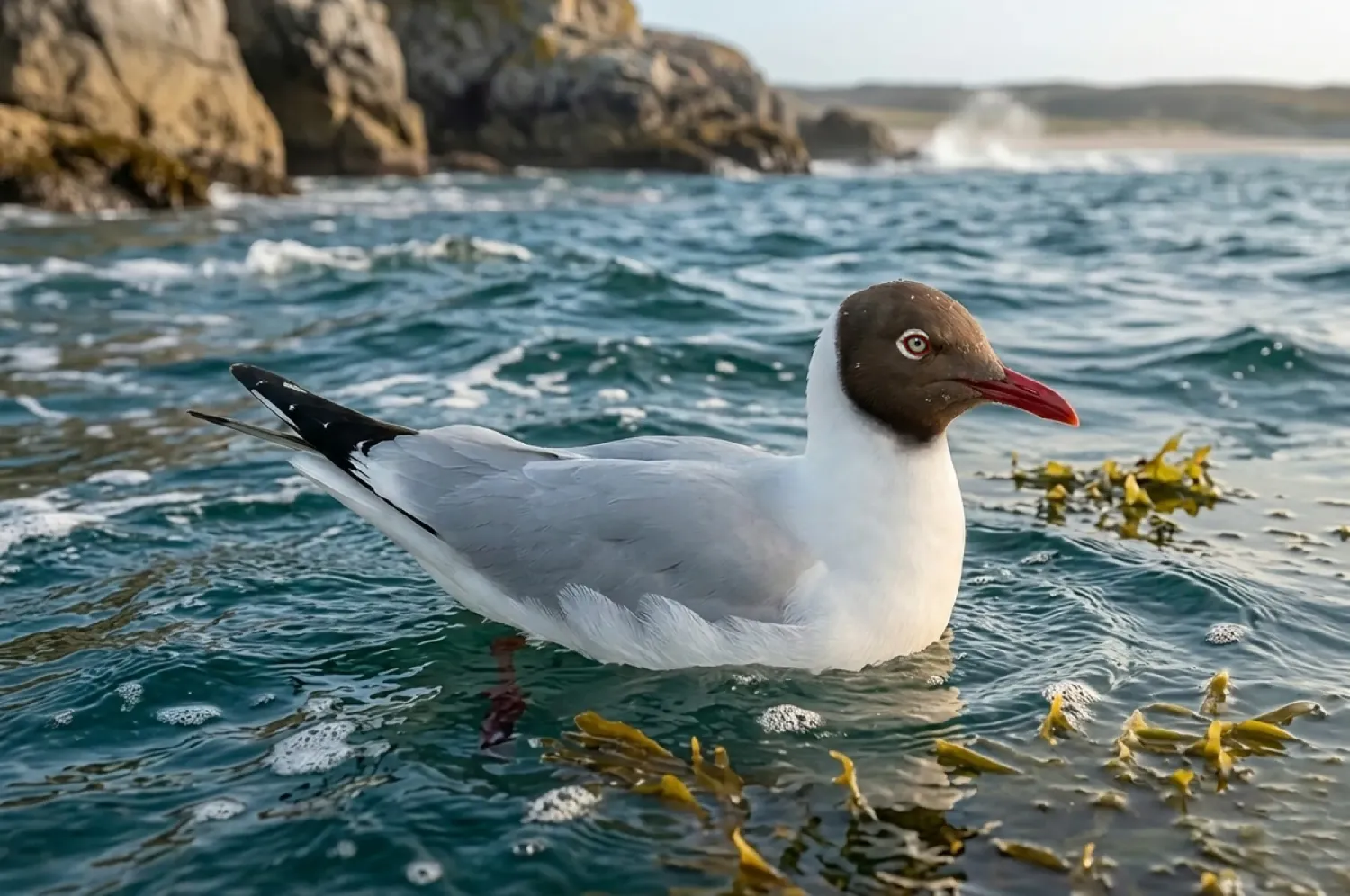
Measuring approximately 42 cm in length, the Brown-headed Gull features pale grey upperparts and white underparts. During the breeding season, adults display a distinctive dark brown hood, which fades to a white head with a dark ear patch in the winter. Its primary wing feathers are black with prominent white "mirrors" at the tips, which are key for identification during flight.
Habitat
The Brown-headed Gull breeds in high-altitude mountain lakes and marshes of the Tibetan Plateau and Central Asia. During the winter, it migrates to warmer coastal areas, estuaries, and large inland lakes across South Asia, including India, Sri Lanka, and Southeast Asia.
Diet
This species is omnivorous and an opportunistic feeder. Its diet consists of fish, insects, small crustaceans, and worms. In urban or coastal areas, they are frequently observed scavenging for food scraps and offal near fishing ports and human settlements.
Breeding and Nesting
Breeding occurs in large, dense colonies, often located on islands in high-altitude lakes. They build their nests on the ground using local vegetation and reeds. A typical clutch contains 2 to 3 eggs, and both parents share the responsibilities of incubation and protecting the chicks.
Behavior
Brown-headed Gulls are highly gregarious and social birds. They are often found in large, noisy flocks, especially at feeding sites or roosting areas. They are known for their loud, raucous calls and can be quite bold when competing for food resources.
Conservation Status - LC Least Concern
The Brown-headed Gull is currently classified as Least Concern by the IUCN. While its population is considered stable, the preservation of its wetland habitats and high-altitude breeding grounds is essential for its long-term survival.
Interesting Facts
- Unlike many other gull species, the Brown-headed Gull is a specialist at breeding in high-altitude environments.
- The white patches on their black wingtips, called "mirrors," are much larger than those of the closely related Black-headed Gull.
- They migrate thousands of miles from the Himalayas to the tropical coasts of the Indian Ocean every year.
- During winter, they lose their brown hood entirely, leaving only a dark spot behind the eye.
Tips for Birdwatchers
To spot these birds, visit coastal mudflats, ferry piers, or estuaries in South Asia between November and March. Bring binoculars to look for the specific wingtip patterns that distinguish them from the smaller Black-headed Gull, which often shares the same habitat.
Conclusion
The Brown-headed Gull is a resilient and adaptable traveler. Whether soaring over the serene lakes of the Himalayas or scavenging along busy tropical coastlines, it remains a fascinating subject for bird enthusiasts and a vital part of the Asian avian ecosystem.
