
Introduction
The Cattle Egret (Bubulcus ibis) is a versatile and highly adaptable heron found across the globe. Unlike many of its relatives that prefer deep water, this species is famously known for its close association with livestock and its preference for terrestrial foraging.
Physical Appearance
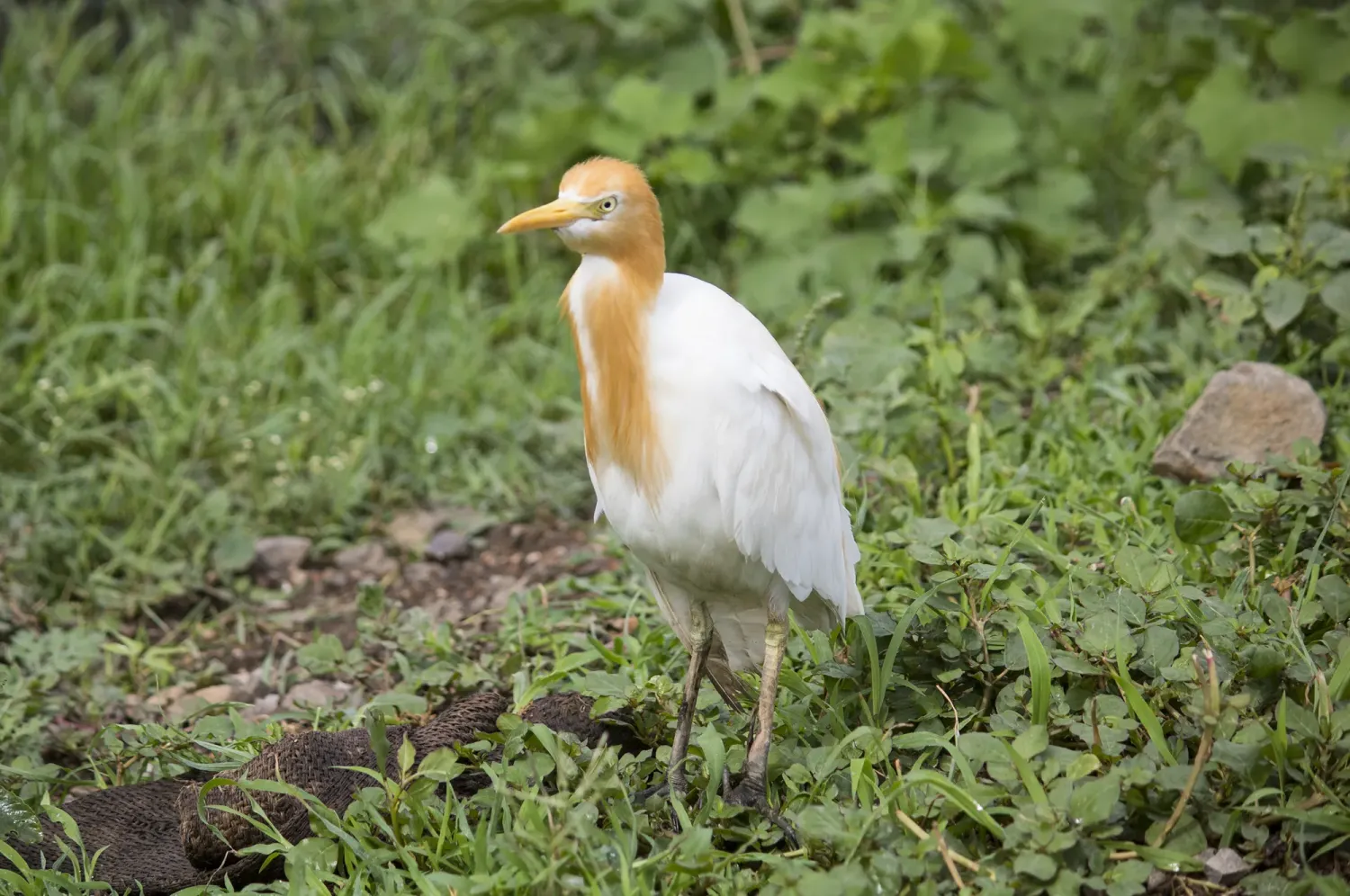
The Cattle Egret is a stocky heron measuring 46-56 cm in length with a wingspan of 88-96 cm. In its non-breeding state, it features pure white plumage, a yellow bill, and grayish-yellow legs. During the breeding season, adults undergo a transformation, developing orange-buff plumes on the crown, back, and breast. Their bill, legs, and irises can even turn bright red for a short period during pairing.
Habitat
This species is gregarious and thrives in various environments, including:
- Damp grasslands and paddy fields.
- Grass banks of village tanks, canals, and lakes.
- Agricultural land near domestic stock.
- Rubbish dumps and forest clearings.
Diet
Unlike most egrets, the Cattle Egret feeds mainly on insects. Its primary diet includes:
- Grasshoppers, crickets, and flies.
- Moths, spiders, and earthworms.
- Frogs and occasionally small lizards.
- In rare cases, they have been observed eating ripe figs from banyan trees.
Breeding and Nesting
During the breeding season, Cattle Egrets nest in colonies, often sharing space with other waterbirds. The male is slightly larger and displays more prominent breeding plumes. They are generally silent but will emit a quiet, throaty 'rick-rack' call at the breeding colony.
Behavior
The Cattle Egret is well-known for its commensal relationship with large mammals like cattle and wild buffalo. It follows these animals to catch insects disturbed by their movement and often perches on their backs to pick off parasitic insects. Their eye positioning allows for binocular vision, which is essential for their hunting style on land.
Conservation Status - LC Least Concern
The Cattle Egret is currently classified as a species of Least Concern. Its ability to adapt to human-altered landscapes and its expansion into new territories have ensured a stable and growing population worldwide.
Interesting Facts
- They have lost the ability of their wetland relatives to accurately correct for light refraction in water.
- They are often seen following tractors and farm machinery to catch displaced insects.
- The species is capable of crepuscular or nocturnal activity.
- Juvenile birds are distinguished by their black bills and lack of colored plumes.
Tips for Birdwatchers
To find Cattle Egrets, look for herds of livestock in open fields or pastures. They are most active during the day and are easy to spot due to their bright white feathers. For the best photos, visit during the breeding season when their vibrant orange plumes and red bills are on full display.
Conclusion
The Cattle Egret is a remarkable bird that demonstrates the beauty of symbiosis in nature. Whether riding on the back of a buffalo or foraging in a quiet meadow, this bird remains an iconic sight for birdwatchers and farmers alike.