
Introduction
The Cinereous Vulture (Aegypius monachus), also known as the Eurasian black vulture, monk vulture, or Eurasian cinereous vulture, is a majestic bird of prey that commands respect across its vast, rugged range. As one of the largest vultures in the Old World, this species is a vital component of the ecosystems it inhabits, playing an essential role as a scavenger. Often misunderstood and frequently overlooked, the Cinereous Vulture is a creature of immense power and endurance, adapted to survive in some of the most challenging terrains across Europe and Asia. Its imposing stature and dark, somber plumage have contributed to its reputation as a formidable presence in the sky. Despite its size and strength, the species faces significant threats from habitat loss, poisoning, and human conflict. Understanding the life cycle and ecological requirements of the Cinereous Vulture is crucial for developing effective conservation strategies to protect this magnificent raptor from further decline and to ensure its presence in our wilderness for future generations.
Physical Appearance
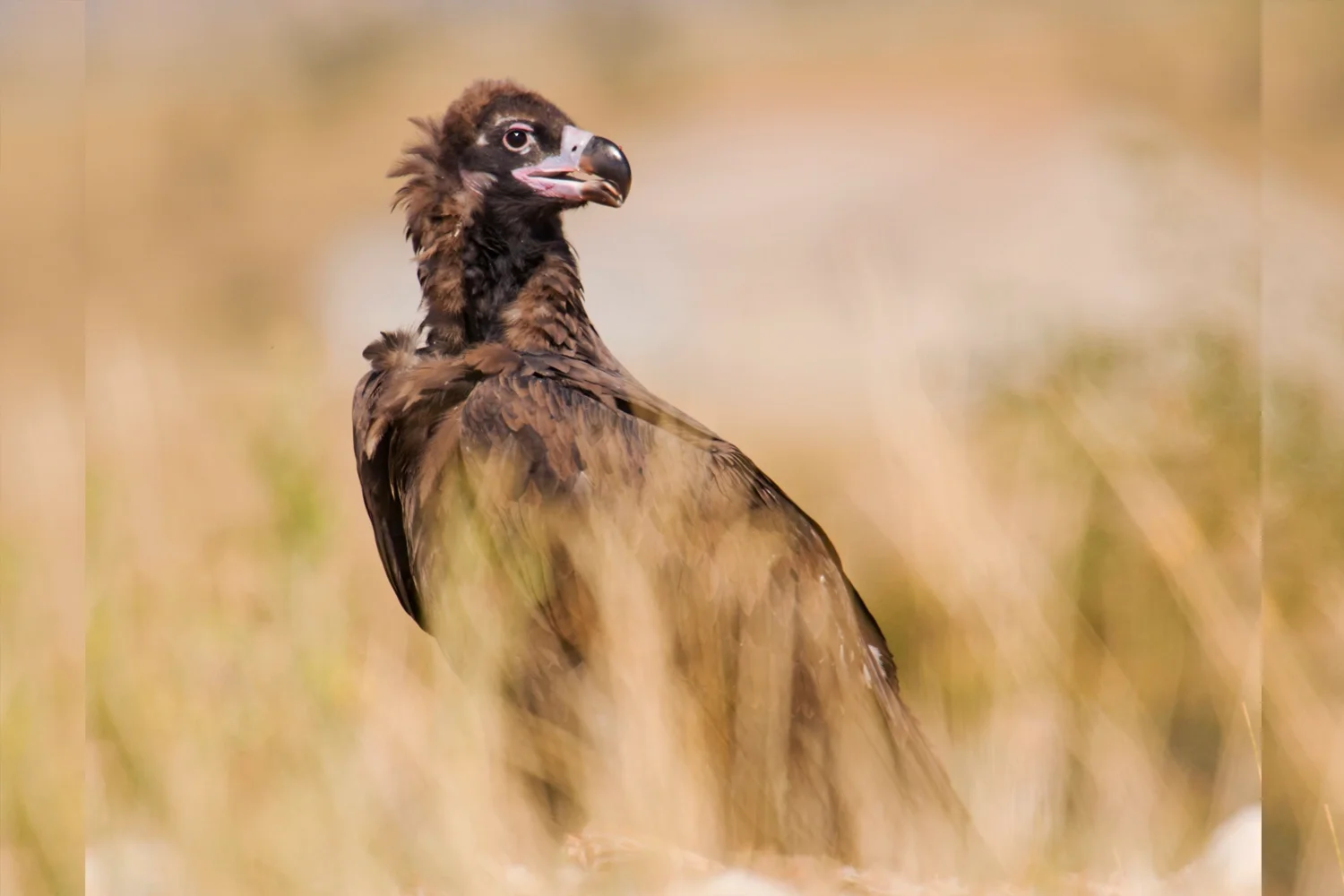
The Cinereous Vulture is a bird of truly gargantuan proportions, standing between 100 and 120 centimeters in height. Its massive frame is supported by a wingspan that can reach up to 3 meters, making it one of the largest flying birds on the planet. The primary coloration of this vulture is a deep, dark black, which transitions into a muted brown across the mantle and wing coverts, providing a somber, monochromatic appearance that serves as excellent camouflage against rocky mountain slopes. A distinguishing feature of the adult is the ruff of feathers around its neck, which gives it a hooded, monk-like appearance—hence the name 'monk vulture.' The head itself is mostly bare, featuring a bluish-grey skin tone that contrasts sharply with its heavy, powerful beak, which is designed for tearing through tough hides. Its legs are sturdy and grey, equipped with strong talons that, while not used for hunting, are essential for navigating steep, rocky terrain. Overall, its physical form is perfectly optimized for long-distance soaring, allowing it to traverse vast territories with minimal energy expenditure.
Habitat
The Cinereous Vulture typically inhabits remote and rugged mountainous regions, as well as vast, open plateaus. Its range extends from southern Europe across central and eastern Asia. These birds prefer high-altitude areas where they can utilize thermal updrafts to soar effortlessly while searching for food. They are often found nesting in large, old-growth trees, specifically coniferous forests, or on inaccessible cliff ledges that offer protection from predators. The selection of their habitat is largely dictated by the availability of nesting sites and the presence of open landscapes where they can scan the ground for carcasses. Because they are sensitive to human disturbance, they generally favor isolated areas far removed from urban centers, requiring large, contiguous tracts of wilderness to thrive.
Diet
As a specialized scavenger, the Cinereous Vulture plays a critical 'clean-up' role in its ecosystem. Its diet consists almost exclusively of carrion, ranging from small mammals and reptiles to large ungulates such as deer, wild boar, and livestock. Using its exceptional eyesight, it spots carcasses from great heights while soaring. Unlike some other vulture species, the Cinereous Vulture has an incredibly strong, thick beak that allows it to tear through tough, thick hides and consume tissues that smaller scavengers cannot access. By feeding on decaying matter, these birds prevent the spread of diseases in their habitat, effectively acting as nature's sanitation service and maintaining environmental health.
Breeding and Nesting
Breeding for the Cinereous Vulture is a long and dedicated process. These birds are generally monogamous and often return to the same nesting site year after year. The nesting period begins in late winter or early spring. They construct massive, bulky nests made of sticks, twigs, and branches, typically situated high up in large trees or on secure cliff shelves. The female usually lays only a single egg, which is incubated by both parents for approximately 50 to 55 days. Once the chick hatches, both the male and female take turns providing food and protection. The nestling period is lengthy, with the young bird staying in the nest for about three to four months before it finally fledge, requiring significant parental investment for survival.
Behavior
The Cinereous Vulture is largely solitary or found in small, loose groups, though they may congregate in larger numbers at a significant food source. They are masters of the air, spending hours soaring on thermals to cover vast distances with minimal flapping. They are generally quiet, shy birds that avoid human contact whenever possible. While they do not exhibit the complex social structures of some other raptors, they communicate through subtle postures and vocalizations. Their behavior is largely centered around energy conservation; by waiting for the right conditions to soar, they maximize their ability to patrol large territories while minimizing the metabolic cost of flight.
Conservation Status - NT Near Threatened
The Cinereous Vulture is currently classified as 'Near Threatened' by the IUCN. Historically, the species has suffered from significant population declines due to habitat loss, the illegal use of poisoned baits aimed at predators, and a decrease in the availability of natural food sources. Conservation efforts are currently focused on supplemental feeding programs, the protection of nesting sites, and educational initiatives to reduce human-wildlife conflict. While populations in some regions show signs of recovery due to these dedicated interventions, the species remains vulnerable and requires ongoing international cooperation to ensure long-term stability.
Interesting Facts
- The Cinereous Vulture is one of the heaviest flying birds in the world, weighing up to 14 kilograms.
- Their wingspan can reach an impressive 3 meters, allowing them to soar for hours.
- They have incredibly powerful beaks capable of tearing through the thick hides of large animals.
- The term 'monk vulture' comes from the ruff of feathers around their neck resembling a monk's hood.
- They play a crucial ecological role by disposing of carcasses, which helps control disease outbreaks.
- They are highly sensitive to human presence and rarely nest near human settlements.
- They are largely silent birds, rarely making sounds except for soft grunts or hisses.
Tips for Birdwatchers
For birdwatchers hoping to spot the elusive Cinereous Vulture, patience is the most important tool. These birds are most active during the warmest parts of the day when thermals are strongest, making this the best time to look up. Focus your search in remote, mountainous regions or large, intact forests within their range, such as in Spain or parts of Central Asia. Using high-quality binoculars or a spotting scope is essential, as these birds often soar at great altitudes. Avoid approaching nesting sites during the breeding season, as these birds are easily disturbed and may abandon their nests. Respecting their space ensures that your presence does not negatively impact their breeding success.
Conclusion
In conclusion, the Cinereous Vulture stands as a testament to the raw beauty and resilience of the natural world. As one of the largest and most powerful birds of prey, it occupies a unique and vital niche in the ecosystems of Europe and Asia. Its role as a scavenger is indispensable, providing essential sanitation services that protect the health of the broader environment. However, the challenges facing this species—ranging from habitat fragmentation to the lethal impacts of poisoning—remind us of the fragility of our wild spaces. Protecting the Cinereous Vulture is not merely about saving a single species; it is about preserving the integrity of the remote landscapes they inhabit. Through continued conservation research, habitat protection, and increased public awareness, we can hope to mitigate the threats this bird faces. By appreciating the complexity of their behavior and the importance of their role in nature, we can move toward a future where these 'monks of the mountains' continue to grace our skies for generations to come, symbolizing the untamed spirit of the wilderness.