
Introduction
The Common Moorhen (Gallinula chloropus) is a distinctive medium-sized water bird belonging to the Rallidae family, which includes crakes and rails. Widely distributed across Europe, Africa, and Asia, this adaptable species is a common sight in various wetland environments, ranging from wild marshes to urban park ponds.
Physical Appearance
The Common Moorhen typically measures between 32-35 cm in length. Its physical characteristics include:
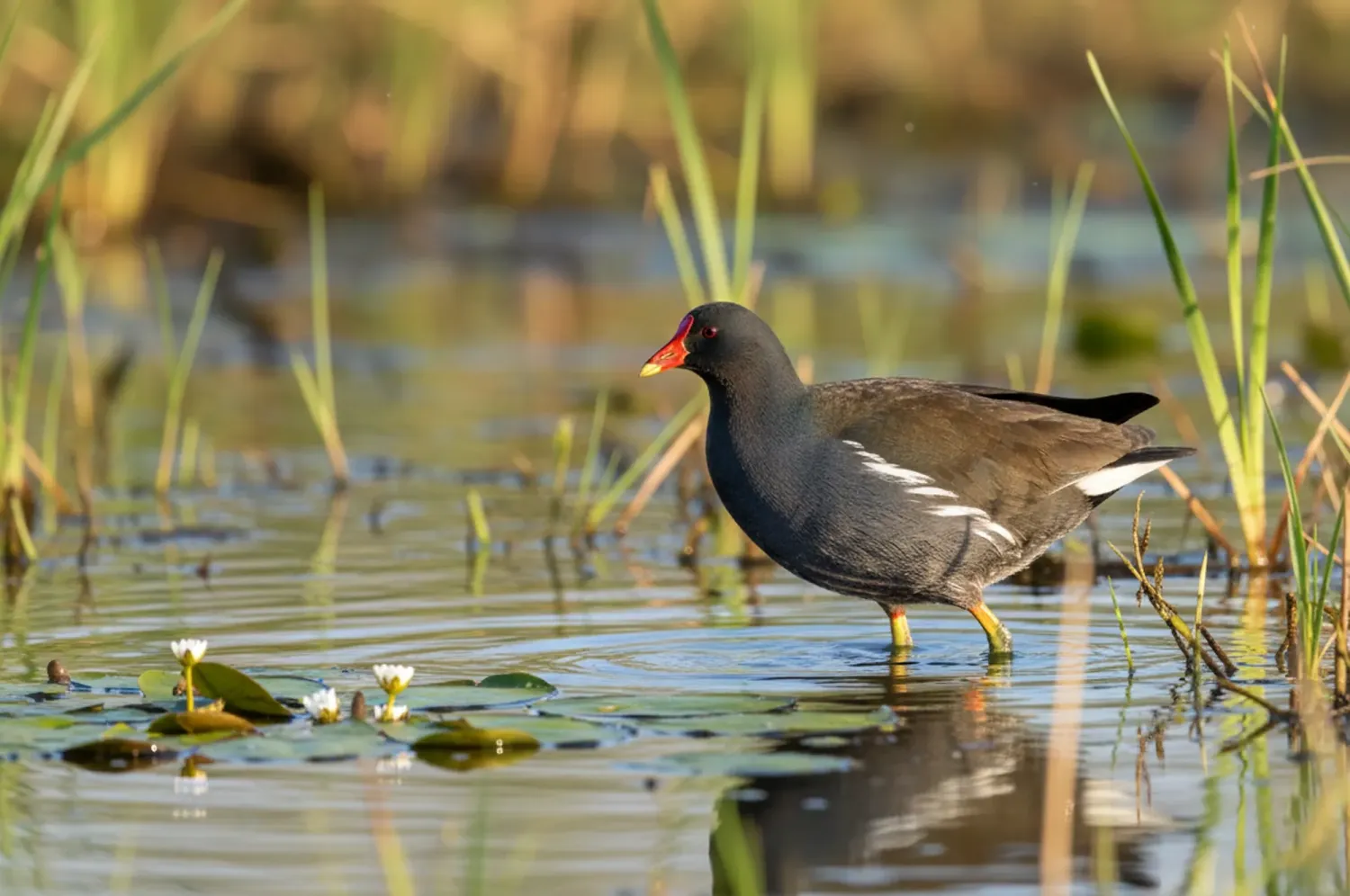
- Plumage: Predominantly dark brown and black feathers with striking white markings along the flanks and under the tail.
- Wings: Short, rounded wings that facilitate quick, though often weak, flight.
- Legs and Feet: Strong legs equipped with exceptionally long toes, perfectly adapted for walking on soft, uneven surfaces and floating vegetation.
- Subspecies: There are five recognized subspecies, showing slight variations across their global range.
Habitat
This species is highly versatile, frequenting freshwater or brackish wetlands. Its preferred habitats include:
- Marshes, lakes, and slow-moving rivers with plenty of fringing vegetation.
- Ponds and water bodies featuring brushy cover for protection.
- Urban areas, where they are often found in city parks and artificial lakes.
- They are found worldwide, excluding polar regions and tropical rain forests.
Diet
Common Moorhens are omnivorous generalists with a diverse diet that varies by season and availability:
- Plant Matter: Algae, moss, reeds, aquatic plants, seeds, berries, fruits, and cereal crops.
- Animal Matter: Small fish, invertebrates, worms, mollusks, and both aquatic and terrestrial insects.
- Occasional Scavenging: They have also been known to consume small rodents, amphibians, and even the eggs of other birds.
Breeding and Nesting
During the breeding season, the Common Moorhen becomes aggressively territorial. While they are often seen in sizeable flocks on shallow vegetated lakes during the rest of the year, they will vigorously defend their nesting sites from intruders during the spring and summer months.
Behavior
Unlike many other rails that remain hidden in dense reedbeds, the Common Moorhen is easy to observe as it frequently feeds in open water margins. They are capable of walking efficiently on soft mud and floating plants. While they appear to be weak fliers, migratory populations can cover distances of up to 2,000 km, typically traveling under the cover of night.
Conservation Status - LC Least Concern
The Common Moorhen is widely distributed and remains common throughout most of its range. However, certain island populations, such as the Gough Moorhen, have evolved toward flightlessness, making them more vulnerable to localized environmental changes.
Interesting Facts
- Migratory Common Moorhens from Siberia can travel up to 2,000 km to reach their breeding grounds.
- Island populations of moorhens have a marked tendency to evolve flightlessness.
- Despite being water birds, they do not have webbed feet; instead, they use long toes to distribute their weight on lily pads and mud.
- They are known to migrate almost exclusively at night.
Tips for Birdwatchers
To spot a Common Moorhen, look along the edges of ponds or slow rivers where there is thick vegetation. Because they are less shy than other rails, you can often find them in urban parks. Bring binoculars to spot the white plumage markings and the red frontal shield on their forehead, which stands out against their dark feathers.
Conclusion
The Common Moorhen is a fascinating and resilient member of the Rallidae family. Its ability to thrive in both wild wetlands and human-altered landscapes makes it one of the most successful and recognizable water birds in the world. Whether you are in a remote marsh or a city park, the moorhen is a testament to avian adaptability.