
Introduction
The Indian thick-knee (Burhinus indicus), also widely known as the Indian stone-curlew, is a distinctive ground-dwelling bird belonging to the Burhinidae family. Once classified as a subspecies of the Eurasian stone-curlew, it is now recognized as a separate species found primarily across the plains of South and South-eastern Asia.
Physical Appearance
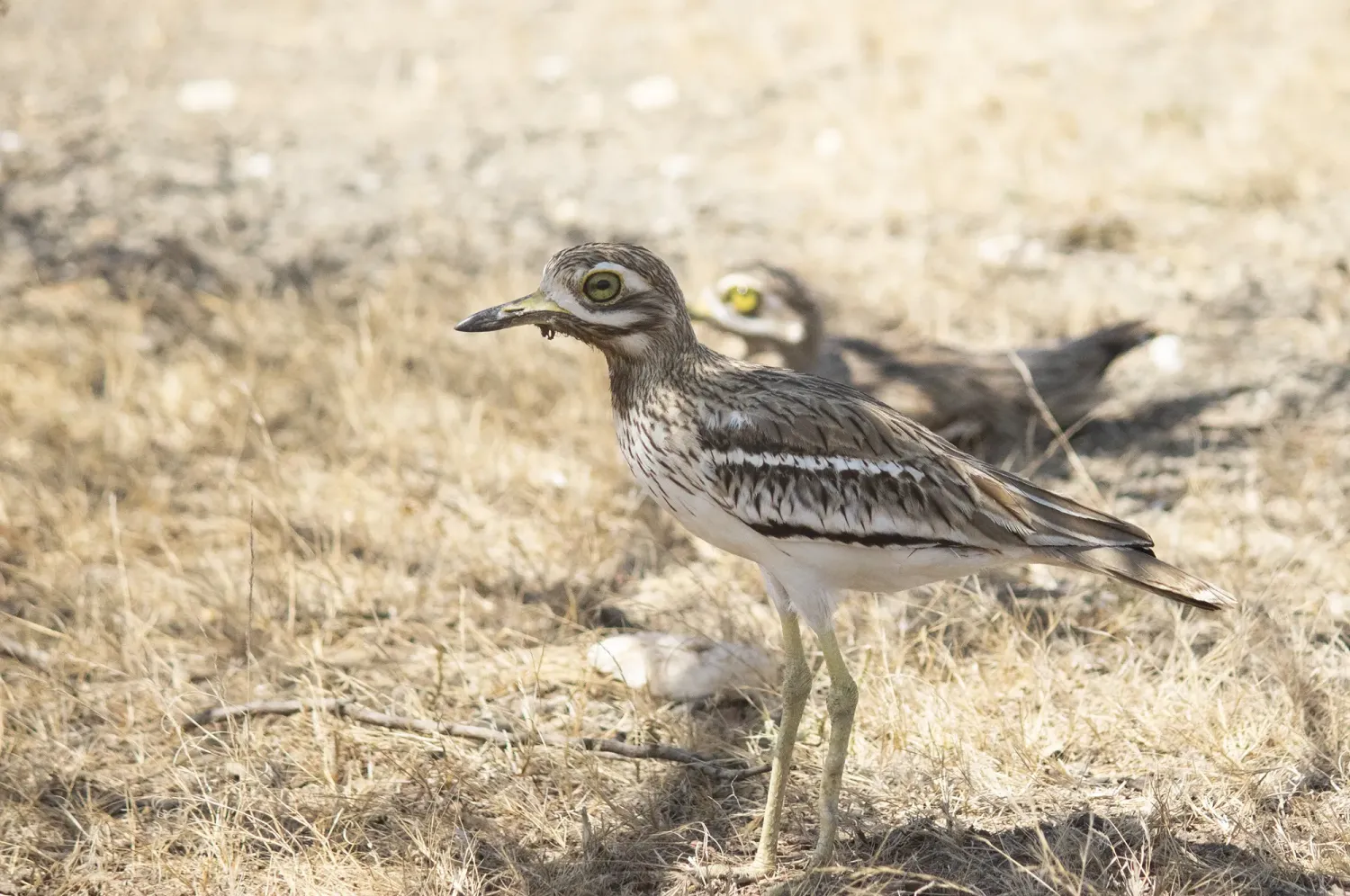
This stocky, plover-like bird is a master of camouflage. Its physical characteristics include:
- Size: Typically ranges between 36 to 41 cm in length.
- Plumage: Sandy brown ground color with dark streaks and pale marks, allowing it to blend perfectly with soil and rocks.
- Eyes: Large, prominent yellow eyes designed for night vision.
- Head details: A large head featuring a dark stripe bordering a creamy moustachial stripe and a narrow creamy supercilium.
- Legs: Stout legs with thickened joints, which is the origin of the name "thick-knee."
- In Flight: Displays two prominent white patches on the darker primary feathers.
Habitat
The Indian thick-knee prefers dry, open environments where its plumage provides the best protection. Common habitats include:
- Dry deciduous forests and thorn forests.
- Scrubby riverbeds and rocky terrain.
- Open groves and occasionally well-maintained gardens.
Diet
As an opportunistic feeder, the Indian thick-knee's diet consists of:
- Mainly insects and worms.
- Small reptiles.
- Occasionally seeds and other small plant matter.
Breeding and Nesting
These birds are ground nesters. They do not build elaborate nests but instead lay their eggs in a shallow scrape on the bare ground or among stones. The eggs are cryptically colored to match the environment, making them nearly invisible to predators.
Behavior
Primarily nocturnal or crepuscular, the Indian thick-knee is most active during the dark hours. They are known for their "freeze" behavior, where they remain perfectly still to avoid detection. Their vocalizations are similar to true curlews, often emitting whistling calls that are most frequent at night or during overcast weather.
Conservation Status - LC Least Concern
The Indian thick-knee is currently categorized as Least Concern on the IUCN Red List, as it has a wide distribution and a population that appears to be stable.
Interesting Facts
- They were formerly considered the same species as the Eurasian stone-curlew.
- Their large yellow eyes are specifically adapted for hunting in low-light conditions.
- Despite their name, the "thick knee" is actually the bird's ankle joint (intertarsal joint).
- When at rest, a broad pale band is visible on their wings.
- They rely more on camouflage and running than flying to escape threats.
Tips for Birdwatchers
- Look for them in dry, stony areas where they are likely to be roosting during the day.
- Use binoculars to scan the ground carefully; they are often mistaken for stones until they move.
- Listen for their distinctive calls at dusk to identify their presence in a specific area.
- Be careful not to disturb ground nests during the breeding season, as they are very difficult to see.
Conclusion
The Indian thick-knee is a fascinating example of evolutionary camouflage. Whether you call it a stone-curlew or a thick-knee, this bird remains a highlight for birdwatchers in South Asia, offering a glimpse into the specialized world of nocturnal ground birds.