
Introduction
The woolly-necked stork, also known as the whitenecked stork (Ciconia episcopus), is a striking large wading bird belonging to the stork family Ciconiidae. Distributed across various landscapes from Asia to Africa, this species is recognized for its distinctive plumage and its ability to thrive in a wide range of wetland and agricultural environments.
Physical Appearance
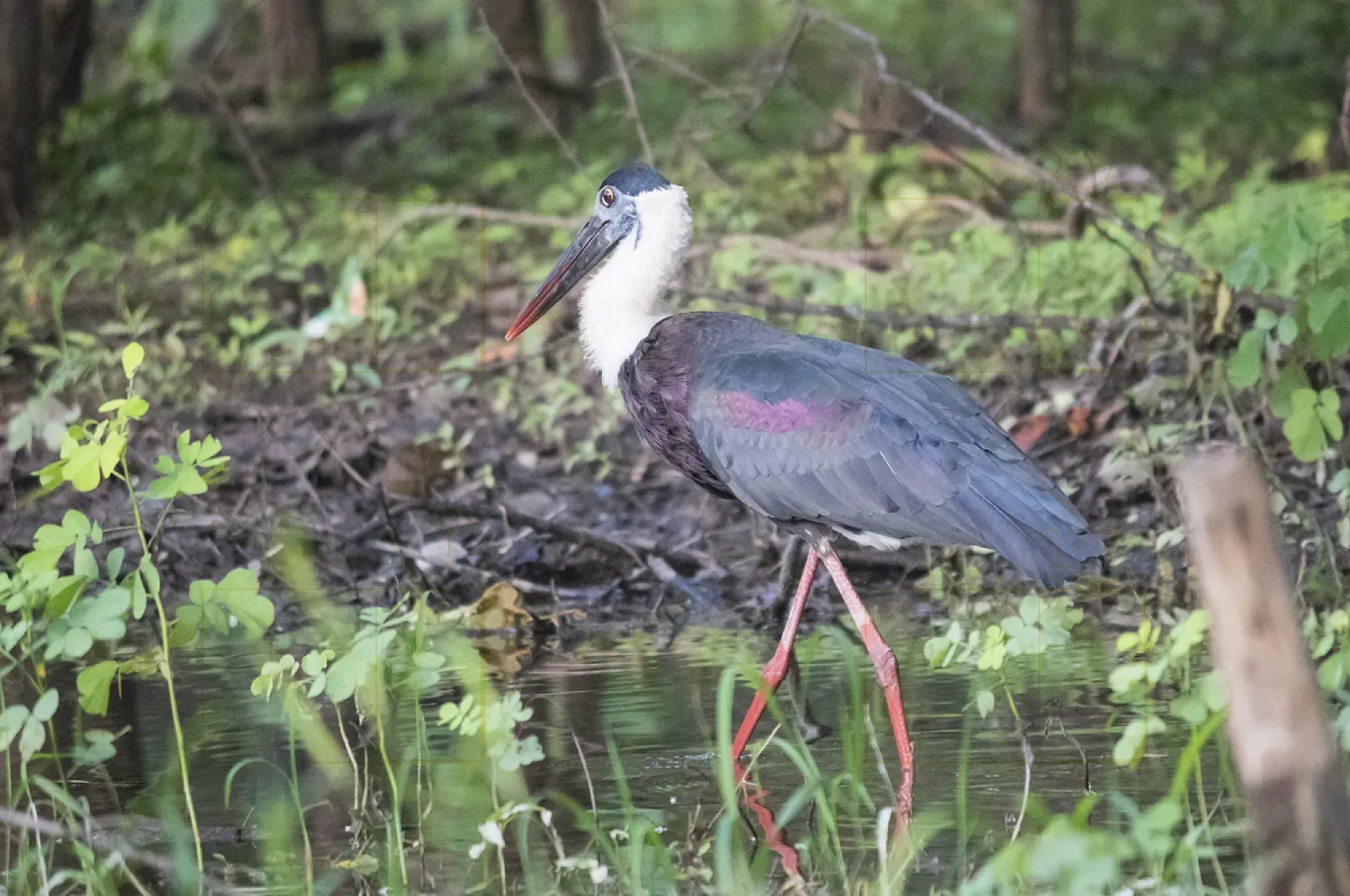
Standing between 75-92 cm tall, the woolly-necked stork is a medium-sized stork with a primarily glistening black body. Its most defining feature is the downy white neck and a black "skull cap." Additional physical characteristics include:
- Eyes: Deep crimson or wine-red irises.
- Plumage: Iridescent feathers on the fore-neck with a coppery-purple tinge that can be erected during displays.
- Tail: A deeply forked white tail, often obscured by long black under-tail coverts.
- Legs and Bill: Long red legs and a heavy blackish bill, sometimes showing dark-red hues.
- Unique Feature: A narrow band of unfeathered skin under the forearm that glows with a neon orange-red color during flight or displays.
Habitat
The woolly-necked stork is highly adaptable and occupies a variety of wetland habitats. In India, it is frequently found on waterlogged ground and ricefields, while in East Africa, it inhabits coastal mudflats, coral reefs, and savannas. It generally prefers:
- Rivers, marshes, and lakes.
- Flood plains and pastures.
- Swamp forests and light woodland clearings.
- Agricultural areas and cultivated grasslands.
Diet
This species is a carnivorous feeder with a diverse menu. The woolly-necked stork typically hunts by walking slowly on the ground or near water sources. Its diet consists of:
- Marine life: Fish, amphibians, and crustaceans.
- Invertebrates: Molluscs and large insects.
- Terrestrial prey: Reptiles and invertebrates often caught near bush fires.
Breeding and Nesting
The woolly-necked stork is known to breed either singly or in small, loose colonies. They construct nests in tall trees located in forests or near wetlands. The nestlings are initially pale grey with buffy down on the neck and a black crown, eventually growing into immature versions of the adults with less iridescence and fluffier neck feathers.
Behavior
These birds are generally quiet but engage in visual displays. They are often seen walking slowly through shallow water or grass to flush out prey. During breeding displays, they can erect the elongated feathers on their fore-neck. They are also known to take advantage of bush fires to catch fleeing insects and small animals.
Conservation Status - NT Near Threatened
While widely distributed, the woolly-necked stork faces threats from habitat loss and the drainage of wetlands. While the African and Asian populations are currently treated as one species, some researchers suggest they may be distinct species due to geographical isolation, which could impact future conservation strategies.
Interesting Facts
- It is also known by the names Bishop Stork and Parson-bird.
- The white neck feathers are so soft and dense they resemble wool, giving the bird its common name.
- The species features a "neon" skin patch under the wing that has been described as looking like a red-gold jewel.
- Unlike many other storks, the woolly-necked stork has a deeply forked tail.
- The African population has a jagged border on its black cap, whereas the Asian population has a sharp, clean border.
Tips for Birdwatchers
To spot a woolly-necked stork, focus your search on freshwater wetlands and agricultural ricefields during the early morning. In coastal regions of East Africa, look toward coral reefs and mudflats at low tide. They are often less shy than other stork species and can sometimes be seen in cultivated areas near human settlements.
Conclusion
The woolly-necked stork is a magnificent example of avian adaptability. From its iridescent plumage to its unique "neon" wing skin, it remains a favorite for birdwatchers and ecologists alike. Protecting the wetlands and marshes they call home is essential for ensuring this "Parson-bird" continues to thrive across the globe.