
Introduction
The Brown Fish Owl (Ketupa zeylonensis) is a large, impressive owl species native to the Indian subcontinent and Southeast Asia. Unlike many of its strictly nocturnal relatives, this owl is often active at dusk and dawn, making it a favorite for birdwatchers in its native range.
Physical Appearance
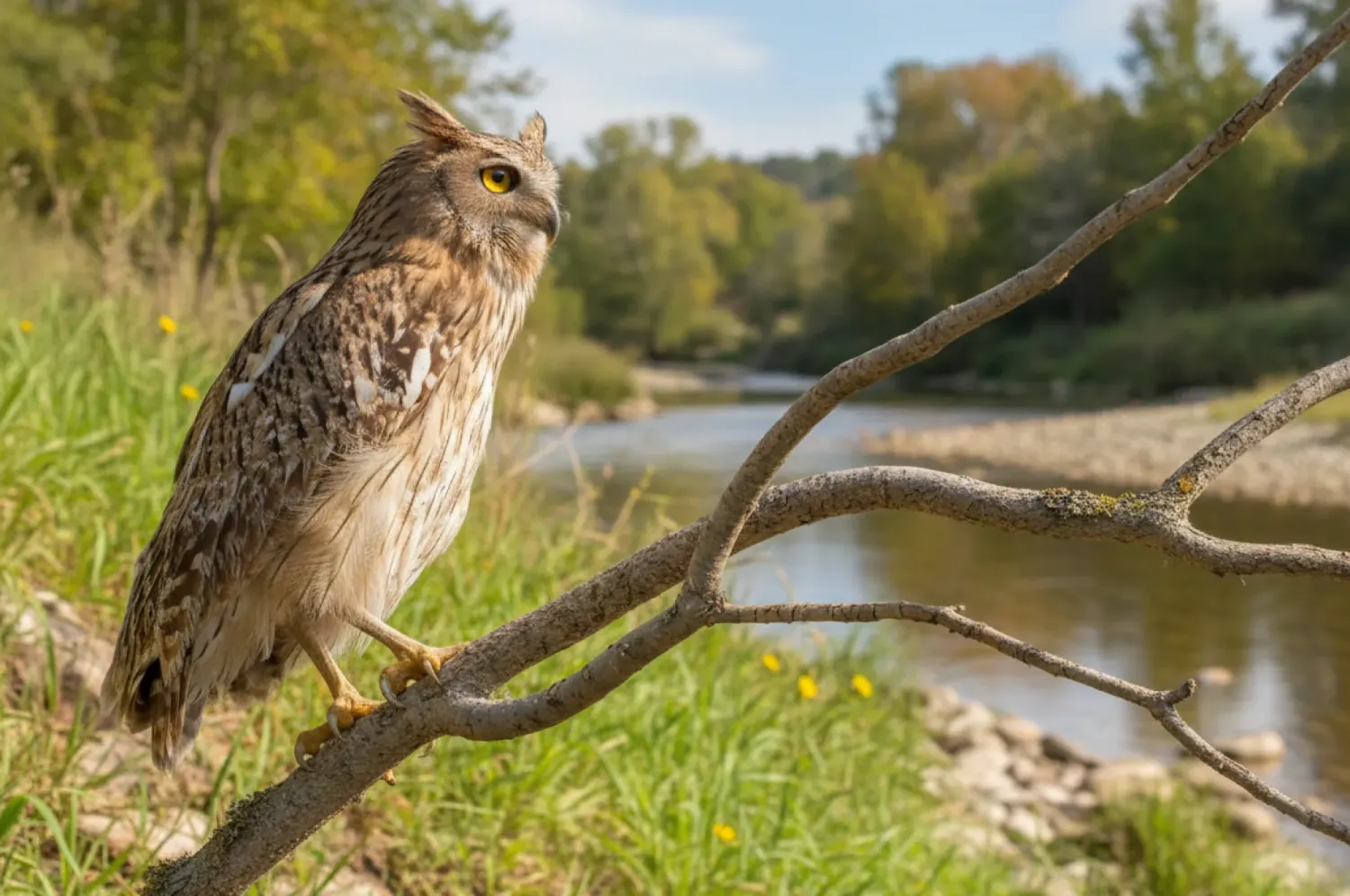
Standing at approximately 56 cm, the Brown Fish Owl is a robust bird with prominent ear tufts and striking golden-yellow eyes. Its plumage is a rich rufous-brown, heavily marked with dark streaks. A key physical adaptation is its unfeathered legs and the tiny spikes (spicules) on the soles of its feet, which help it grip slippery fish.
Habitat
This species is primarily found near water bodies, including rivers, lakes, streams, and wooded wetlands. They prefer lowland forests and agricultural areas where there is easy access to perennial water sources and large trees for roosting.
Diet
True to its name, the Brown Fish Owl's primary diet consists of fish and aquatic crustaceans like crabs. However, they are opportunistic hunters and will also consume frogs, small mammals, reptiles, and occasionally other birds.
Breeding and Nesting
Breeding usually takes place between November and April. They do not build their own nests; instead, they utilize tree hollows, abandoned nests of large birds (like eagles), or even rocky ledges near water. They typically lay one or two white eggs.
Behavior
The Brown Fish Owl is semi-diurnal, often seen hunting during the day if the weather is overcast. They have a deep, booming call that sounds like a low 'hu-hu-hu'. They are known to spend much of their time perching on branches overlooking water, waiting for the perfect moment to strike.
Conservation Status - LC Least Concern
The Brown Fish Owl is currently listed as Least Concern on the IUCN Red List. While their population is generally stable, they are sensitive to the degradation of wetlands and the loss of large nesting trees.
Interesting Facts
- Unlike most owls, their flight is not completely silent because they lack the specialized soft fringe on their feathers—this is because they don't need to sneak up on fish.
- They have been observed bathing in shallow water to keep their plumage clean.
- Their wingspan can reach up to an impressive 150 cm.
- They are one of the few owl species that can be regularly spotted during daylight hours.
Tips for Birdwatchers
- Look for them at dawn or dusk near the edges of lakes and rivers.
- Listen for their distinctive, low-pitched hooting to locate them in thick canopy cover.
- Search for large trees with horizontal branches that hang over water.
- Use binoculars with a high light-gathering capacity for the best views during twilight.
Conclusion
The Brown Fish Owl is a magnificent example of specialized evolution. Its unique lifestyle and striking appearance make it a highlight for any birdwatching expedition in Asia. Understanding and protecting its watery habitats is key to ensuring this raptor continues to thrive.
