
Introduction
The Northern Shoveler (Anas clypeata), known simply as the shoveler in Britain, is a common and widespread duck species found across the northern hemisphere. Recognized for its distinctive spatulate bill, this waterfowl is a favorite among birdwatchers from North America to Asia. It belongs to the group of dabbling ducks and is highly migratory, traveling vast distances to winter in warmer climates.
Physical Appearance
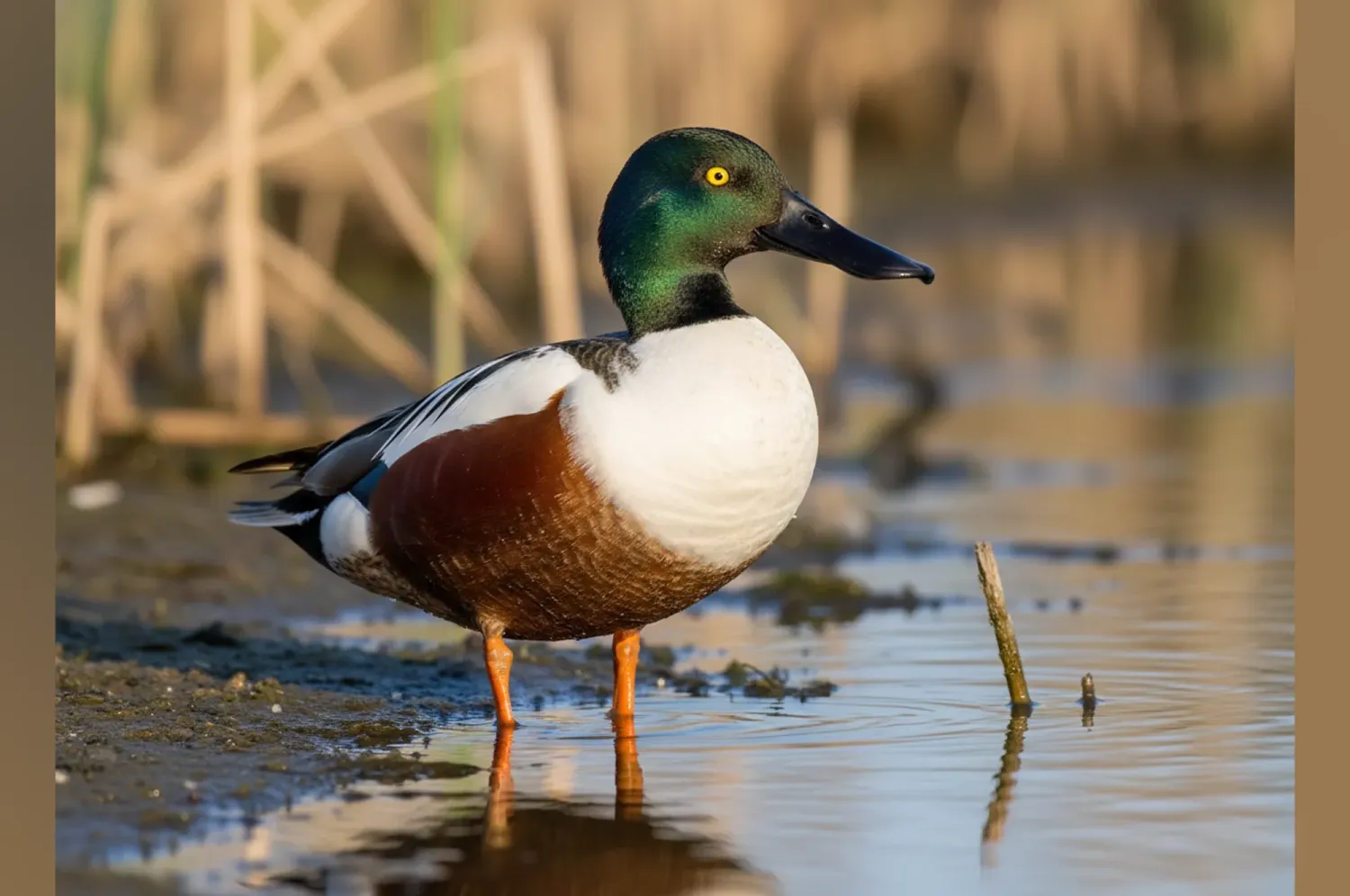
Measuring between 44-52 cm in length, the Northern Shoveler is medium-sized but stands out due to its oversized, spoon-shaped bill. The breeding drake is particularly striking with an iridescent dark green head, a white breast, and reddish-chestnut flanks. Its wings feature a green speculum and pale blue forewing feathers bordered with white. The long, broad bill is typically gray with orange tinges on the edges, while females display a more mottled brown plumage with a similarly large, though often more orange-hued, bill.
Habitat
The Northern Shoveler prefers freshwater marshes, ponds, and lakes with plenty of emergent vegetation and muddy margins. They are commonly found in prairies and tundra during the breeding season. During migration and winter, their habitat expands to include:
- Open lakes and fresh marshes
- Estuaries and coastal lagoons
- Shallow waters with muddy margins
- Stagnant or polluted waters often avoided by other species
Remarkably, they have been recorded at elevations of up to 4,000 meters in Ethiopia and 2,800 meters in Bhutan.
Diet
This species has a highly specialized diet facilitated by its unique anatomy. The broad, flat bill is lined with over 100 lamellae—fine, comb-like structures that act as sieves. By pumping water through their bills, they filter out:
- Crustaceans and plankton
- Aquatic insects and larvae
- Molluscs
- Aquatic vegetation and seeds
Breeding and Nesting
Breeding occurs in temperate regions throughout the northern hemisphere. Northern Shovelers typically nest in grassy areas near shallow water, often within freshwater marshes or lakes with emergent vegetation. They favor habitats like prairies and tundra where food is abundant during the warmer months to support their young.
Behavior
Northern Shovelers are social birds, often seen in small groups or large flocks during migration. Their feeding behavior is distinctive; they often swim with their bills submerged, swinging them from side to side to filter food. They are also known to swim in tight circles to create a vortex that brings food items toward the surface, a behavior often shared with other members of the flock.
Conservation Status - LC Least Concern
The Northern Shoveler is currently classified as Least Concern by the IUCN. It is a widespread and locally abundant species. It is also one of the birds protected under the Agreement on the Conservation of African-Eurasian Migratory Waterbirds (AEWA), ensuring international cooperation for its continued survival.
Interesting Facts
- The species was first described in 1758 by the famous Swedish botanist and zoologist Carolus Linnaeus.
- Their spatulate bill contains more than 100 lamellae along the cutting edges for specialized filter-feeding.
- Unlike many other ducks, Northern Shovelers are known to utilize stagnant and polluted waters that other species avoid.
- They are highly migratory, wintering as far south as Central America, Africa, and Southeast Asia.
Tips for Birdwatchers
To spot a Northern Shoveler, look for their unusually large bills, which make them look front-heavy even from a distance. They are often found in shallow, muddy edges of wetlands. Listen for the drake's low, croaking 'pook-pook' call. During the winter, check coastal lagoons and estuaries where they congregate in significant numbers.
Conclusion
With its unmistakable profile and vibrant breeding plumage, the Northern Shoveler is a fascinating example of evolutionary specialization. Whether you are observing them filter-feeding in a local marsh or tracking their impressive migratory journeys, these ducks remain a vital and beautiful part of our global wetland ecosystems.