
Introduction
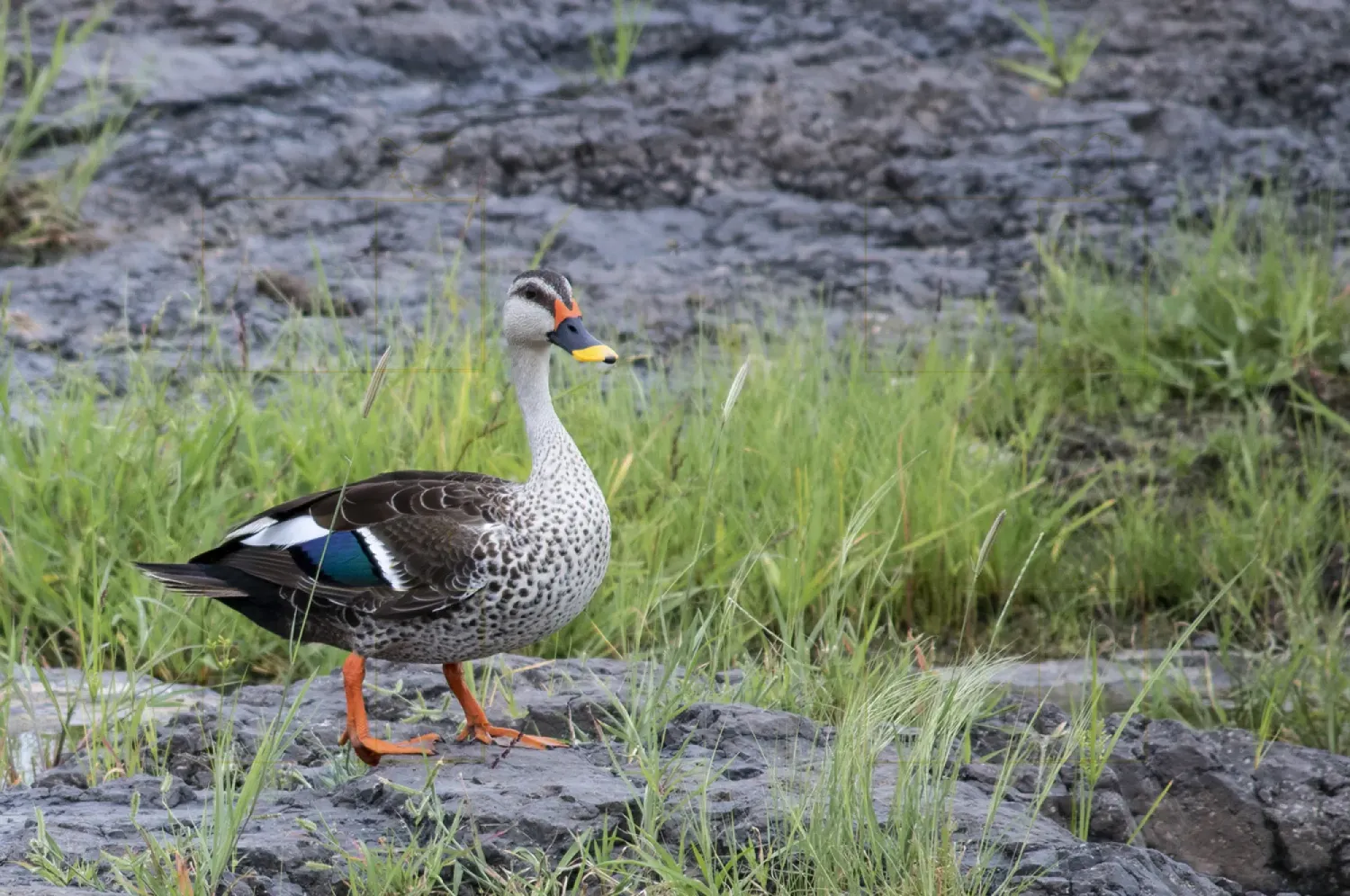
The Indian spot-billed duck (Anas poecilorhyncha) is a large, non-migratory dabbling duck native to the freshwater wetlands of the Indian subcontinent. Known for its distinctive facial markings and scaly plumage, it is a common and beautiful sight for birdwatchers across South Asia.
Physical Appearance
Measuring between 58-63 cm in length, this duck features a grey, scaly-patterned body and a pale head. Its most defining characteristic is the black bill with a bright yellow tip and a signature red spot at the base. In flight, it displays a striking green speculum with a broad white band, while its white tertials form a visible stripe on its side when resting on water.
Habitat
This species thrives in freshwater wetlands, specifically preferring reed- and vegetation-covered jheels, shallow ponds, and lakes. They are well-adapted to environments with abundant aquatic flora which provides both necessary cover and a steady food source.
Diet
The Indian spot-billed duck is primarily herbivorous, feeding on wild grains, seeds, and shoots of aquatic plants. However, they are opportunistic feeders and will occasionally consume water insects, worms, and water-snails. They are also known to frequent agricultural areas, where they may cause damage to paddy crops.
Breeding and Nesting
These ducks are non-migratory breeders that stay within their range year-round. They typically build their nests on the ground, hidden within thick vegetation near the water's edge to protect their brood from predators. Both parents undergo a complete post-breeding moult, temporarily dropping all wing feathers simultaneously.
Behavior
As a dabbling duck, it feeds by upending its body in shallow water rather than diving. They are generally social and can be found in small groups or pairs. Interestingly, the male of this species does not have an eclipse plumage, maintaining its colorful bill spots throughout the year.
Conservation Status - LC Least Concern
The Indian spot-billed duck is currently classified as Least Concern on the IUCN Red List. While their population is stable, they remain dependent on the preservation of freshwater wetlands and are sensitive to habitat loss and water pollution.
Interesting Facts
- The name is derived from the distinct red spot at the base of the bill, a feature specific to the mainland Indian population.
- Unlike many other duck species, the Indian spot-billed duck is non-migratory.
- The white tertial feathers are so prominent they can be used to identify the bird from a long distance.
- The eastern spot-billed duck was once considered a subspecies but is now recognized as a separate species (A. zonorhyncha).
Tips for Birdwatchers
- Look for the white stripe on the side of the body to identify them quickly while they are swimming.
- Early morning is the best time to observe them feeding in shallow, vegetation-rich ponds.
- Use binoculars to distinguish the male from the female; the male has more prominent orange-red spots at the base of the bill.
Conclusion
The Indian spot-billed duck is a resilient and iconic resident of India's wetlands. With its unique bill markings and scaly plumage, it remains a favorite for nature enthusiasts and plays a vital role in the ecology of freshwater ecosystems.
