
Introduction
The Red-headed Barbet (Eubucco bourcierii) is a striking member of the Capitonidae family, renowned for its vivid plumage and charismatic presence within the lush, dense forests of the Neotropics. As a quintessential tree-clinging bird, it occupies a specialized niche in the forest canopy, often remaining hidden among the thick foliage. This species serves as a fascinating subject for ornithologists and birdwatchers alike, offering a glimpse into the incredible biodiversity of South and Central American ecosystems. Characterized by its intense coloration and distinct vocalizations, the Red-headed Barbet is a testament to the evolutionary marvels of tropical avian life. Understanding this bird requires an appreciation for its complex relationship with its environment, as it plays a vital role in seed dispersal and forest maintenance. Whether you are a seasoned birder or a nature enthusiast, the Red-headed Barbet provides an unparalleled opportunity to study the intricate behaviors of forest-dwelling species that thrive in the heart of the rainforest.
Physical Appearance
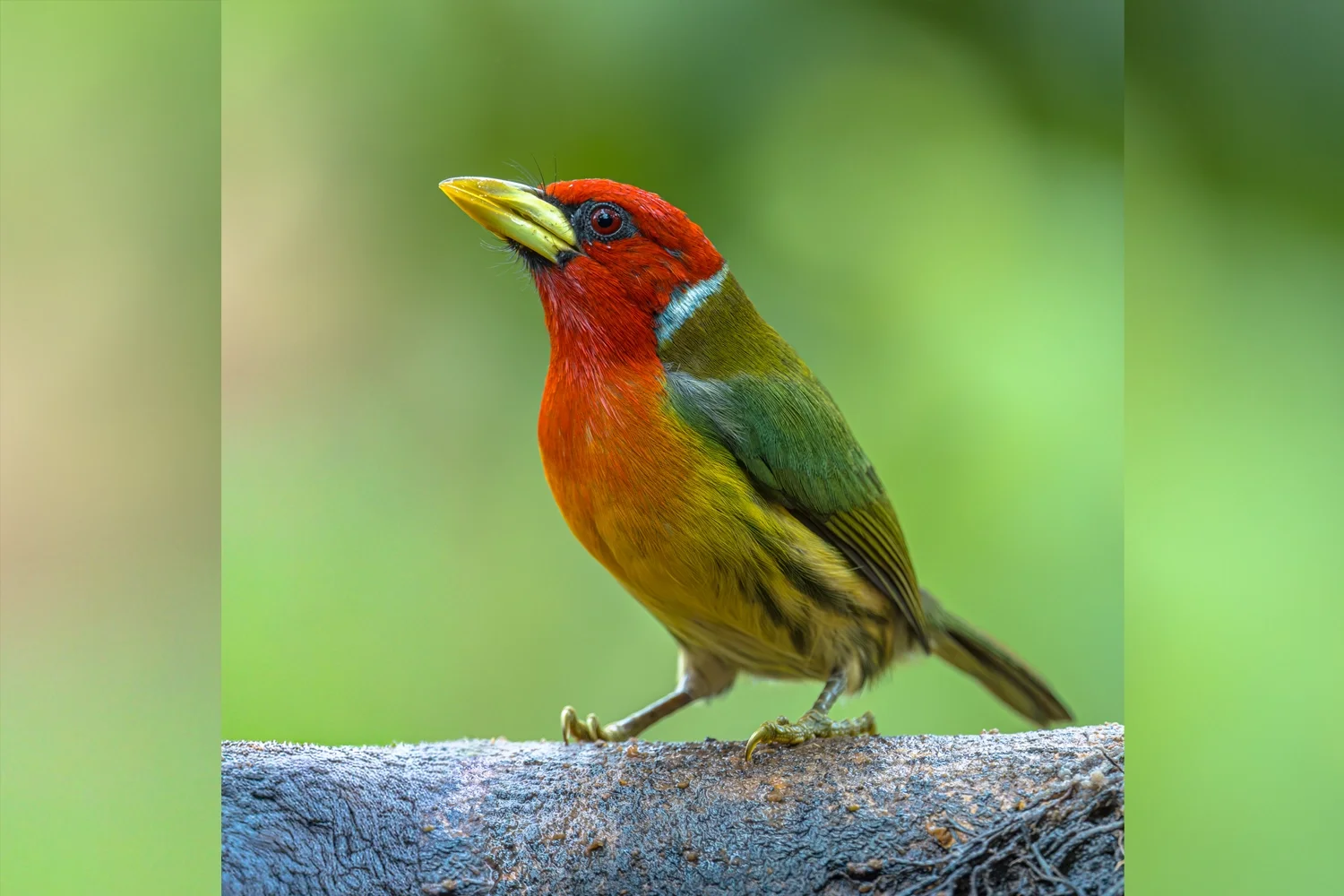
Measuring between 16 and 18 centimeters in length, the Red-headed Barbet is a compact yet robust bird that displays a spectacular array of colors. The male is particularly eye-catching, featuring a brilliant, fiery red head and throat that contrast sharply with its vibrant yellow chest and underparts. Its back and wings are a deep, forest-green, which provides excellent camouflage against the leafy backdrop of its habitat. The bill is thick, sturdy, and typically yellowish-green, specifically adapted for its foraging habits. Females, while slightly more subdued, maintain a similar pattern but often exhibit paler colorations or different facial markings compared to their male counterparts. Both sexes possess strong, zygodactyl feet, a defining trait of tree-clinging birds that allows them to grip vertical branches and trunks with ease. This combination of bold colors and anatomical adaptations makes the Red-headed Barbet easily identifiable once spotted, though its penchant for staying high in the canopy often keeps it elusive to the casual observer.
Habitat
The Red-headed Barbet is primarily found in the humid montane forests and foothills of Central and South America, ranging from Costa Rica down through the Andean slopes of Colombia, Ecuador, and Peru. These birds prefer the dense, humid environments provided by tropical and subtropical primary forests. They are most commonly observed in the mid-to-upper levels of the forest canopy, where they forage among the trees. Their reliance on high-quality forest cover means they are sensitive to habitat fragmentation. By staying within the safety of thick vegetation, they are protected from various aerial predators while maintaining access to the abundant food sources found in these diverse ecosystems.
Diet
The diet of the Red-headed Barbet is predominantly frugivorous, consisting mainly of a variety of wild berries, small fruits, and seeds found throughout the canopy. Because of their specialized bill structure, they are highly efficient at plucking fruit and breaking open tough skins to reach the nutrient-rich pulp inside. In addition to fruit, these birds are known to supplement their nutritional intake with small insects, particularly during the breeding season when protein demands are higher for developing chicks. This omnivorous tendency allows them to thrive even when specific fruit trees are not in peak season, ensuring their survival in the competitive rainforest environment.
Breeding and Nesting
The breeding biology of the Red-headed Barbet is a fascinating aspect of their life cycle. These birds are cavity nesters, typically utilizing pre-existing holes in dead or decaying tree trunks. Both the male and female participate in the excavation and maintenance of the nesting site, demonstrating a cooperative approach to reproduction. During the nesting period, they are highly territorial, defending their chosen tree from other birds to ensure the safety of their clutch. The female typically lays a small clutch of white eggs, which are incubated by both parents. Once hatched, the chicks are fed a diet rich in insects and fruit pulp, provided by both the male and female until they are ready to fledge and explore the canopy on their own.
Behavior
Behaviorally, the Red-headed Barbet is a solitary or pair-living bird that is often heard before it is seen. Their vocalizations consist of repetitive, hollow, and nasal notes that carry through the dense forest air. Despite their bright colors, they are remarkably adept at remaining motionless when threatened, blending into the dappled light of the canopy. They are active during the day, spending most of their time climbing along branches with their zygodactyl feet. While not particularly migratory, they may move locally within their mountain ranges to follow the seasonal availability of fruiting trees, showcasing a deep understanding of their surroundings.
Conservation Status - LC Least Concern
Currently, the Red-headed Barbet is classified under the 'Least Concern' category by the IUCN. However, their populations remain tied to the health of their forest habitats. The primary threat to this species is the ongoing deforestation of the Andean slopes and surrounding tropical forests due to agricultural expansion and logging. Maintaining large, contiguous forest tracts is essential for their long-term survival. While they are not currently facing an immediate risk of extinction, conservation efforts focusing on habitat preservation are crucial to ensure that these vibrant birds continue to thrive in the wild.
Interesting Facts
- They possess strong zygodactyl feet, with two toes facing forward and two facing backward for better grip.
- The Red-headed Barbet is known for its distinct, repetitive vocalizations that sound like a rhythmic 'tock-tock-tock'.
- They play a vital role in forest regeneration by dispersing seeds through their fruit-heavy diet.
- Unlike many other species, both parents share the responsibility of excavating the nesting cavity.
- Their bright red head is a classic example of sexual signaling in avian species.
- They are rarely found on the forest floor, preferring the safety of the mid-canopy and treetops.
Tips for Birdwatchers
For birdwatchers hoping to spot the Red-headed Barbet, patience and a good pair of binoculars are essential. Because they frequent the mid-to-high canopy, looking up for extended periods can be strenuous, so using a tripod or comfortable birding chair is recommended. The best time to observe them is during the early morning hours when they are most vocal and active. Listen closely for their repetitive, hollow calls, which often give away their location. Visiting areas with fruiting trees is a surefire way to increase your chances, as these birds are highly attracted to reliable food sources. Always maintain a respectful distance to avoid disturbing their natural behavior.
Conclusion
The Red-headed Barbet (Eubucco bourcierii) stands as a vibrant symbol of the ecological complexity found within Neotropical rainforests. From its specialized physical adaptations to its vital role in the food web as a frugivore, this bird offers endless fascination for those who take the time to study it. While its status remains stable for now, the future of this species is inextricably linked to the preservation of the forest ecosystems it calls home. By learning more about the Red-headed Barbet, we gain a deeper understanding of the delicate balance required to sustain such beautiful life forms in our world. Birdwatching is not merely a hobby but a gateway to environmental stewardship, encouraging us to protect the habitats that allow species like the Red-headed Barbet to flourish. Whether you encounter this bird in the deep jungles of Ecuador or study it through scientific literature, the Red-headed Barbet remains an unforgettable highlight of avian diversity. We must continue to support conservation initiatives that ensure these colorful, tree-clinging wonders continue to call the forest canopy their home for generations to come.
