
Introduction
The Brown-headed Barbet (Psilopogon zeylanicus) is a charismatic and vocal member of the Asian barbet family. Widely recognized for its repetitive, mechanical calls, this species is a familiar sight and sound in various landscapes across the Indian subcontinent. As a tree-clinging bird, it spends much of its life perched high in the canopy, blending seamlessly with the foliage due to its vibrant coloration. These birds are not only ecologically significant as seed dispersers but also serve as a quintessential element of the avian diversity found in tropical gardens, orchards, and dense forests. Understanding the life cycle and habits of this bird provides deep insights into the avian dynamics of South Asia. Whether you are an amateur birdwatcher or a seasoned ornithologist, the Brown-headed Barbet offers a fascinating study in adaptation, social behavior, and survival within human-altered environments.
Physical Appearance
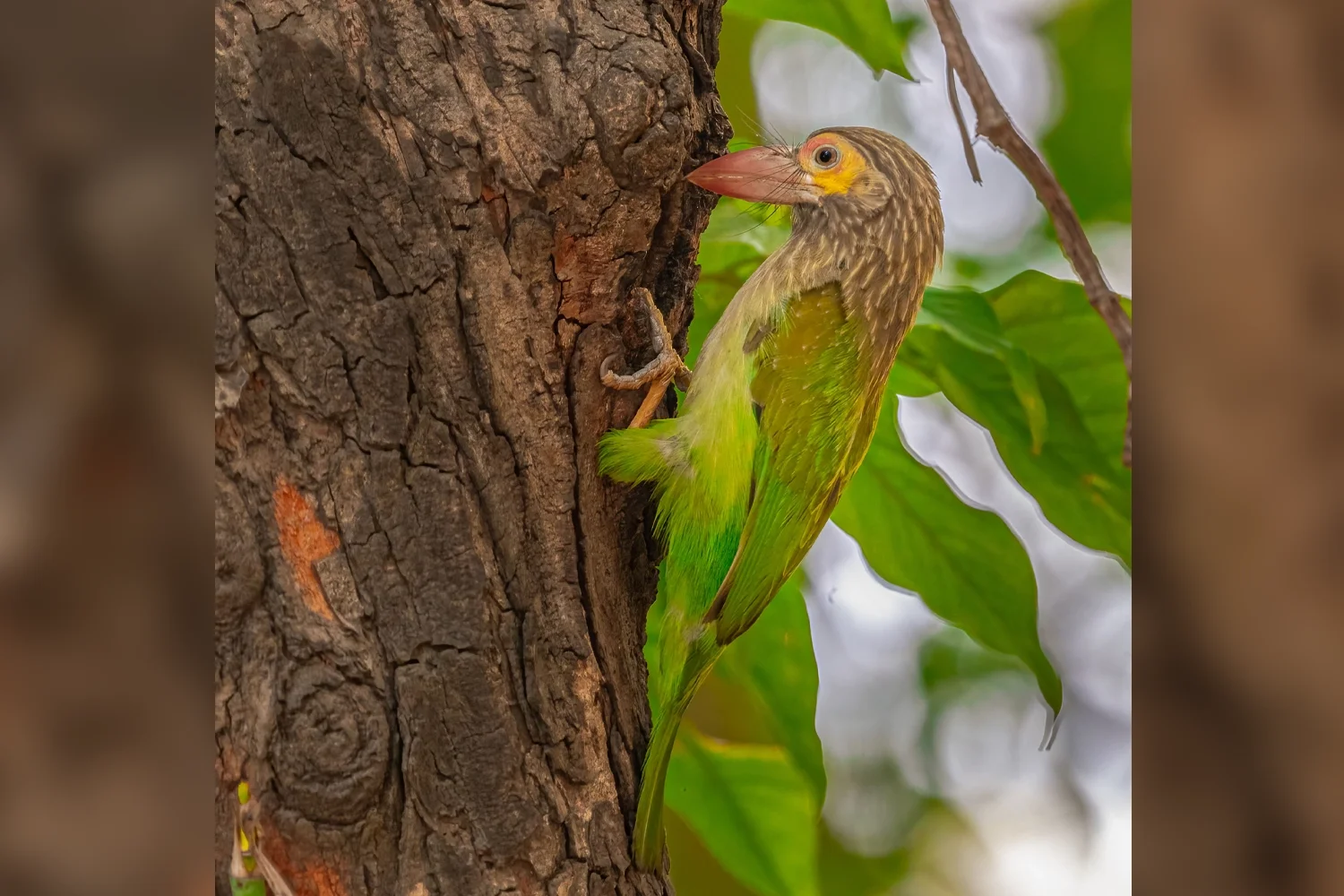
The Brown-headed Barbet is a robust, medium-sized bird, typically measuring between 25 and 27 cm in length. Its appearance is defined by a stout, heavy bill that is characteristic of the barbet family, designed for drilling into wood and consuming tough fruits. The plumage is predominantly green, which provides excellent camouflage against the leafy backdrop of its habitat. As the name suggests, it features a distinctive brown head, neck, and upper chest, which is often streaked with paler, whitish markings. The eyes are surrounded by a patch of bare, yellow-orange skin, adding a striking contrast to its overall earthy appearance. Both sexes look similar, though juveniles may exhibit slightly duller coloration. Its sturdy legs and zygodactyl feet—two toes forward and two backward—are perfectly adapted for its tree-clinging lifestyle, allowing it to navigate vertical trunks and thick branches with remarkable agility and stability while foraging for food.
Habitat
The Brown-headed Barbet is a highly adaptable species, thriving in a wide range of environments. They are most commonly found in well-wooded areas, including tropical and subtropical forests, deciduous woodlands, and mangrove swamps. Beyond wild forests, they have successfully colonized human-dominated landscapes, frequently residing in orchards, large urban gardens, parks, and tree-lined avenues. They prefer areas with mature trees that provide both nesting hollows and a consistent supply of fruit. Because they are not strictly migratory, they maintain stable territories within these habitats year-round, provided there is adequate food and nesting space. Their ability to integrate into suburban settings has made them one of the most observed bird species in South Asia.
Diet
The diet of the Brown-headed Barbet is primarily frugivorous, consisting of a wide variety of wild fruits and berries. They are particularly fond of figs, which form a staple of their nutritional intake. In addition to fruit, they are known to consume nectar from flowers and occasionally supplement their diet with insects, such as beetles, mantids, and cicadas, especially during the breeding season when protein is required for the development of their young. Their powerful, serrated bills allow them to easily crush tough fruit skins. By foraging across the canopy, they play a crucial role in local ecosystems as effective seed dispersers, helping to regenerate the diverse flora of their native habitats.
Breeding and Nesting
Breeding for the Brown-headed Barbet usually occurs between February and August, depending on the local climate and resource availability. These birds are cavity nesters, utilizing their strong bills to excavate holes in the trunks or thick branches of dead or decaying trees. Unlike some other species, they do not typically use lining materials for their nests; instead, they lay their eggs on the bare wood inside the chamber. Both the male and female participate in the excavation process and share the responsibilities of incubating the eggs and feeding the chicks. A typical clutch consists of two to four white eggs. The protection provided by the tree hollow is essential for safeguarding the vulnerable chicks from predators, ensuring a higher survival rate for the next generation of these vibrant, tree-clinging birds.
Behavior
The Brown-headed Barbet is best known for its loud, monotonous, and repetitive 'kutroo-kutroo' call, which can be heard echoing through the canopy throughout the day. They are generally solitary or found in pairs, though they may congregate in large fruiting trees where food is abundant. Despite their loud vocalizations, they can be surprisingly difficult to spot due to their green plumage. They exhibit strong territorial behavior and will often defend their chosen nesting or feeding trees from other birds. They are sedentary birds, rarely venturing far from their home range, and are often seen hopping energetically along branches or clinging vertically to tree trunks while investigating crevices.
Conservation Status - LC Least Concern
The Brown-headed Barbet is currently classified as a species of Least Concern by the IUCN. Their population remains stable, largely due to their high level of adaptability and ability to thrive in human-modified landscapes like cities and rural plantations. While they are not currently threatened with extinction, they still face challenges such as the loss of mature, dead trees which are vital for their nesting requirements. Protecting large, old trees in urban and rural areas is essential to ensure the continued survival and health of this species, as well as the biodiversity they support.
Interesting Facts
- They are often called 'Coppersmith's larger cousins' due to their similar, though louder, rhythmic calls.
- The bare skin around their eyes changes intensity in color depending on their stress levels or health.
- They possess zygodactyl feet, allowing them to hang onto vertical tree bark with ease.
- They are essential 'gardeners' of the forest, as they help disperse the seeds of various fruit-bearing trees.
- Their vocalizations are so loud that they are often the first birds heard in the morning in Indian cities.
- They do not build traditional nests; they carve their own homes directly into wood.
Tips for Birdwatchers
To spot a Brown-headed Barbet, the best strategy is to follow the sound of their repetitive call. Once you hear the 'kutroo' sound, stay still and scan the upper canopy of large, fruit-bearing trees, especially those with figs. Use high-quality binoculars to look for the distinct brown-streaked head against the green foliage. Early mornings are the most productive time for observation, as the birds are most active and vocal. Avoid making sudden movements, as these birds are wary of disturbances. If you are in an urban area, check older parks or residential avenues with mature trees, as they are surprisingly common in these environments. Patience is key, as their camouflage is exceptionally effective, often hiding them in plain sight.
Conclusion
The Brown-headed Barbet (Psilopogon zeylanicus) is a remarkable example of an avian species that has mastered the art of survival in both wild and urban landscapes. With its vibrant green plumage, unique brown head, and iconic, rhythmic call, this bird is a staple of the South Asian wilderness. Beyond its aesthetic appeal, it performs vital ecological services as a seed disperser, contributing significantly to the health of the forests and gardens it inhabits. As we continue to urbanize, the presence of the Brown-headed Barbet serves as a reminder of the importance of preserving mature trees and natural nesting sites. Whether you are observing them from a city balcony or deep within a forest, these tree-clinging birds offer a rewarding experience for any nature enthusiast. By understanding their biology, diet, and behavior, we can better appreciate the intricate balance of the ecosystems they occupy. Protecting the Brown-headed Barbet is not just about saving a single species, but about maintaining the vibrant, noisy, and colorful biodiversity that makes our natural world so extraordinary.
