
Introduction
The Red-rumped Swallow (Cecropis daurica) is a small, elegant passerine bird belonging to the swallow family. Known for its wide distribution across Europe, Asia, and Africa, this aerial insectivore is a favorite among birdwatchers for its graceful flight and distinctive coloration.
Physical Appearance
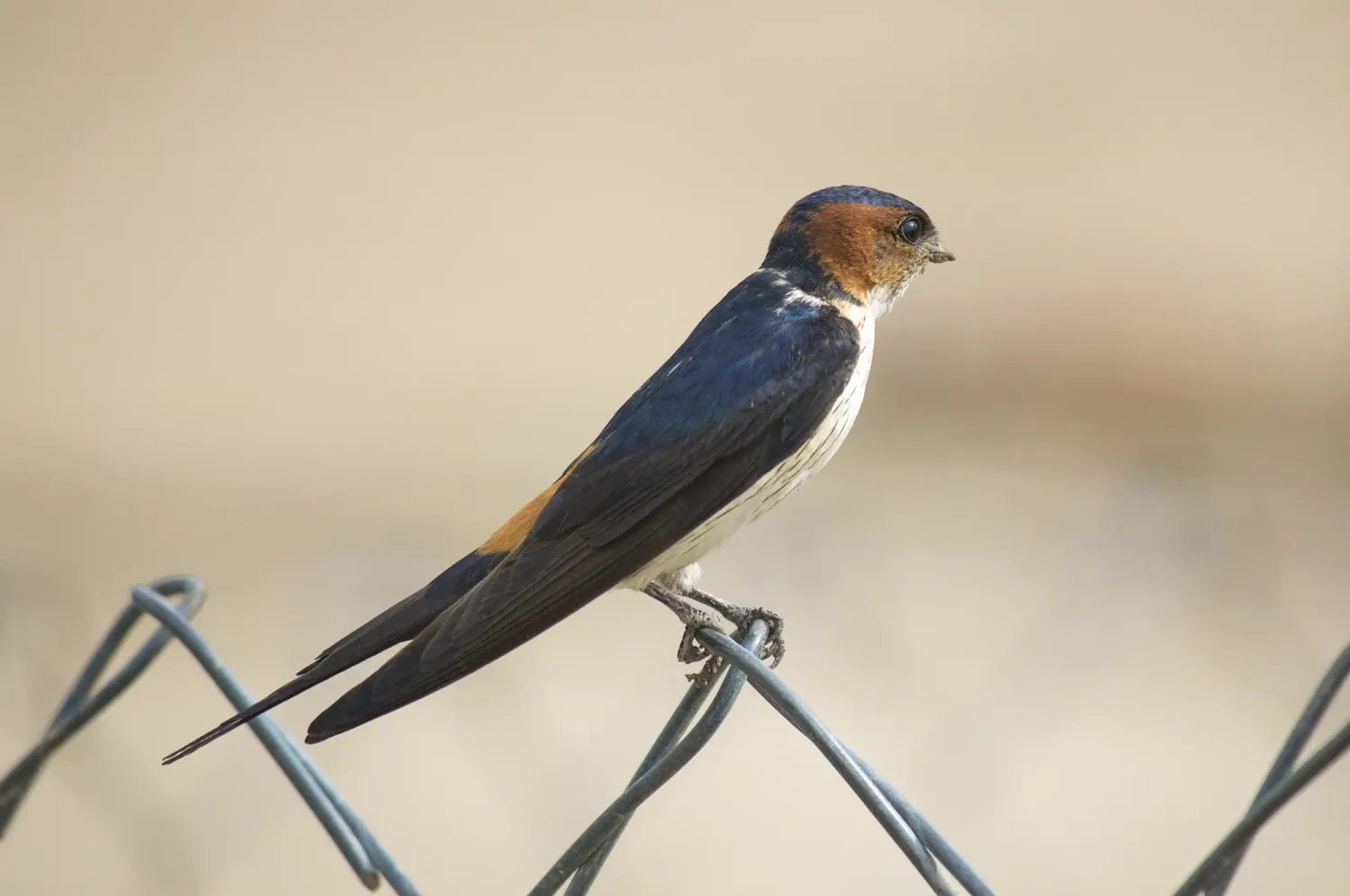
Measuring between 16-17 cm, the Red-rumped Swallow is characterized by its unique markings:
- Upperparts: Deep blue feathers on the back.
- Rump and Neck: A pale or reddish rump, face, and neck collar that distinguishes it from the Barn Swallow.
- Underparts: Dusky coloration without a breast band.
- Tail: Distinctive black undertails and a deeply forked shape.
- Wings: Broad but pointed, optimized for high-speed maneuvering.
Habitat
The Red-rumped Swallow inhabits diverse environments depending on the season:
- Summer: Prefers upland cultivation, open grassy hill slopes, and rocky gorges or cliffs, particularly in regions like Baluchistan.
- Winter: Often found in open scrub, cultivation, and forest clearings.
- Congregation: During winter, they are known to gather in massive numbers on wires or within reedbeds.
Diet
As an aerial insectivore, the diet of an adult Red-rumped Swallow consists primarily of insects caught mid-air, including:
- Flies (Diptera) and Beetles (Coleoptera).
- Bugs (Hemiptera) and Termites (Isoptera).
- Grasshoppers (Orthoptera) and Wasps/Ants (Hymenoptera).
Breeding and Nesting
These birds are master architects, building quarter-sphere nests made of mud collected in their beaks. Features include:
- Tunnel Entrance: A unique tube-like entrance leading to the main chamber.
- Location: Traditionally built under cliff overhangs, they frequently adapt to man-made structures like mosques, bridges, and buildings.
- Clutch Size: They typically lay between 3 to 6 eggs.
Behavior
Red-rumped Swallows are fast fliers that swoop with precision to catch insects. While they do not usually form large breeding colonies, they are highly gregarious during the non-breeding season. In the plains of India, it is common to see many hundreds of these birds flocking together.
Conservation Status - LC Least Concern
While not currently listed as globally threatened, the Red-rumped Swallow relies on the availability of insect populations and suitable nesting sites. They are widespread across temperate southern Europe, Asia, and tropical Africa.
Interesting Facts
- They are often mistaken for Barn Swallows but can be identified by their lack of a breast band and the presence of a pale rump.
- European and northern Asian populations are migratory, wintering in Africa or India.
- They are considered vagrants in distant locations like Christmas Island and northern Australia.
- Their nests are lined with mud and are exceptionally sturdy compared to other swallow species.
Tips for Birdwatchers
To spot a Red-rumped Swallow, look for close-packed flocks on telegraph wires during the winter months. In the summer, scan rocky cliffs or the undersides of concrete bridges near open fields. Their reddish rump is the best field mark to look for when they are in flight.
Conclusion
The Red-rumped Swallow is a fascinating species that showcases the beauty of migratory birds. From its intricate mud-tunnel nests to its impressive aerial displays, it remains a vital part of the ecosystems across three continents.
