Introduction
The black-necked stork (Ephippiorhynchus asiaticus) is a majestic, tall wading bird belonging to the stork family. Known for its striking appearance and impressive stature, it is a resident species across the Indian Subcontinent, Southeast Asia, and Australia. Often a symbol of wetland health, this bird is a fascinating subject for birdwatchers and nature enthusiasts alike.
Physical Appearance
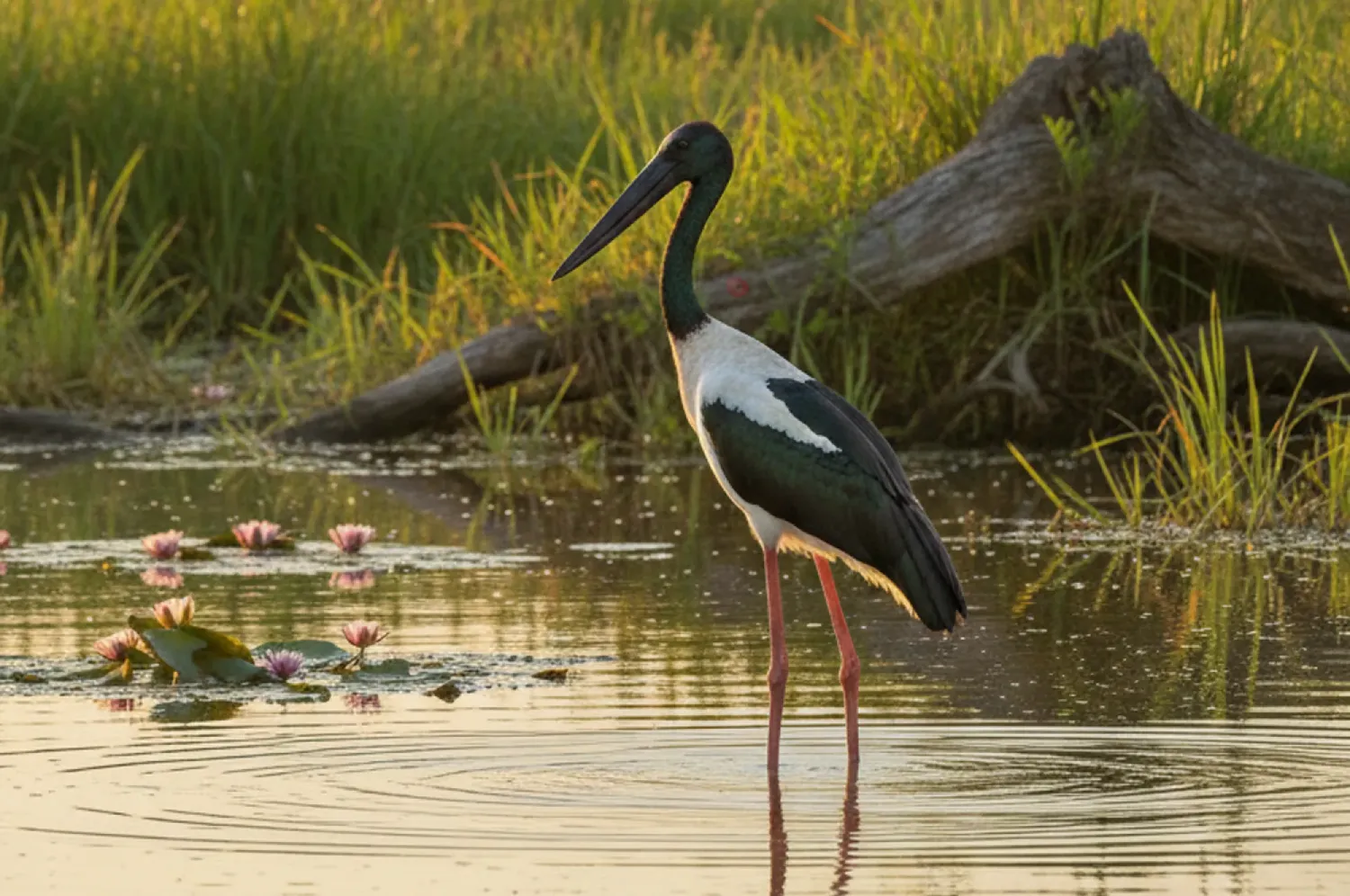
Standing between 129 and 150 cm tall with a massive 230 cm wingspan, the black-necked stork is a giant among waterbirds. Adults display a glossy bluish-black iridescent head, neck, and tail, contrasted by a bright white back and belly. One of the most unique features is sexual dichromatism in the eyes: females have yellow irises, while males have dark brown ones. They possess long, bright red legs and a heavy black bill with a slightly concave upper edge.
Habitat
This species is primarily a freshwater forager, favoring specific aquatic environments. Its typical habitats include:
- Wetlands and floodplains of major rivers.
- Large shallow marshes and seasonal pools.
- Deep permanent bodies of water.
- Occasionally, they can be found straying into open grasslands or wooded areas while searching for food.
Diet
The black-necked stork is a carnivorous predator that hunts by walking through shallow water. Its diet is diverse and includes:
- Fish, amphibians, and small crustaceans (primary food sources).
- Reptiles and small turtles.
- Large insects and rodents.
- Occasionally, it will consume carrion.
Breeding and Nesting
These birds are strongly territorial during both feeding and breeding. They typically build large stick nests placed high in tall trees, often located near a reliable water source. In regions like India, they are also known to forage near agricultural fields of rice and wheat, which provide ample prey during the nesting season.
Behavior
Unlike many other colonial waterbirds, the black-necked stork is often seen as a solitary bird or in pairs. It is highly protective of its feeding grounds. In flight, it is easily identified by its outstretched neck and a distinct black bar running through its white wings, appearing spindly and elegant against the sky.
Conservation Status
While the black-necked stork has a wide distribution, it is often found in low densities. It is sensitive to habitat loss, particularly the drainage of wetlands and the pollution of water bodies. In many regions, it is considered a species of concern, requiring the preservation of large, undisturbed wetland complexes.
Interesting Facts
- In Australia, this bird is commonly referred to as the Jabiru, though that name technically belongs to a different stork species in the Americas.
- You can determine the sex of an adult stork simply by looking at its eye color.
- They are among the least abundant large waterbirds even in areas with high avian diversity.
- Juveniles look completely different from adults, featuring brownish plumage and dark legs until they are over six months old.
Tips for Birdwatchers
To spot a black-necked stork, visit shallow wetlands or marshes during the early morning. Look for their bright red legs, which are often visible from a distance. Because they are territorial and easily disturbed, it is best to observe them from a distance using a spotting scope or high-quality binoculars. In Australia, the northern tropical wetlands are the best places for a sighting.
Conclusion
The black-necked stork is a remarkable predator and a stunning representative of the world's wetlands. Whether you call it a Jabiru or a black-necked stork, seeing this bird in the wild is a highlight for any wildlife enthusiast. Protecting the marshes and rivers they call home is essential for the survival of this iconic species.