
Introduction
The Barn Owl (Tyto alba) is one of the most widely distributed birds in the world. Often referred to as the 'ghost owl' due to its pale plumage and silent flight, this nocturnal predator is a favorite among birdwatchers and farmers alike for its incredible hunting skills.
Physical Appearance
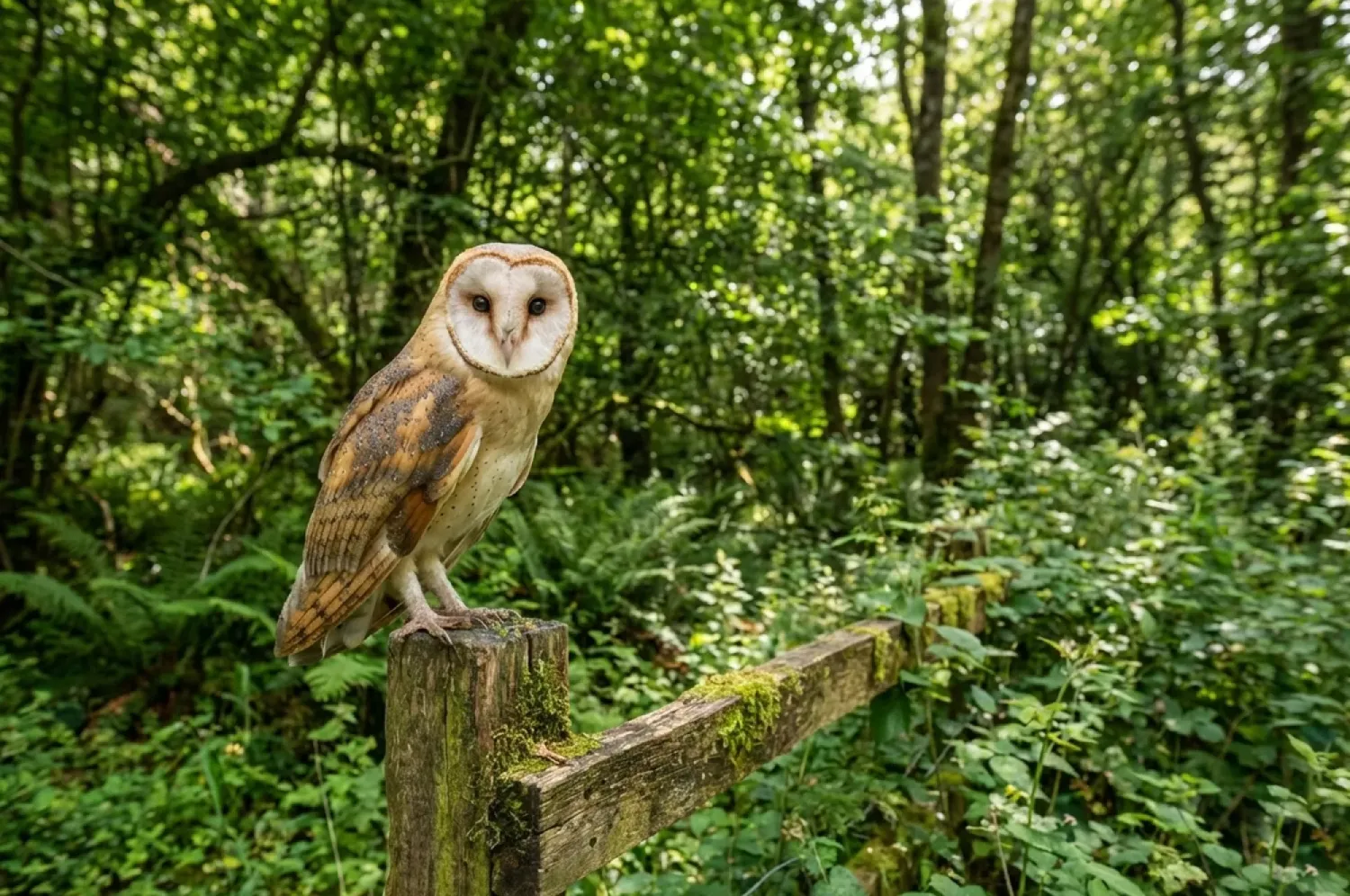
The Barn Owl is a medium-sized bird of prey, typically measuring around 36 cm in length. It is most famous for its striking heart-shaped facial disc and dark, soulful eyes. Its plumage is a beautiful mosaic of buff-colored feathers with grey and white highlights, while its underparts are usually pure white or lightly spotted.
Habitat
Barn Owls thrive in open country, including grasslands, meadows, marshes, and agricultural fields. As their name suggests, they frequently utilize man-made structures such as barns, abandoned buildings, and church belfries for roosting and nesting.
Diet
The diet of the Barn Owl consists almost exclusively of small mammals. They are specialized hunters of voles, mice, and shrews. Thanks to their exceptional hearing, they can pinpoint the exact location of a rodent moving under tall grass or even snow.
Breeding and Nesting
These owls do not build nests in the traditional sense; they lay their eggs directly on the floors of cavities, hollow trees, or nesting boxes. A typical clutch contains 4 to 7 eggs. The female handles the incubation while the male provides a steady supply of food to the nest.
Behavior
Barn Owls are strictly nocturnal, meaning they are active at night. Unlike many other owl species, they do not 'hoot.' Instead, they produce a variety of hisses and piercing screeches. Their specialized wing feathers allow them to fly in near-complete silence, making them lethal hunters.
Conservation Status - LC Least Concern
Globally, the Barn Owl is listed as Least Concern. However, local populations are often threatened by the loss of foraging habitat, the use of toxic rodenticides, and the disappearance of traditional nesting sites like old wooden barns.
Interesting Facts
- The Barn Owl's heart-shaped face acts like a satellite dish, funneling sound directly to its ear openings.
- Their ears are placed asymmetrically on their head, allowing them to triangulate the vertical and horizontal position of prey.
- A single pair of Barn Owls can consume over 1,000 rodents during a single breeding season.
- They have been known to inhabit every continent except Antarctica.
Tips for Birdwatchers
- Look for them at dusk or dawn along the edges of fields and marshes.
- Check for 'whitewash' (droppings) and pellets at the base of large, hollow trees or old buildings.
- Use binoculars to observe from a distance to avoid disturbing their hunting or nesting patterns.
Conclusion
The Barn Owl (Tyto alba) is a majestic and ecologically vital species. By providing natural pest control and adding a touch of mystery to the night sky, they remain one of the most iconic raptors in the avian world. Protecting their habitat is key to ensuring their silent flight continues for generations to come.
