Introduction
The Christmas Island Frigatebird (Fregata andrewsi) is a majestic and rare seabird belonging to the Fregatidae family. Endemic to the remote Christmas Island in the Indian Ocean, this species is a master of the skies, known for its incredible aerial agility and striking appearance. As one of the rarest seabirds in the world, it holds a significant place in the ecosystem of its island home.
Physical Appearance
The Christmas Island Frigatebird is a large, lightly built bird measuring between 90–100 cm in length with a massive wingspan reaching up to 2.3 meters. It features brownish-black plumage and a deeply forked tail.
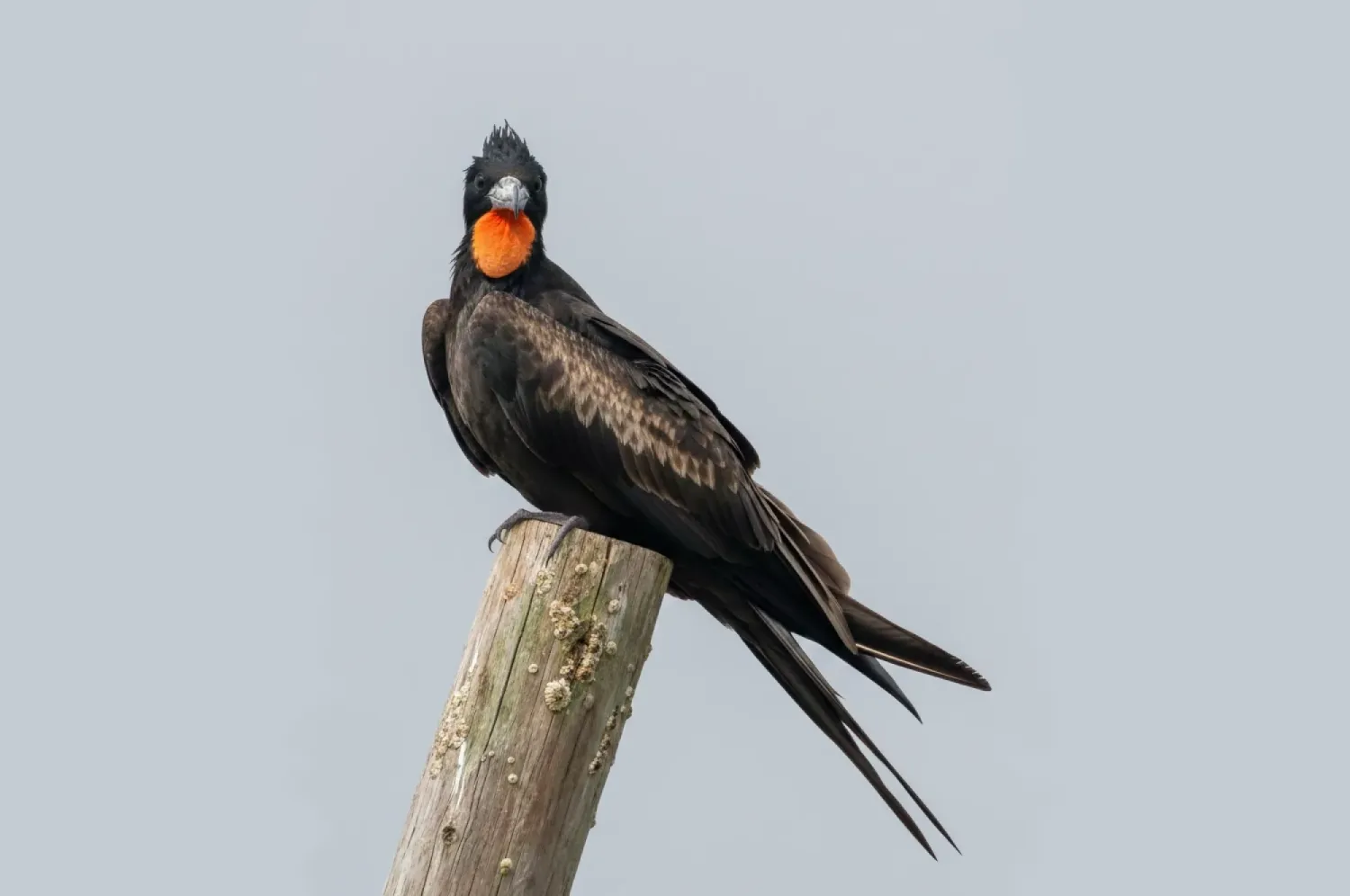
The adult male is easily identified by a striking, egg-shaped red gular sac which he inflates to attract mates, and a white patch on his belly. Females are slightly larger than males, distinguished by a white breast and belly, and lack the inflatable sac.
Habitat
This species spends the vast majority of its life over the open sea, returning to land primarily for roosting and breeding. Its terrestrial habitat is limited to the low, dry forests of Christmas Island. These birds are known to roost communally, perching at least 3 metres above the ground in tall trees like the Indian Almond (Terminalia catappa) and Ficus to ensure an easy take-off into the wind.
Diet
Primarily piscivorous, the Christmas Island Frigatebird feeds on fish snatched from the ocean's surface while in flight, with flying fish being a favorite.
Interestingly, they are famous for kleptoparasitism. They frequently harass other seabirds until they are forced to regurgitate their prey, which the frigatebird then expertly catches mid-air.
Breeding and Nesting
Breeding occurs in the tall canopy of Christmas Island's forests. They prefer the outer parts of the forest, nesting in trees like the Indian Almond and various Ficus species. The breeding process is a spectacle, as males display their vibrant red pouches to passing females. Because they have a long chick-rearing period, they typically breed only every second year.
Behavior
Frigatebirds are high-altitude masters but are almost completely unable to swim or walk, as their feathers are not waterproof and their legs are very short. They exhibit highly social behavior during roosting, often mingling with other frigatebird species. Their flight is characterized by long periods of effortless soaring, utilizing thermals and wind currents to stay aloft for days.
Conservation Status
The Christmas Island Frigatebird is currently listed as Critically Endangered by the International Union for Conservation of Nature (IUCN). Due to its very small breeding range and the threat of habitat loss, intensive conservation efforts are required to protect this unique species from extinction.
Interesting Facts
- The species was named 'andrewsi' in 1914 to honor English paleontologist Charles Andrews.
- Despite being a seabird, it cannot land on water because its feathers would become waterlogged, preventing it from taking off.
- They have the largest wingspan-to-body-weight ratio of any bird in the world.
- Genetic analysis shows they are most closely related to the Great Frigatebird.
Tips for Birdwatchers
- The best time to see the male's vibrant red sac display is during the early breeding season on Christmas Island.
- Look for them soaring near the coast where they intercept other seabirds returning with food.
- Bring a high-zoom lens or powerful binoculars, as they often roost high up in the canopy of Indian Almond trees.
- Always stick to designated paths to avoid disturbing the fragile nesting sites.
Conclusion
The Christmas Island Frigatebird is a true icon of avian evolution and a reminder of the fragility of endemic island species. From its 'pirate' hunting tactics to its breathtaking aerial displays, it remains one of the most fascinating birds for enthusiasts and researchers alike. Protecting their limited habitat is essential to ensuring these 'pirates of the sky' continue to soar over the Indian Ocean.