
Introduction
The Asian Koel (Eudynamys scolopaceus) is a striking member of the cuckoo order, widely recognized across South Asia, China, and Southeast Asia. Known for its loud, echoic calls and its presence in various cultural myths, this bird forms a superspecies with the Black-billed and Pacific Koels. Unlike many of its relatives, the Asian Koel has several unique biological traits that make it a fascinating subject for birdwatchers and ornithologists alike.
Physical Appearance
The Asian Koel is a large, long-tailed cuckoo reaching approximately 43 to 45 cm in length. The species exhibits strong sexual dimorphism:
- Males: Feature a glossy bluish-black plumage, a pale greenish-grey bill, and striking crimson irises. They have grey legs and feet.
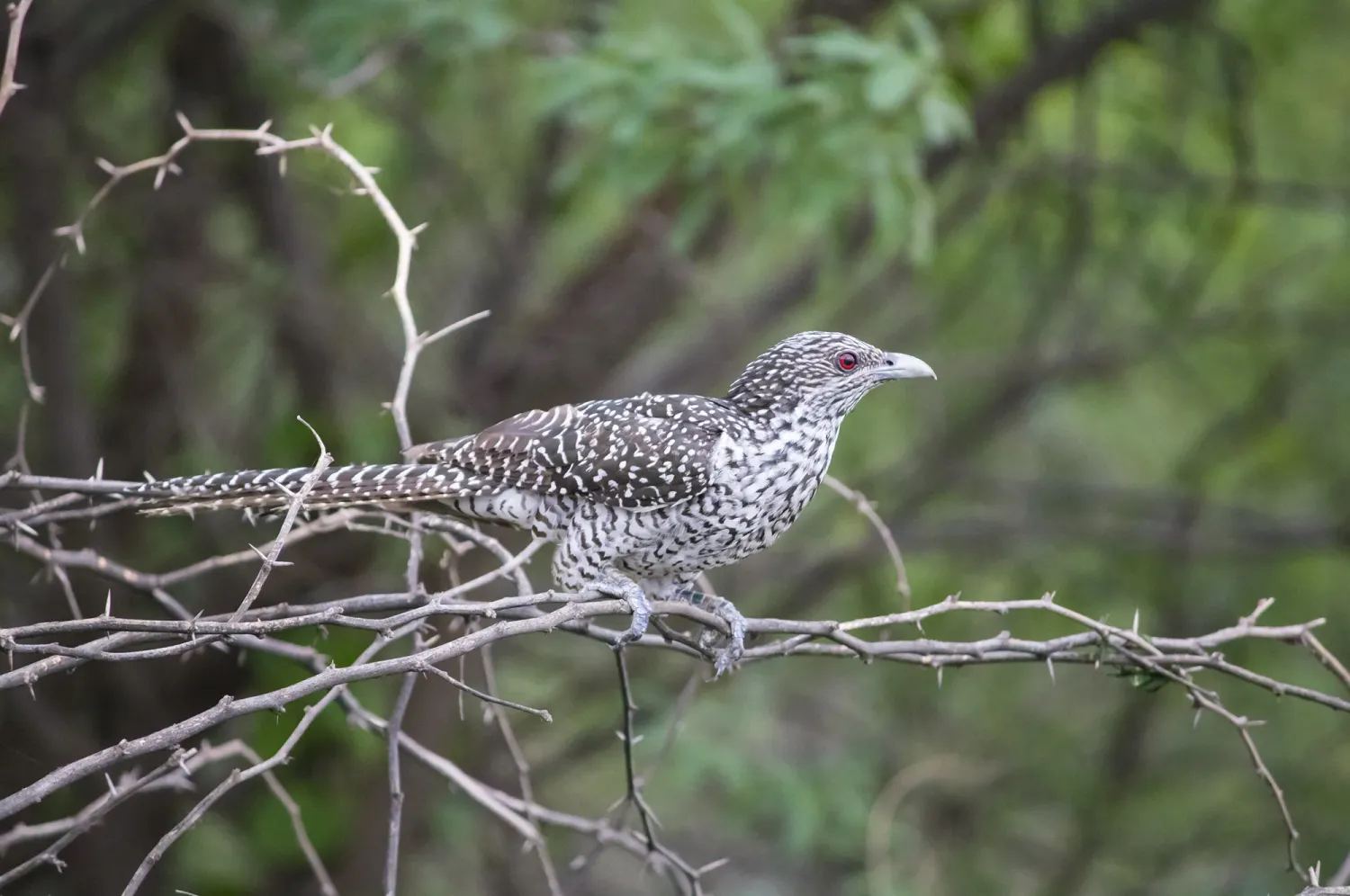
- Females: Are brownish on the crown with rufous streaks. Their back, rump, and wing coverts are dark brown adorned with white and buff spots, while their underparts are whitish and heavily striped.
- Juveniles: Young birds resemble the male in their upper plumage but possess a distinct black beak.
Habitat
Asian Koels are highly adaptable birds found in a variety of environments. Their primary habitats include dense thickets of trees or bamboo scattered across the countryside. They are also frequently spotted in:
- Coastal mangrove edges and shrubby areas with tall trees.
- Orchards, gardens, and urban woods.
- Towns and villages where tall trees provide adequate cover.
Diet
While most cuckoos are insectivorous, the adult Asian Koel is unusual for being largely frugivorous. Their diet consists of:
- Fruits and Berries: They feast on a variety of ripe fruits found in trees and are frequent visitors to orchards.
- Insects and Caterpillars: They supplement their fruit intake with protein-rich insects.
Breeding and Nesting
The Asian Koel is a well-known brood parasite. Instead of building its own nest, it lays its eggs in the nests of other birds, most notably crows. The host birds then unknowingly raise the Koel's young. The breeding season typically spans from March to August, coinciding with the nesting periods of their host species.
Behavior
These birds are exceptionally vocal, especially during the breeding season. The name "Koel" is echoic in origin, mimicking the bird's distinctive call. They are most active in the canopy, often remaining hidden in dense foliage while their loud, rising "ko-el" calls resonate through the area.
Conservation Status - LC Least Concern
The Asian Koel is currently considered a species of Least Concern. Its ability to thrive in human-altered landscapes, such as gardens and urban areas, has helped maintain a stable population across its extensive range in Asia.
Interesting Facts
- The Asian Koel is a widely used symbol in Indian poetry, often associated with longing and the beauty of nature.
- In Sri Lanka, the bird's song is a traditional herald of the New Year, signaling a strong association with the upcoming year.
- Unlike many other cuckoos, adult Koels primarily eat fruit, though the chicks are fed a mix of food by their host parents.
- They are part of a superspecies complex that includes the Black-billed and Pacific Koels.
Tips for Birdwatchers
To spot an Asian Koel, follow these tips:
- Listen First: Their loud calls are much easier to find than the bird itself. Follow the sound to dense tree canopies.
- Check Fruit Trees: Look for them in fruiting trees or orchards, especially during the early morning.
- Observe Crows: During breeding season, keep an eye on crow nests; you might see a female Koel nearby waiting for an opportunity.
- Use Binoculars: Because they prefer dense foliage, binoculars are essential to see the crimson eye of the male or the intricate patterns of the female.
Conclusion
The Asian Koel is more than just a bird; it is a cultural icon and a marvel of evolutionary adaptation. From its unique diet to its parasitic nesting habits and its unmistakable voice, the Koel remains one of the most intriguing avian species in the Asian landscape. Whether you are a seasoned birder or a casual observer, encountering this glossy cuckoo is always a memorable experience.