
Introduction
The bluethroat (Luscinia svecica) is a striking small passerine bird that captures the attention of birdwatchers worldwide. Formerly classified as a member of the thrush family (Turdidae), it is now widely recognized as an Old World flycatcher within the family Muscicapidae. Often referred to as "chats," these migratory birds are celebrated for their vibrant plumage and remarkable journeys across continents.
Physical Appearance
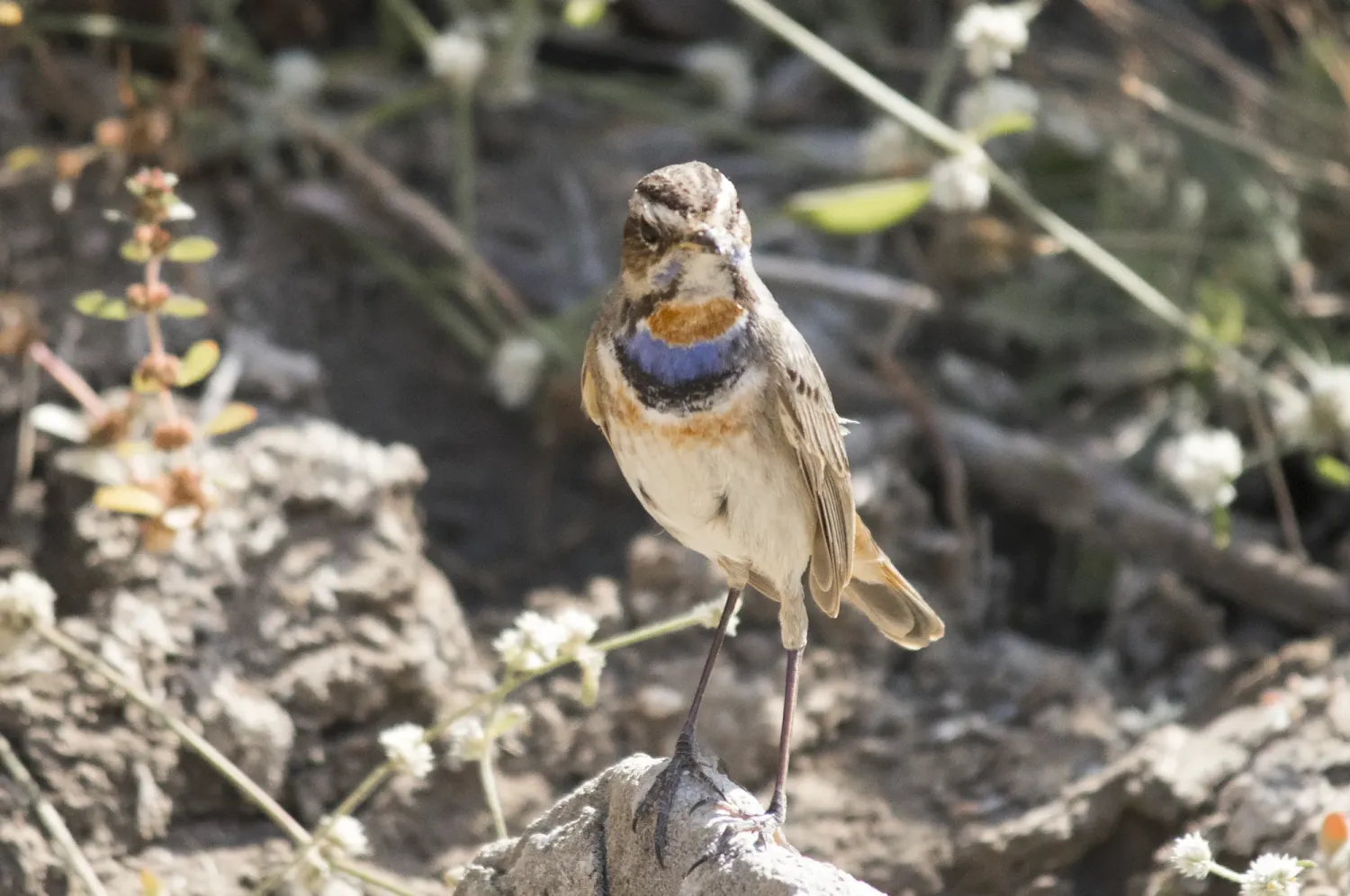
Measuring approximately 13-15 cm in length, the bluethroat is similar in size to the European robin. It features plain brown upperparts and a distinctive black tail marked with red side patches. A prominent white supercilium (eyebrow) sits above the eyes. The male is particularly famous for its iridescent blue bib, which is bordered below by black, white, and rust-colored bands. Depending on the subspecies, the center of this bib may feature a red spot (L. svecica svecica) or a white spot (L. svecica cyanecula), while some have no spot at all. Females typically lack the bright blue and instead display a blackish crescent on a cream-colored throat.
Habitat
The bluethroat occupies diverse environments depending on the season. During the summer breeding months, they are commonly found in scrub along streams and lakes, wet birch woods, or bushy swamps. In the winter, they migrate to drier or warmer regions, inhabiting scrublands, tall grass, and marshes across North Africa and the Indian subcontinent.
Diet
As an insectivorous species, the bluethroat's diet consists primarily of small invertebrates. Their feeding habits include:
- Insects: Particularly beetles, caterpillars, ants, sawfly larvae, and various flies like crane flies.
- Other Invertebrates: Spiders, snails, and earthworms.
- Plant Matter: They occasionally consume berries and a few seeds, most notably during the autumn months.
Breeding and Nesting
Bluethroats typically nest in tussocks or low within dense bushes to provide protection for their young. They are summer visitors to regions like the NW Himalayas and Alaska for breeding. After the breeding season concludes in July, the birds undergo a moult that lasts approximately 40–45 days, ensuring their feathers are in peak condition before they begin their long migration.
Behavior
The bluethroat is a migratory species with a vast range spanning Europe, Asia, and western Alaska. Known for their shy yet active nature, they are often seen flitting through dense undergrowth. Despite the visual diversity among different races, genetic studies confirm that they belong to a single, cohesive species with limited genetic variation.
Conservation Status - LC Least Concern
While not specifically detailed in the provided data, the bluethroat is generally considered a species of Least Concern in many regions due to its wide distribution across several continents, though local populations may be affected by habitat loss in wetland areas.
Interesting Facts
- The bluethroat's tail is a key identification feature, showing bright red patches when spread.
- There are distinct regional variations: northern Eurasia birds often have red spots, while central European birds have white spots.
- The species completes its entire post-breeding moult in just under 7 weeks before migrating.
- They were once considered thrushes but are now grouped with flycatchers.
Tips for Birdwatchers
- Look for them in wet, scrubby areas near water sources during the spring.
- Listen for their complex song, which often incorporates mimicry of other birds.
- The best time to spot the male's vibrant bib is during the early breeding season when they are more likely to perch in the open.
- Observe the tail; the red side patches are a giveaway even when the throat is not visible.
Conclusion
The bluethroat is a jewel of the avian world, combining stunning aesthetics with a hardy migratory lifestyle. Whether you are spotting a red-spotted variant in the north or a white-spotted one in central Europe, encountering this "Old World flycatcher" is always a highlight for any birding excursion.