
Introduction
The Short-eared Owl (Asio flammeus) is one of the most widely distributed owl species in the world, captivating birdwatchers and researchers alike with its unique appearance and behavior. Unlike many other owls that are strictly nocturnal and deep-forest dwellers, the Short-eared Owl is frequently seen during the day and prefers open landscapes. Its scientific name, Asio flammeus, hints at its flame-colored, streaked plumage, which provides excellent camouflage against the dry grasses of its home. These birds are known for their erratic, moth-like flight patterns, which they display while hunting over vast meadows, marshes, and tundra. As a member of the Strigidae family, they possess a distinct personality, often described as curious yet elusive. Their adaptability allows them to thrive across diverse continents, including North America, Europe, and Asia. Understanding the Short-eared Owl is essential for appreciating the biodiversity of open-country ecosystems, as they serve as vital indicators of environmental health within their expansive, often threatened, natural habitats.
Physical Appearance
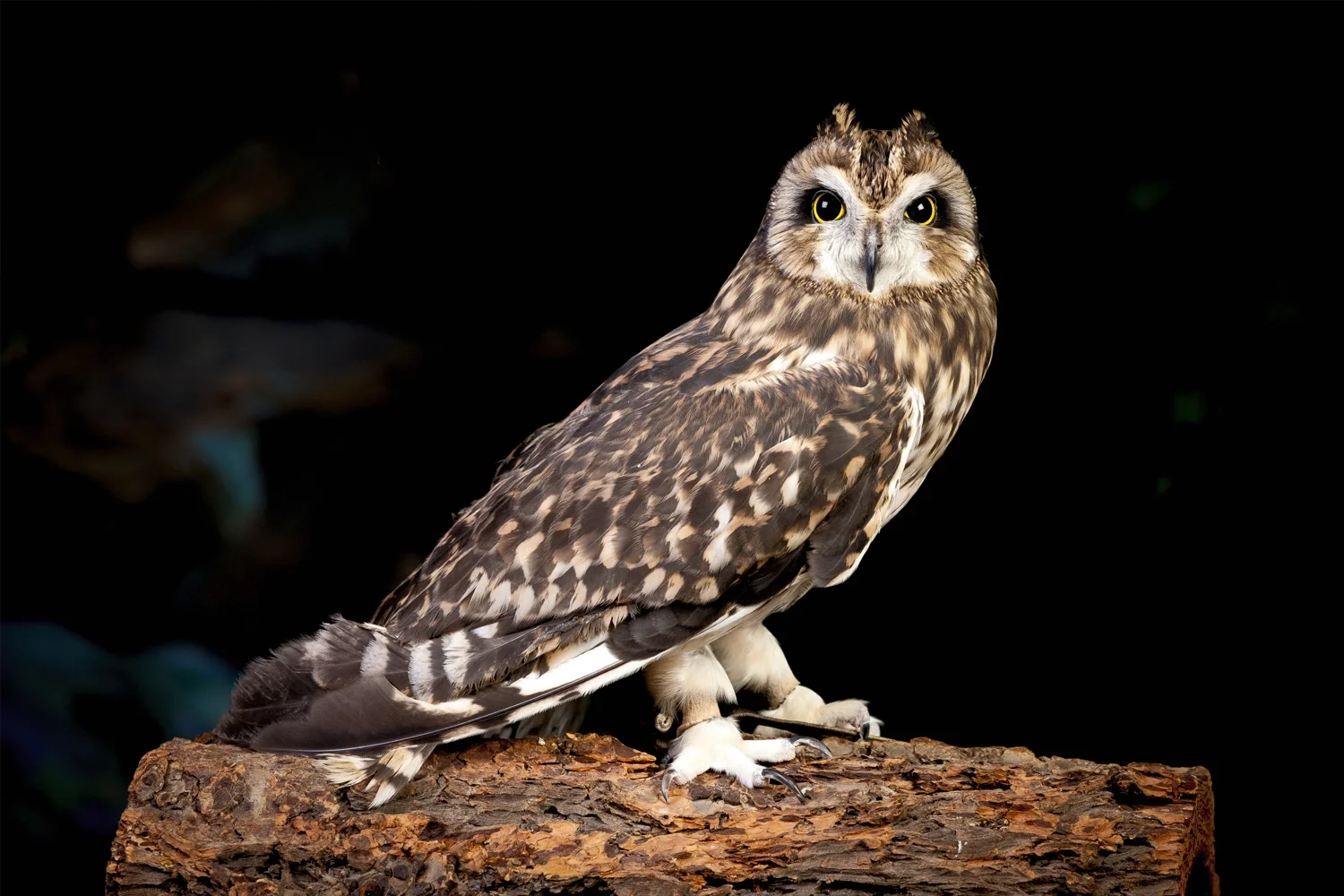
The Short-eared Owl is a medium-sized raptor, typically measuring between 34 and 43 centimeters in length. Its plumage is a masterclass in natural camouflage, dominated by a base of warm brown feathers intricately patterned with darker streaks. This is complemented by a lighter buff or tawny color, which helps the bird blend seamlessly into withered grasses and marsh vegetation. One of its most distinctive features is its namesake: the "short ears" or ear tufts. These are actually small feathers located above the eyes that are often held flat against the head, making them difficult to spot unless the bird is agitated or alert. Their facial disc is pale and rounded, framing striking, bright yellow eyes that are surrounded by dark patches, giving the owl an intense, piercing expression. With a wingspan that can reach up to 110 centimeters, these owls are agile fliers, possessing broad, rounded wings that allow for silent, low-altitude hunting. Females are generally slightly larger and darker than males, though both sexes share the same stunning, earth-toned coloration that serves as their primary defense against predators.
Habitat
Unlike many forest-dwelling owls, the Short-eared Owl is a specialist of wide-open spaces. They are primarily found in expansive grasslands, prairies, coastal marshes, tundra, and agricultural fields. By selecting habitats with low-growing vegetation, they gain the necessary vantage points to scan for movement while maintaining the ability to hover or glide silently. During the winter months, these owls may congregate in communal roosts, sometimes gathering in sheltered areas like pine groves or dense shrubbery to conserve heat. Their ability to inhabit such diverse biomes across the globe—from the Arctic tundra to temperate wetlands—demonstrates their incredible environmental flexibility. However, they remain strictly tied to areas that support healthy populations of small mammals, which are the backbone of their survival in these open, often windswept landscapes.
Diet
The Short-eared Owl is a specialized predator, with a diet that consists almost exclusively of small mammals, particularly voles. These rodents are the driving force behind the owl's local distribution and breeding success; in years where vole populations boom, owl numbers often follow suit. They are opportunistic hunters, and if voles are scarce, they will readily consume mice, shrews, young rabbits, and occasionally small birds. Hunting primarily at dawn and dusk, they use their acute hearing and vision to detect movement in the grass. Once prey is sighted, they drop silently from the air, using their sharp talons to secure the meal. Their hunting technique is efficient and precise, often involving long periods of low-altitude patrolling over their territory, which makes them highly effective at controlling rodent populations within their ecosystem.
Breeding and Nesting
Breeding for the Short-eared Owl is a seasonal affair heavily influenced by food availability. Unlike many raptors that build high nests in trees, this species nests exclusively on the ground. They create a simple, shallow depression, often hidden beneath a thick clump of grass or low shrubbery, which they may line with a small amount of feathers and dry vegetation. The female typically lays a clutch of 4 to 8 white eggs, which she incubates for approximately 26 to 28 days. During this period, the male is responsible for providing food for the female. Once the owlets hatch, they are semi-altricial and grow quickly. As they mature, the young owls may leave the nest and wander through the surrounding vegetation before they are fully capable of flight, a behavior known as "branching" or, in this case, "ground-roaming." Parents remain highly protective, often performing distraction displays to lure potential threats away from their vulnerable offspring.
Behavior
The behavior of the Short-eared Owl is quite distinctive, especially compared to other nocturnal raptors. They are highly social during the non-breeding season, often roosting in groups. One of their most fascinating behaviors is their crepuscular activity, meaning they are most active during the twilight hours of dawn and dusk. This allows them to avoid competition with other daytime raptors. During courtship, males engage in spectacular aerial displays, including "wing-clapping," where they snap their wings together beneath their bodies while in mid-air. They are also known for being highly nomadic, moving vast distances in response to fluctuating prey cycles, which makes them one of the most mobile owl species in the world, constantly searching for the next rich feeding ground.
Conservation Status - LC Least Concern
The Short-eared Owl is currently listed as a species of "Least Concern" globally, yet many regional populations are facing significant declines. The primary threat to this species is the loss and degradation of their open-country habitat. As grasslands, prairies, and wetlands are converted into agricultural land or urban developments, the owls lose both their hunting grounds and their critical nesting sites. Furthermore, the use of rodenticides in farming areas poses a secondary poisoning risk. Conservation efforts focus on protecting large, contiguous tracts of grassland and promoting sustainable farming practices that support healthy vole populations, ensuring these resilient birds continue to thrive in the wild.
Interesting Facts
- They are one of the few owl species that hunt during the daylight hours.
- Short-eared Owls are found on every continent except for Antarctica and Australia.
- They use a unique 'wing-clapping' display to attract mates and defend territories.
- Their ears are asymmetrical, which helps them pinpoint the exact location of prey by sound.
- They often hunt by hovering over fields, a behavior rarely seen in other owl species.
- They are highly nomadic, traveling hundreds of miles to follow vole population booms.
- The 'ears' on their head are not actual ears, but tufts of feathers used for signaling.
Tips for Birdwatchers
To successfully spot a Short-eared Owl, timing and location are everything. Focus your efforts on large, open areas like marshes or grasslands during the "golden hour"—the time just before sunset or shortly after sunrise. Because they are crepuscular, they are most active when the light is low, making them easier to see against the sky. Use high-quality binoculars and scan low over the grass, as they often patrol just a few feet above the ground. If you notice a raptor flying with a slow, erratic, moth-like flapping, keep your eyes on it! Remain patient and quiet; these birds can be easily disturbed. If you find a communal roost, observe from a significant distance to avoid causing stress to the birds, especially during the winter months when energy conservation is vital for their survival.
Conclusion
In conclusion, the Short-eared Owl (Asio flammeus) is a remarkable example of nature's adaptability and specialization. From its cryptic, buff-and-brown plumage that perfectly mimics its environment to its unique hunting strategies and nomadic lifestyle, this bird is a true master of the open landscape. While it may not possess the iconic silhouette of a deep-forest owl, its presence in our grasslands and marshes is a critical indicator of a healthy, functioning ecosystem. As human expansion continues to encroach upon these vital habitats, the future of the Short-eared Owl depends on our commitment to conservation and habitat preservation. By protecting the vast, open spaces they call home, we ensure that future generations can witness the silent, graceful flight of this "flame-colored" hunter. Whether you are a seasoned ornithologist or a casual bird enthusiast, taking the time to observe and learn about the Short-eared Owl offers a profound connection to the natural world. Their survival is not just a win for biodiversity, but a reminder of the delicate balance that exists within our planet's most overlooked environments. We must continue to support research and conservation initiatives to guarantee that this fascinating species remains a permanent fixture of our prairies and wetlands for centuries to come.
