
Introduction
Introduction
The Grey-headed Fish Eagle (lcthyophanga ichthyaetus) is a formidable large raptor known for its specialized hunting skills. Primarily found across the Indian subcontinent and Southeast Asia, this stocky eagle is a master of wetland ecosystems. Unlike many other eagles, it has evolved specific physical adaptations that make it a premier 'piscivore'—a dedicated fish eater—thriving in forested areas near water bodies.
Physical Appearance
Physical Appearance
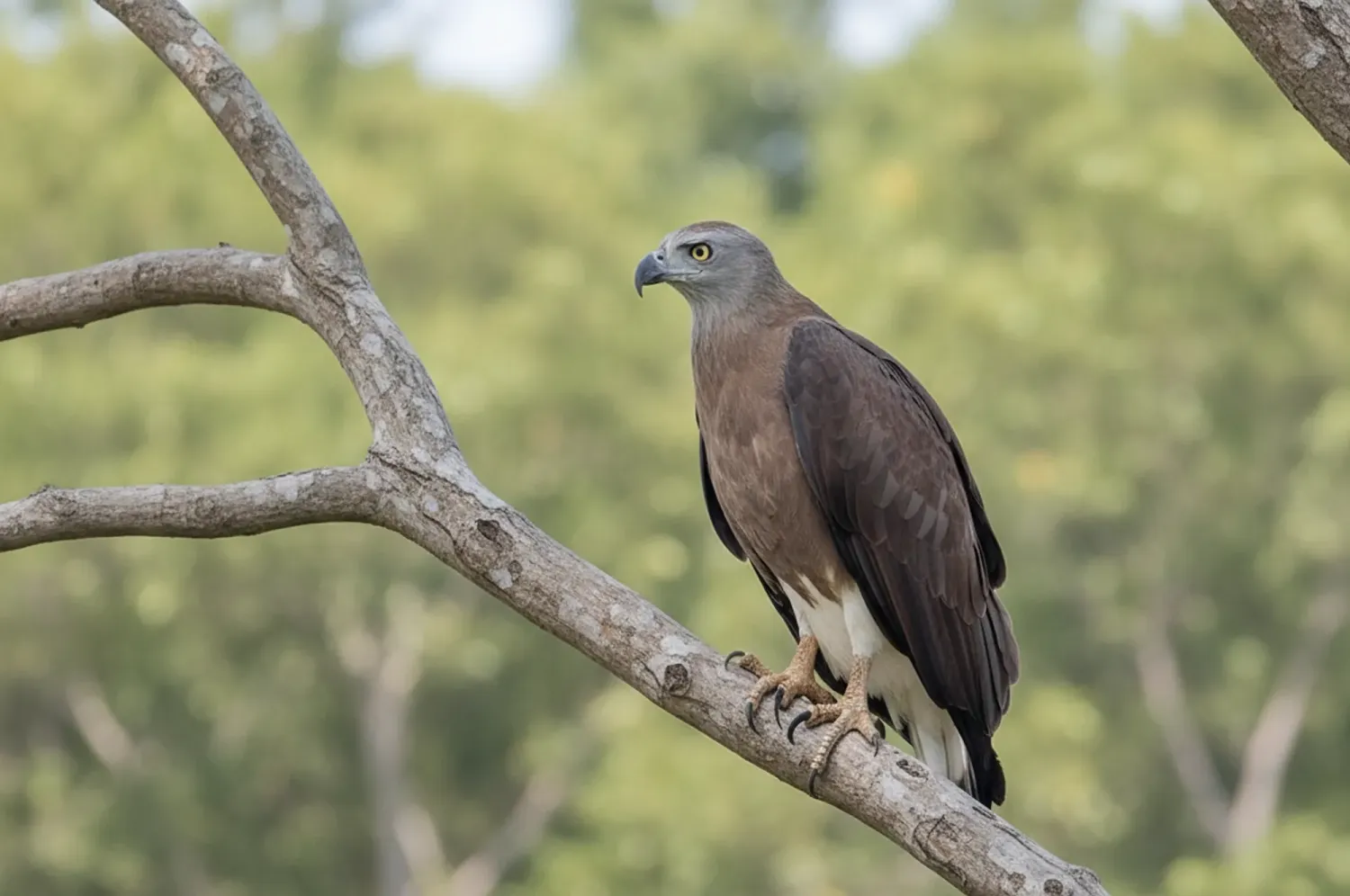
Measuring between 69 and 74 cm, the Grey-headed Fish Eagle is a powerful bird. Adults possess a distinctive grey head, dark brown wings and back, and a striking reddish-brown breast. Their lower belly, thighs, and tail are pure white, with the tail featuring a prominent black terminal band. While males and females look similar, juveniles can be distinguished by their pale buff heads and heavily streaked underparts.
Habitat
Habitat
These eagles are residents of lowland forests, generally found at altitudes up to 1,500 meters. They are never far from water, nesting near slow-moving rivers, streams, lakes, lagoons, marshes, and estuaries. In Sri Lanka, they are frequently spotted near irrigation tanks. Their survival is closely tied to the health of these aquatic environments and the surrounding forest canopy.
Diet
Diet
The Grey-headed Fish Eagle is a specialist piscivore. While its primary diet is live fish, it is known to scavenge dead fish and occasionally hunt reptiles, small mammals, and other birds. Interestingly, studies in the Tonlé Sap area have shown they also consume the endangered Tonlé Sap water snake. A key evolutionary feature is their strongly recurved talons, similar to the Osprey, which allow them to maintain a firm grip on slippery prey.
Breeding and Nesting
Breeding and Nesting
Breeding typically occurs in forested areas near water sources. The birds construct large, sturdy nests made of sticks high up in trees. A typical clutch consists of two to four eggs. The proximity to water is essential, ensuring that the parents have a steady supply of fish to feed the growing chicks during the breeding season.
Behavior
Behavior
These eagles employ several hunting techniques. The most common is the 'perch-and-pounce' method, where the bird sits on a branch overhanging water and makes a short flight to snatch prey from the surface. They are also dynamic hunters capable of catching fish in rough waters like rapids. If a fish is too heavy to lift, the eagle is known to drag it to the bank to consume it. They also quarter (fly low) over stretches of rivers to spot potential meals.
Conservation Status - NT Near Threatened
Conservation Status
While still widely distributed across South and Southeast Asia, the Grey-headed Fish Eagle faces threats from habitat loss, pollution of waterways, and overfishing. They are sensitive to human disturbance near their nesting sites, making the protection of undisturbed lowland forests and clean wetlands vital for their continued survival.
Interesting Facts
Interesting Facts
- Unlike the Haliaeetus (Sea Eagle) genus, the Ichthyophaga genus has specialized curved talons specifically evolved for gripping slippery fish.
- They are known to hunt in turbulent water, including river rapids, showing high agility for their size.
- In Sri Lanka, their frequent presence at irrigation tanks has given them unique local significance.
- They are capable of 'dragging' prey to shore that weighs more than they can carry in flight.
- Their diet can be regionally specific, sometimes including rare species like the Tonlé Sap water snake.
Tips for Birdwatchers
Tips for Birdwatchers
- Scan the Canopy: Look for them perched on large branches overhanging slow-moving water or lagoons.
- Listen for the Call: They are often heard before they are seen, especially during the breeding season.
- Identify the Tail: Look for the white tail with a thick black band at the end to confirm an adult sighting.
- Check Irrigation Tanks: If you are in Sri Lanka, these tanks are prime locations for spotting them.
Conclusion
Conclusion
The Grey-headed Fish Eagle is a magnificent example of evolutionary specialization. As a guardian of the lowland forest rivers, it plays a vital role in the ecological balance of Asian wetlands. Protecting its habitat ensures that this powerful 'piscivore' continues to soar and hunt across the waterways of the East.
