
Introduction
The Oriental Darter (Anhinga melanogaster), often colloquially referred to as the "snakebird," is a remarkable water bird known for its long, slender neck and exceptional diving abilities. Closely related to cormorants, this species is a master of the wetlands, utilizing a specialized hunting technique that sets it apart from other aquatic predators.
Physical Appearance
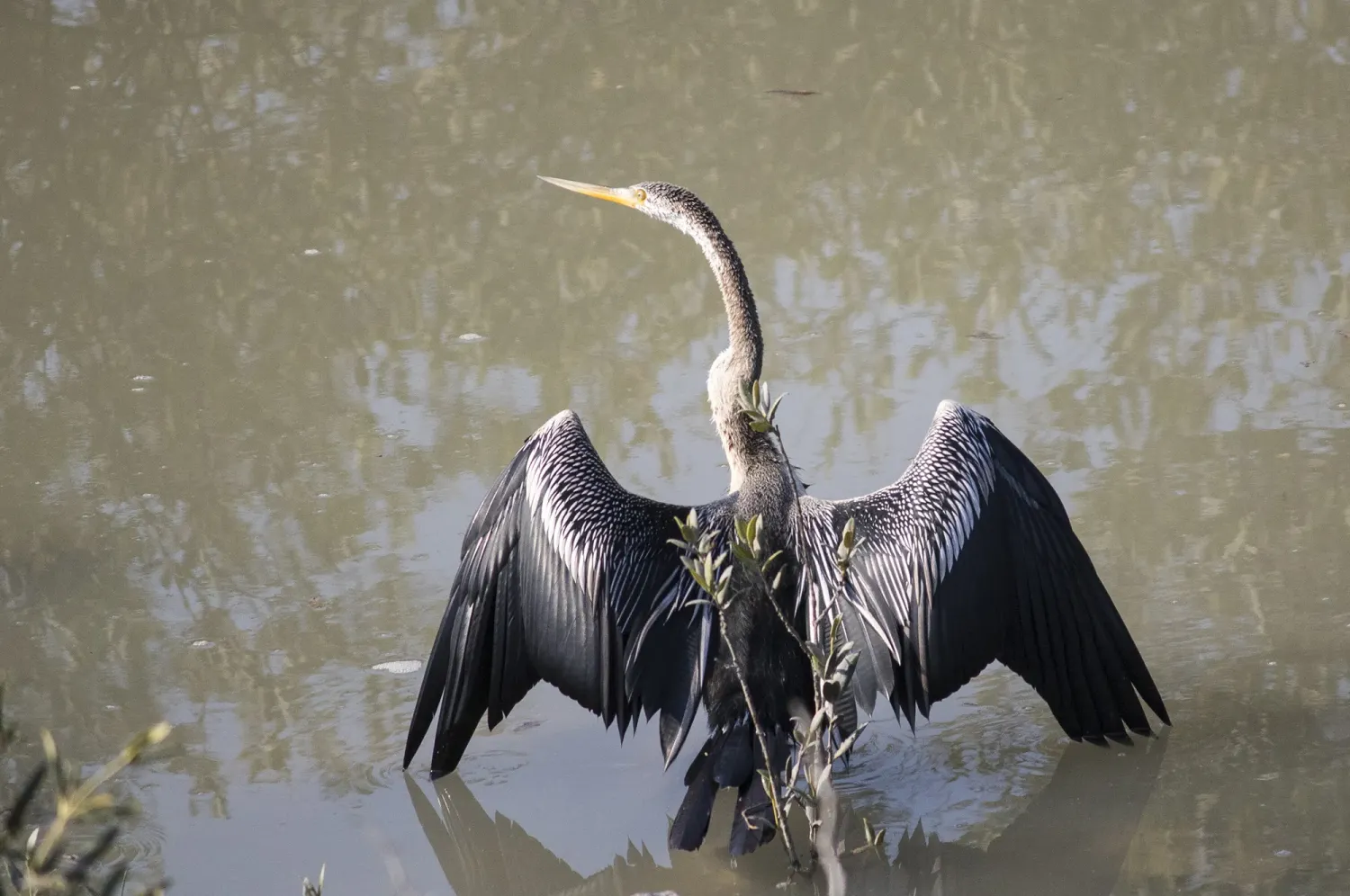
Measuring between 85-97 cm, the darter possesses a long, slender neck and a straight, pointed bill. The adult plumage is predominantly black on top, with silvery streaks along the wing coverts and tertials. The crown and neck are brown, shading into black toward the back. A distinct pale line runs over the eye and throat, giving the bird a striped look. One of its most striking features is the white iris surrounded by a yellow ring, which becomes brighter during the breeding season. Males often feature black speckles on the throat, while females typically have shorter bills and a wide buff band on the neck.
Habitat
Darters are primarily found in inland waters such as lakes, ponds, reservoirs, rivers, and marshes. They also inhabit mangroves and coastal waters. They are often seen swimming with their bodies submerged and only their head and neck above the water, or perched on branches and rocks near the water's edge to dry their plumage.
Diet
The darter feeds mainly on mid-sized fish, though it occasionally consumes other aquatic vertebrates and large invertebrates. As a foot-propelled diver, it quietly stalks and ambushes prey underwater. Using a unique hinge-like mechanism in its neck, it projects its head forward like a spear to impale fish with its sharp bill. After a successful strike, the bird returns to the surface to toss the fish into the air and swallow it head-first.
Breeding and Nesting
During the breeding season, the darter's appearance shifts; the yellow ring around the iris becomes more vibrant, and the legs (tarsi) and toes turn a darker grey. They typically nest in scattered pairs or sometimes in larger colonies, often sharing nesting sites with other water birds. They prefer perches overhanging the water for both safety and easy access to hunting grounds.
Behavior
Unlike cormorants, the darter does not leap before diving; instead, it slowly submerges itself. Because its plumage is wettable and it has small air sacs and dense bones, it has low buoyancy, allowing it to stay underwater with ease. After diving, darters must spend significant time sitting on favored perches with their wings and tail spread wide to dry. Interestingly, they undergo a synchronous moult of their flight feathers, rendering them temporarily flightless.
Conservation Status - LC Least Concern
The Oriental Darter is currently categorized as Near Threatened in many regions due to habitat loss, pollution of wetlands, and human disturbance. Protection of inland water bodies and mangroves is essential for the continued survival of this unique species.
Interesting Facts
- The name "snakebird" comes from its appearance while swimming, where only the slender neck is visible above the water.
- The darter has a specialized keel on its cervical vertebrae that acts as a hinge for spear-like neck movements.
- Unlike most water birds, darters have a vestigial preen gland, meaning their feathers are not waterproof.
- They must toss their prey into the air and catch it again to ensure it is swallowed head-first.
Tips for Birdwatchers
- Look for them on dead trees or rocks near the water, where they often spread their wings to dry.
- Scan the surface of calm lakes for a "snake" moving through the water—this is often the darter's neck.
- Bring binoculars to spot the silvery streaks on their wings and the distinct yellow ring around their eyes.
- Be patient near hunting spots; they move slowly and quietly before making a sudden spear-like strike.
Conclusion
The Oriental Darter is a testament to the specialized evolution of wetland birds. From its spear-like hunting mechanism to its unique "snake-like" swimming profile, it remains one of the most intriguing species for birdwatchers and nature enthusiasts alike. Protecting our natural waterways ensures that this magnificent diver continues to thrive.