Introduction
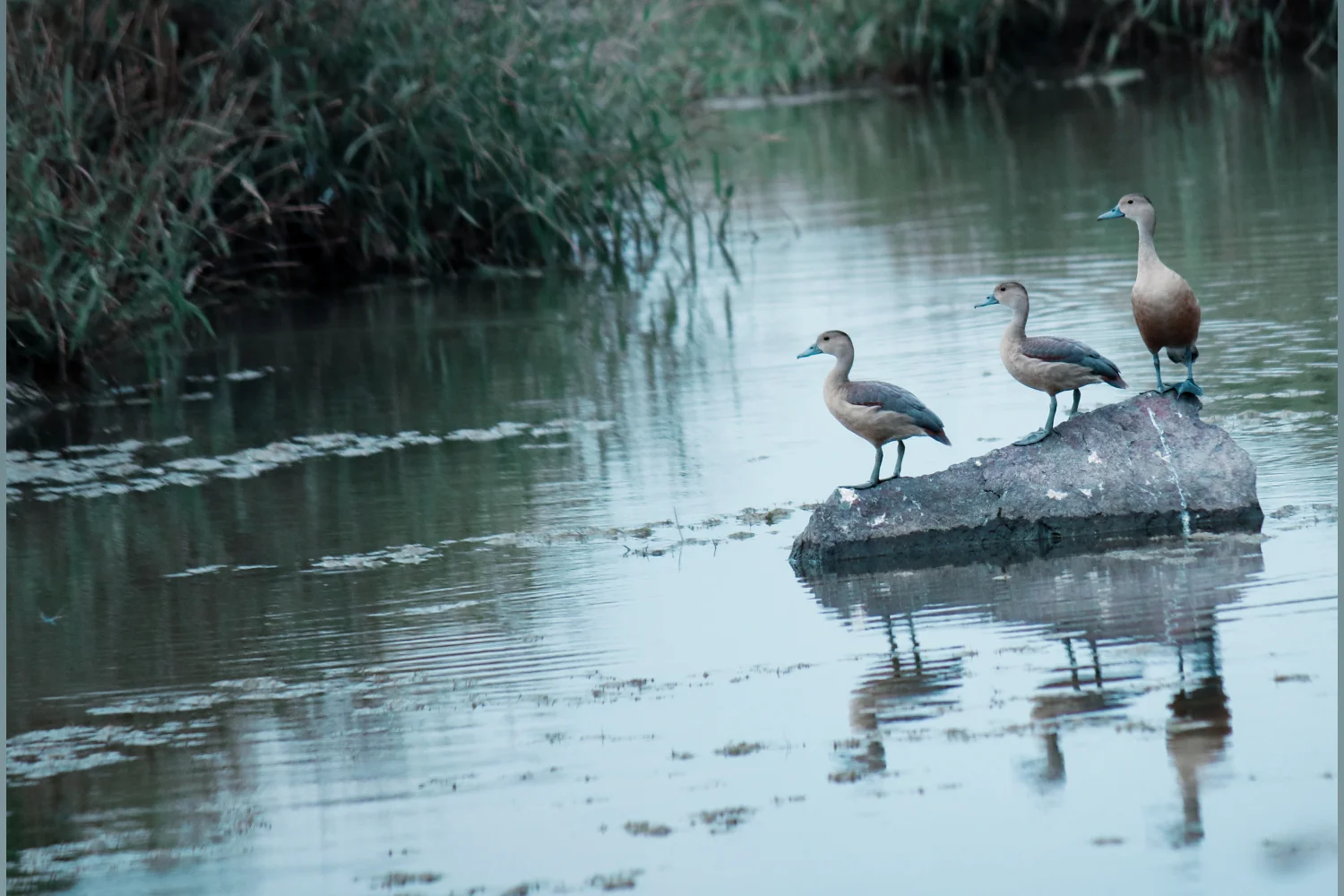
The Lesser Whistling Duck (Dendrocygna javanica), also frequently referred to as the Indian whistling duck or lesser whistling teal, is a distinctive species of whistling duck native to the Indian subcontinent and Southeast Asia. These social waterfowl are best known for their nocturnal habits and the characteristic whistling sound they produce while in flight.
Physical Appearance
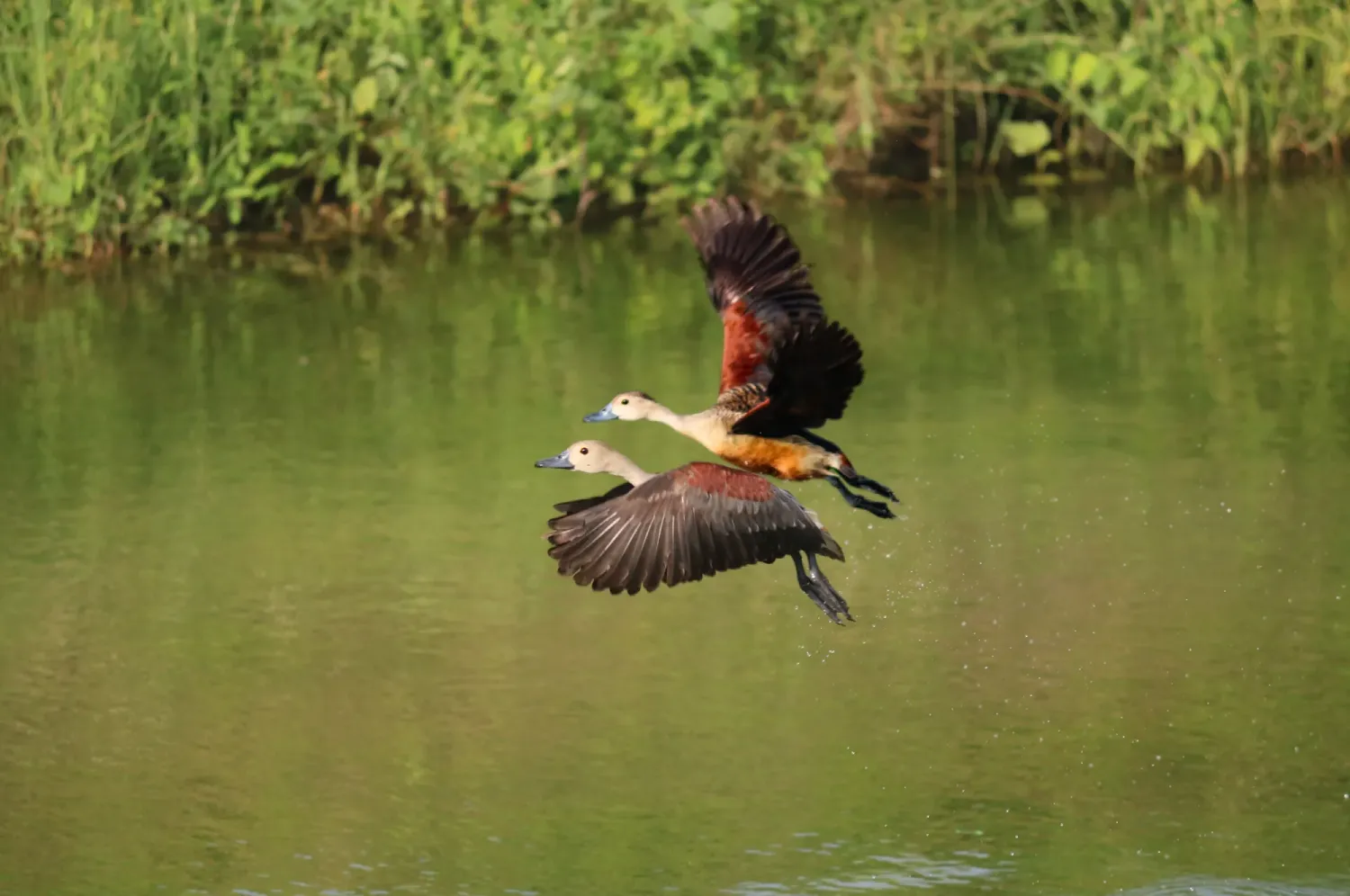
Measuring approximately 42 cm in length, the Lesser Whistling Duck is a medium-sized waterfowl with a long neck and broad wings. It features a predominantly chestnut brown plumage and a dark crown. A key identifying feature is its chestnut rump, which distinguishes it from the similar fulvous whistling duck. It also possesses an orange to yellow ring around the eye. In flight, they are easily recognized by their slow, rapid wing-flapping and the way they hold their head slightly below the level of their body.
Habitat
The habitat of the Lesser Whistling Duck typically consists of freshwater marshes, shallow ponds, and lakes. They have a strong preference for wetlands featuring emergent vegetation and partly submerged trees. Additionally, they are commonly found in flooded grasslands and wet paddy fields, which provide both safety and ample foraging opportunities.
Diet
Lesser whistling ducks are primarily gregarious feeders. Their diet is diverse, consisting mainly of:
- Aquatic plants taken directly from the water.
- Grains, particularly from cultivated rice fields.
- Small fish and frogs.
- Invertebrates such as molluscs and worms.
Breeding and Nesting
These birds are unique among ducks for their ability to perch on trees. While they often nest near water, they are known to sometimes build their nests within the hollow of a tree. Their breeding season is usually aligned with the rainy season, ensuring plenty of food and water for the hatchlings.
Behavior
Lesser Whistling Ducks are nocturnal feeders, meaning they are most active at night. During the daylight hours, they are often seen resting in large flocks around lakes or in trees. They are highly vocal, producing a loud two-note wheezy call described as a repetitive "seasick" sound while circling overhead. They also produce a very prominent whistling sound caused by their wings during flight.
Conservation Status - LC Least Concern
Currently, the Lesser Whistling Duck is widespread across its range in Asia. While not globally threatened, their populations depend heavily on the preservation of wetland ecosystems and the regulation of agricultural practices in paddy fields.
Interesting Facts
- They are often called 'teals' due to their size, but they are actually more closely related to swans and geese.
- The outermost primary feather has a modified inner vane that helps produce their signature whistling sound in flight.
- Unlike many other ducks, both sexes of the Lesser Whistling Duck have almost identical plumage.
- They are highly social and are rarely seen alone, often forming massive flocks during the non-breeding season.
Tips for Birdwatchers
To spot a Lesser Whistling Duck, visit freshwater wetlands or rice paddies at dawn or dusk when they are most active. Listen for their distinctive wheezy whistling call, which is often heard before the bird is seen. Look for them perching in trees near water, a behavior that separates them from many other local duck species.
Conclusion
The Lesser Whistling Duck is a fascinating and vocal member of the Asian avian landscape. With its unique nocturnal lifestyle and specialized whistling flight, it remains a favorite for birdwatchers and nature enthusiasts exploring the wetlands of the Indian subcontinent and Southeast Asia.