
Introduction
The red-wattled lapwing (Vanellus indicus) is a striking Asian lapwing and a member of the Charadriidae family. Known for its loud, piercing alarm calls, this large wader is a common sight across the Indian subcontinent and Southeast Asia. Often found near water bodies, it is frequently referred to as the 'did-he-do-it' bird due to its unique vocalizations.
Physical Appearance
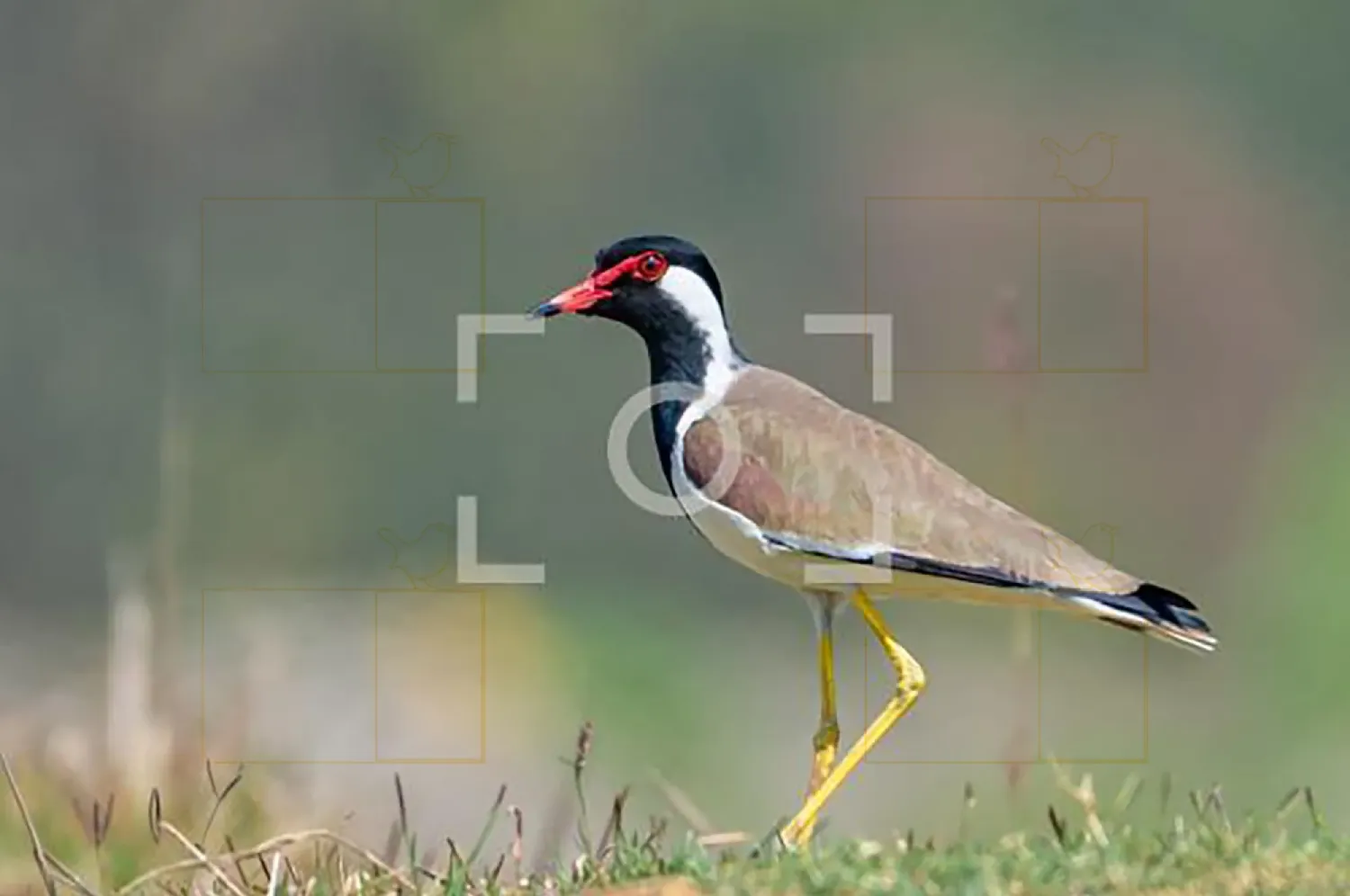
The red-wattled lapwing is a large wader, measuring between 32 and 35 cm in length. Its most distinctive features include:
- Plumage: Light brown wings and back with a purple-to-green sheen, contrasted by a black head, bib, and neck.
- Wattles: A prominent red fleshy wattle in front of each eye.
- Bill and Legs: A red bill with a black tip and long, sturdy yellow legs.
- Markings: A white patch running from the belly and tail up the sides of the neck to the crown, and prominent white wing bars visible during flight.
Habitat
These birds are versatile but generally avoid dense forests. Their habitats include:
- Natural Ecosystems: Wetlands, riverine gravel islands, freshwater marshes, rivers, streams, and flooded grasslands.
- Artificial Ecosystems: Cultivated lands, corn fields, pasturelands, fallow agricultural fields, and rural gardens.
- Altitude: They can be found at altitudes ranging from 0 to 1800 meters above sea level.
Diet
The red-wattled lapwing is primarily insectivorous. Its diet consists of:
- Insects: Beetles, ants, termites, grasshoppers, crickets, and butterflies.
- Other Invertebrates: Insect larvae, small gastropods, crustaceans, and worms.
- Plant Matter: They also consume seeds, grains, and other plant materials.
They forage on the ground, often using their strong legs to scratch the soil and uncover hidden prey.
Breeding and Nesting
Red-wattled lapwings are ground-nesting birds. They lay three to four camouflaged eggs in a simple ground scrape. To protect the nest, adults are known to fly in circles and dive at potential predators while calling noisily. The chicks hatch with cryptic patterns, allowing them to hide by lying low in the grass when threatened.
Behavior
These birds are ceaselessly vigilant and are often the first to sound an alarm when an intruder is detected. They are active both day and night, specifically around the full moon. While they usually move in pairs or trios, they can form large flocks of up to 200 birds during the non-breeding season.
Conservation Status - LC Least Concern
The red-wattled lapwing is generally considered a species of Least Concern due to its wide distribution and ability to adapt to human-altered landscapes like agricultural fields and gardens.
Interesting Facts
- The bird is colloquially known as the 'did-he-do-it' bird because of its characteristic alarm call.
- They are ground birds and are incapable of perching on trees or branches.
- During the breeding season, parents will soak their belly feathers in water to cool the eggs or provide a drink to the chicks.
- They exhibit remarkable agility in flight when defending their territory against hawks or other predators.
Tips for Birdwatchers
- Listen for the Call: Their loud 'did-he-do-it' call is the easiest way to locate them.
- Check Near Water: Look for them in open fields near tanks, puddles, or riverbeds.
- Keep Your Distance: During nesting season, be careful not to approach too closely, as the parents can become very aggressive and vocal.
- Night Observation: Try spotting them during full moon nights when they are particularly active.
Conclusion
The red-wattled lapwing is a fascinating and highly vocal sentinel of the wetlands and open fields. Its striking appearance, combined with its role as an early-warning system for the animal kingdom, makes it one of the most interesting waders to observe in the wild. Whether in a rural garden or a remote marsh, this bird remains a symbol of vigilance and adaptation.